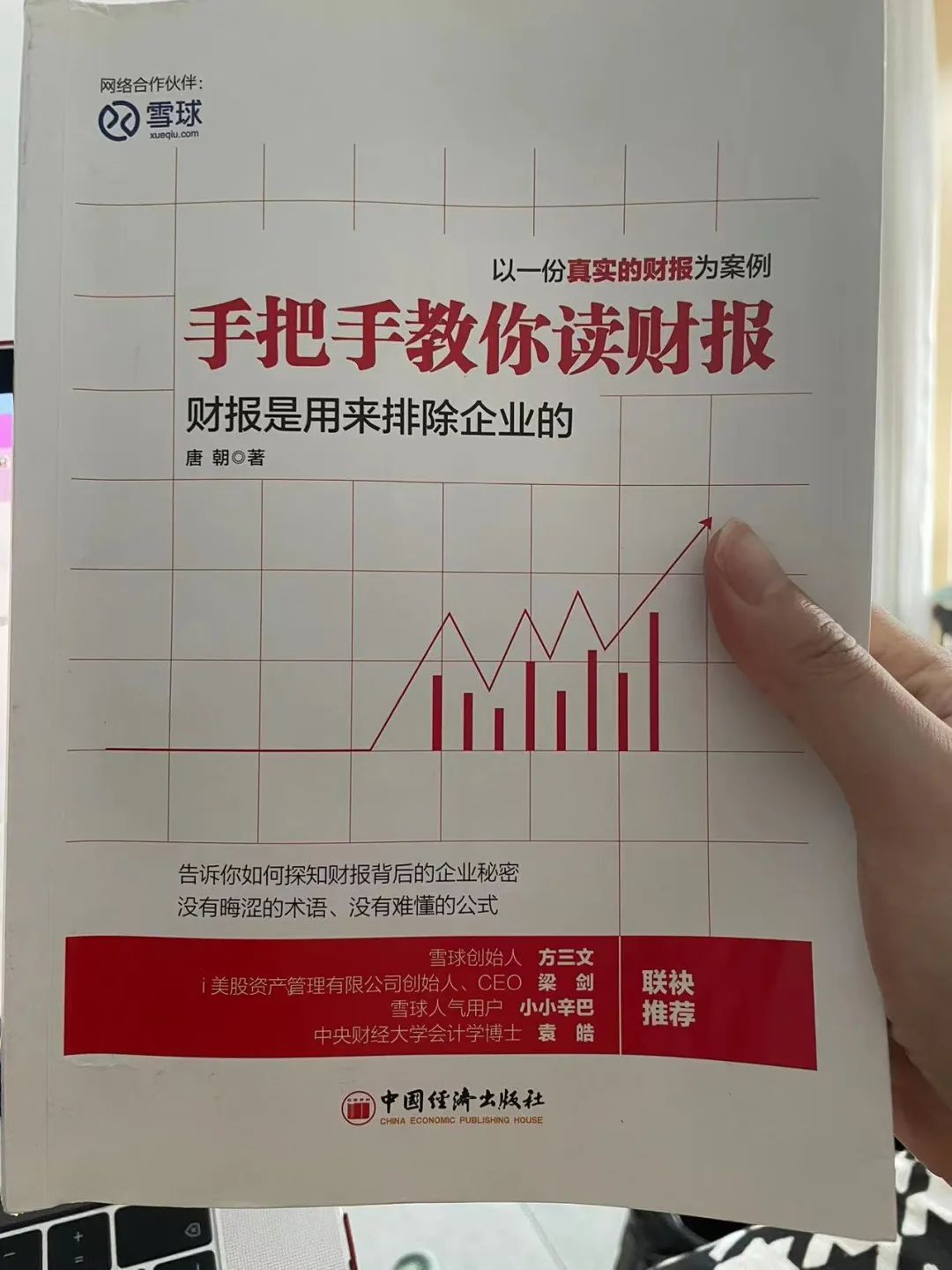
Step-by-Step Guide to Reading Financial Reports
- My rating: 7 / 10
- Purchase Link
This book provides an in-depth analysis of the core elements of financial statements, teaching readers how to identify high-quality companies through structured analysis, from the balance sheet to the income statement to the cash flow statement. It’s packed with valuable insights, especially suitable for investors who want to continuously monitor the financial reports of high-quality companies.
Rich in detail: Compared to the previous book “Playing with Financial Statements,” this book delves deeper into details and provides more practical analytical methods.
Clear structure: Starting from the balance sheet, income statement to the cash flow statement, it progresses layer by layer, helping readers build a complete financial statement analysis framework.
- Case studies combined with practicality: By illustrating the applicability of analytical methods through the characteristics of specific industries (such as hydropower generation, real estate), it enhances practicality.
- Multi-dimensional perspective: Analyzing corporate financial statements from three dimensions—structure, history, and peers—to comprehensively reveal the operational status and competitiveness of the enterprise.
What I Liked 🔗︎
Some content is complex: For beginners, certain analytical methods (such as preparing cash flow statements using the indirect method) may require repeated reading to fully understand.
Lack of interactive exercises: Although the content is detailed, it lacks practical cases or tool recommendations, which may require readers to supplement hands-on experience on their own.
Unusual situations not elaborated: Mentioning the identification of unusual situations in the three financial statements but not elaborating on them in detail is a bit of a 遗憾.
- Analysis of the Balance Sheet:
First look at assets = liabilities + equity to clarify the sources of assets; then examine the proportion of owner’s equity to determine the capital structure.
- Light Asset vs Heavy Asset: Companies with a low proportion of production materials in total assets and a significantly higher pre-tax profit/production materials ratio than the social average return rate are considered light asset companies.
- Return on Equity (ROE): Warren Buffett’s core metric for measuring the performance of a business.
What I Disliked 🔗︎
- Historical and Peer Comparison: Focus on the trend of changes in a company’s assets and the dynamics of its competitors.
- Financial Health Indicators: Interest-bearing debt ratio, Cash and equivalents/Interest-bearing debt ≥1, Accounts receivable ratio does not exceed more than half of total assets.
- Income Statement Analysis:
Revenue Growth: Only by exceeding the industry average can market share expansion be proven.
Gross Profit Margin: Above 40% usually indicates sustainable competitive advantages, while below 20% warrants cautious attention.
- Cost Ratio: (Selling Expenses + Administrative Expenses + Financial Expenses) / Operating Revenue, be wary of companies with excessively high cost ratios.
Key Takeaways 🔗︎
- Operating Profit Margin: Operating Profit / Operating Revenue, analyze the reasons for price increases, cost reductions, or expense control, as well as their sustainability.
- Cash Flow Statement Analysis:
- Key Indicator: Operating Cash Flow Net / Net Profit consistently greater than 1 indicates that goods or services are in short supply.
- Preparation Method:
- Add back non-expensed costs (such as depreciation, asset impairment).
- Subtract non-operating income (such as investment income, interest income).
- Subtract cash outflows not included in costs (such as deferred taxes, inventory, accounts receivable and payable).
- VAT Verification: The cash received from selling goods should be 1.17 times the operating revenue (including VAT), theoretically greater than 1 is considered good.
- Corporate Portrait: Determine the type of business (fairy type, hen type, bull type, cow type) through multiple years of financial reports.
- Comprehensive Analysis Method:
- Continuously Monitor High-Quality Companies: Track the financial reports of high-quality enterprises over the long term to identify investment opportunities.
- Exceptional Case Identification: Further research is needed on the exceptional data in the three tables, and judgment should be made in combination with industry characteristics.
- Precautions:
- Industry Characteristics: Certain industries (such as hydropower generation, real estate) are not suitable for general analytical methods and require adjustments based on industry-specific features.
- Avoid Optimism Bias: Maintain a rational attitude towards revenue growth and be wary of overly optimistic expectations.
- Impact of cost control: Whether cost control harms a company’s long-term competitiveness needs to be carefully evaluated.
New articles on AI agents, full-stack engineering, and a one-person company
I email new writing about AI and agents, full-stack engineering, and building a one-person company. No spam, and you can unsubscribe anytime.