The iterative method will definitely use a while loop. Binary tree traversal needs the help of a stack, while binary search only needs pointers. Generally, recursion is more intuitive, but the iterative method for binary search is more intuitive.
The pre-order, in-order, and post-order traversals of a tree are all recursive, so you don’t need to worry about them. Instead, you need to distinguish between level-order traversal and breadth-first traversal; level-order traversal is not recursive.
Programming Tools
Jupyter is a vscode plugin that facilitates one-time compilation and writing.
classSolution:deftopKFrequent(self, nums: List[int], k:int)-> List[int]:dict={}for num in nums:if num notindict:dict[num]=1dict[num]=dict[num]+1 sorted_items =sorted(dict.items(), key=lambda item: item[1], reverse=True)#keys = [item[0] for item in sorted_items[:k]] return sorted_items
# This problem is more algorithmic, but the specific implementation will test your array traversal skills.fromtypingimport List
defproductArrayOfSelf(list: List[int])-> List[int]:# 1,2,3,4 # prefix: 1 1 2 6# suffix: 24 12 4 1 n =len(list) prefix_result =[1]* n
suffix_result =[1]* n
for i inrange(n-1): prefix_result[i+1]=list[i]* prefix_result[i]for i inreversed(range(1,len(list))): suffix_result[i-1]=list[i]* suffix_result[i] result =[1]* n
for i inrange(n): result[i]= prefix_result[i]* suffix_result[i]return result
productArrayOfSelf([1,2,3,4])
fromtypingimport List
classSolution:defproductExceptSelf(self, nums: List[int])-> List[int]: n =len(nums) prefix_prduct =1 postfix_product =1 result =[0]* n
for i inrange(n): result[i]= prefix_prduct
prefix_prduct *= nums[i]for i inrange(n-1,-1,-1): result[i]*= postfix_product
postfix_product *= nums[i]return result
print(Solution().productExceptSelf([1,2,3,4]))# Output: [24, 12, 8, 6]
Let’s take the input list [1,2,3,4] as an example to explain the third step in detail.
After the second step, the values of result and postfix_product are as follows:
result = [1, 1, 2, 6] (stores the product of all elements to the left of each element)
postfix_product = 1
Then, we traverse the input list nums from back to front:
When i = 3 (corresponding to element 4), we multiply the value of postfix_product (which is 1 at this time) by result[3], getting result = [1, 1, 2, 6]. Then, we multiply nums[3] (which is 4) by postfix_product, getting postfix_product = 4.
When i = 2 (corresponding to element 3), we multiply the value of postfix_product (which is 4 at this time) by result[2], getting result = [1, 1, 8, 6]. Then, we multiply nums[2] (which is 3) by postfix_product, getting postfix_product = 12.
When i = 1 (corresponding to element 2), we multiply the value of postfix_product (which is 12 at this time) by result[1], getting result = [1, 12, 8, 6]. Then, we multiply nums[1] (which is 2) by postfix_product, getting postfix_product = 24.
When i = 0 (corresponding to element 1), we multiply the value of postfix_product (which is 24 at this time) by result[0], getting result = [24, 12, 8, 6].
So, the final returned result list result is [24, 12, 8, 6], where each element is the product of all elements in the original list except itself.
Valid Sudoku
classSolution:defisValidSudoku(self, board: List[List[str]])->bool: rows =[{}for _ inrange(9)] columns =[{}for _ inrange(9)] boxes =[{}for _ inrange(9)]for i inrange(9):for j inrange(9): num = board[i][j]if num !='.': num =int(num) box_index =(i //3)*3+ j //3 rows[i][num]= rows[i].get(num,0)+1 columns[j][num]= columns[j].get(num,0)+1 boxes[box_index][num]= boxes[box_index].get(num,0)+1if rows[i][num]>1or columns[j][num]>1or boxes[box_index][num]>1:returnFalsereturnTrue
Determine if there are duplicate values by checking rows, columns, and boxes. rows is defined as an array, where each element is a hash. row[0][5]=0 calculates the count of 5 in the current row. Pay special attention to the box index: ``
(i // 3) * 3 + j // 3 For any element, if its row index is i and column index is j, then the index of the 3x3 sub-sudoku it belongs to can be calculated by (i // 3) * 3 + j // 3. For example, if an element’s row index is 4 and column index is 7, then the index of the 3x3 sub-sudoku it belongs to is (4 // 3) * 3 + 7 // 3 = 1 * 3 + 2 = 5, which means it is in the 5th sub-sudoku in the diagram above.
Longest Consecutive Sequence
classSolution:deflongestConsecutive(self, nums: List[int])->int: nums_set =set(nums) longest =1for i in nums_set:if i -1notin nums_set: current_len =1 current_num = i +1while current_num in nums_set: current_num +=1 current_len = current_len +1 longest =max(longest, current_len)return longest
Solution().longestConsecutive([100,100,4,200,1,3,2])
classSolution:defthreeSum(self, nums: List[int])-> List[List[int]]: res =set() n, p, z =[],[],[]for i in nums:if i >0: p.append(i)elif i <0: n.append(i)else: z.append(i) N, P =set(n),set(p)if z:for i in P:if-1*i in N: res.add((-1*i,0, i))iflen(z)>=3: res.add((0,0,0))for i inrange(len(n)):for j inrange(i+1,len(n)): target =-1*(n[i]+n[j])if target in P: res.add(tuple(sorted([n[i], n[j], target])))for i inrange(len(p)):for j inrange(i+1,len(p)): target =-1*(p[i]+p[j])if target in N: res.add(tuple(sorted([p[i],p[j], target])))return res
In a one-dimensional array, find the contiguous subarray with the largest sum and return its sum.
Input:
arr = [-2, -3, 4, -1, -2, 1, 5, -3]
Output:
7
Explanation:
The contiguous subarray with the largest sum is [4, -1, -2, 1, 5], and its sum is 4 + (-1) + (-2) + 1 + 5 = 7.
Kadane’s algorithm is an efficient dynamic programming algorithm used to solve the maximum subarray sum problem. Its core idea is to dynamically maintain the maximum sum of the current subarray and the global maximum sum by traversing the array.
Implementation Code
functionmaxSubArraySum(arr: number[]):number{// Initialize variables
constmaxint=Math.pow(2,53);// Maximum safe integer in JavaScript
letmaxSoFar=-maxint-1;// Global maximum sum, initialized to the minimum value
letmaxEndingHere=0;// Maximum sum of the current subarray
// Traverse the array
for(letindex=0;index<arr.length;index++){maxEndingHere=maxEndingHere+arr[index];// Update the current subarray sum
// If the current subarray sum is greater than the global maximum sum, update the global maximum sum
if(maxSoFar<maxEndingHere){maxSoFar=maxEndingHere;}// If the current subarray sum is less than 0, restart calculating the subarray
if(maxEndingHere<0){maxEndingHere=0;}}returnmaxSoFar;// Return the global maximum sum
}// Test case
constarr=[-2,-3,4,-1,-2,1,5,-3];console.log(maxSubArraySum(arr));// Output: 7
Initialization:
maxSoFar: Records the global maximum sum, initialized to the minimum value (-Infinity or -Math.pow(2, 53) - 1).
maxEndingHere: Records the maximum sum of the current subarray, initialized to 0.
Traverse the array:
Each time, add the current element to maxEndingHere to extend the current subarray.
If maxEndingHere is greater than maxSoFar, update maxSoFar.
If maxEndingHere is less than 0, it means the current subarray does not contribute to subsequent results, so reset it to 0.
Return the result:
After the traversal is complete, maxSoFar is the maximum subarray sum.
Time Complexity: O(n)
Only needs to traverse the array once, which is highly efficient.
Space Complexity: O(1)
Only uses a constant amount of extra space.
We have 1TB of order data that needs to be sorted by amount. However, the machine’s memory is only 2GB, so we cannot load all the data into memory at once. How can we solve this problem?
This is a typical massive data processing problem, which can be solved using the divide and conquer approach. The core idea of divide and conquer is to break down a large problem into multiple smaller problems, solve these smaller problems separately, and then merge the results to get the final answer.
Merge sort is a classic application of the divide and conquer approach. It achieves sorting through the following steps:
Divide: Continuously split the array until each subarray has only one element (which is already sorted).
Merge: Merge two sorted arrays into a larger sorted array, ultimately obtaining the completely sorted result.
The following is a diagram of the merge sort process:
Merge Sort Process
Suppose we need to merge two sorted arrays A and B:
Allocate a new array with a size of A + B.
Use two pointers to point to the starting positions of A and B respectively.
Compare the values pointed to by the two pointers, write the smaller value into the new array, and move the corresponding pointer.
When one of the array’s pointers reaches the end, copy the remaining part of the other array directly into the new array.
Finally, copy the contents of the new array back to the original array.
The following is the code implementation of merge sort:
constmergeSort=(data,p,r)=>{// If only one element is left, end the recursion
if(p>=r)return;// Split point
letq=Math.floor((p+r)/2);// Divide
mergeSort(data,p,q);mergeSort(data,q+1,r);// Merge
merge(data,p,q,r);};constmerge=(data,p,q,r)=>{consttemp=newArray(r-p+1);leti=p;letj=q+1;letk=0;// Compare the elements of the two arrays and write them to the temporary array in ascending order
while(i<=q&&j<=r){if(data[i]<=data[j]){temp[k++]=data[i++];}else{temp[k++]=data[j++];}}// Write the remaining elements to the temporary array
letstart=i;letend=r;if(j>r){end=q;}else{start=j;}while(start<=end){temp[k++]=data[start++];}// Copy the contents of the temporary array back to the original array
for(leti=0;i<r-p+1;i++){data[p+i]=temp[i];}returndata;};exportconstms_test_function=()=>{constdata=[11,8,3,9,7,1,2,3];mergeSort(data,0,data.length-1);returntrue;};
Back to the main topic, facing 1TB of order data and a 2GB memory limit, we can solve the problem using the following steps:
Due to limited memory, we need to read the large file line by line and split it into multiple smaller files based on the order amount. For example, assuming the maximum order amount is 10,000, we can split it by amount range:
0-99 yuan → file partition_0.txt
100-199 yuan → file partition_1.txt
200-299 yuan → file partition_2.txt
…
The advantage of doing this is that it facilitates quick sorting during subsequent merging, as we can sort based on the file name order.
The following is the code implementation for splitting the file:
// Step 1: Divide the file into smaller partitions based on order amounts
functionpartitionFile(inputFilePath,outputDirPath,callback){constpartitions={};// Read the input file sequentially
constreadStream=fs.createReadStream(inputFilePath,{encoding:'utf8'});readStream.on('data',(chunk)=>{constorders=chunk.split('\n');orders.forEach((order)=>{// Extract the order amount from the order entry
constamount=parseFloat(order.split(',')[1]);// Determine the partition for the order based on its amount
constpartition=Math.floor(amount/100);// Create a writable stream for the partition file if it doesn't exist
if(!partitions.hasOwnProperty(partition)){constpartitionFilePath=`${outputDirPath}/partition_${partition}.txt`;partitions[partition]=fs.createWriteStream(partitionFilePath,{flags:'a'});}// Write the order to the appropriate partition file
partitions[partition].write(`${order}\n`);});});readStream.on('end',()=>{// Close all partition files
for(constpartitioninpartitions){partitions[partition].end();}callback();});}
The data volume of each small file is small and can be loaded directly into memory for sorting. We can use an efficient sorting algorithm (such as merge sort or quick sort) and write the sorted results back to the file.
The following is the code implementation for sorting small files:
// Step 2: Sort each partition individually
functionsortPartitions(inputDirPath,outputDirPath,callback){fs.readdir(inputDirPath,(err,files)=>{if(err){throwerr;}files.forEach((file)=>{constfilePath=`${inputDirPath}/${file}`;constsortedFilePath=`${outputDirPath}/sorted_${file}`;// Read the orders from the partition file
constorders=fs.readFileSync(filePath,{encoding:'utf8'}).split('\n');// Sort the orders using an efficient algorithm (e.g., merge sort)
constsortedOrders=orders.sort((a,b)=>{constamountA=parseFloat(a.split(',')[1]);constamountB=parseFloat(b.split(',')[1]);returnamountA-amountB;});// Write the sorted orders to the sorted partition file
fs.writeFileSync(sortedFilePath,sortedOrders.join('\n'),{encoding:'utf8'});});callback();});}
Merge all the sorted small files in the order of their file names. This step is similar to the merge process of merge sort, where we take the smallest element from each small file at a time to gradually generate the final sorted result.
The following is the code implementation for merging small files:
// Step 3: Merge the sorted partitions
functionmergePartitions(inputDirPath,outputFilePath){// Step 1: Perform merge sort on an array of numbers
functionmergeSort(arr){if(arr.length<=1){returnarr;}constmid=Math.floor(arr.length/2);constleft=arr.slice(0,mid);constright=arr.slice(mid);returnmerge(mergeSort(left),mergeSort(right));}// Step 2: Merge two sorted arrays
functionmerge(left,right){letmerged=[];leti=0;letj=0;while(i<left.length&&j<right.length){// Read the number after the file title
if(parseFloat(left[i].split(',')[1])<=parseFloat(right[j].split(',')[1])){merged.push(left[i]);i++;}else{merged.push(right[j]);j++;}}while(i<left.length){merged.push(left[i]);i++;}while(j<right.length){merged.push(right[j]);j++;}returnmerged;}constfilePointers=[];letmergedOutput='';fs.readdir(inputDirPath,(err,files)=>{if(err){throwerr;}// Open all sorted partition files and initialize file pointers
files.forEach((file)=>{constfilePath=path.join(inputDirPath,file);constfileData=fs.readFileSync(filePath,'utf8').trim();constpartitionData=fileData.split('\n');filePointers.push(partitionData);});// Merge the sorted partitions
constsortedOutput=mergeSort(filePointers.flat());// Format the sorted output
mergedOutput=sortedOutput.join('\n')+'\n';// Write the merged output to the final sorted file
fs.writeFileSync(outputFilePath,mergedOutput,{encoding:'utf8'});});}
The following is the running result of the entire process:
Input file: Original 1TB order data.
Intermediate files:
temp/input: The result after splitting into small files, with each small file storing the corresponding order data.
temp/output: The result after sorting within the small files.
Output file: sorted_file.txt is the final merged result, which has been sorted by order amount.
The running result is shown in the figure below:
Running Result
Suppose we have a shopping cart with n items (prices are known). We need to select some items from these n items so that their total price just meets the price requirement for a discount. For example, the discount requirement is 10 yuan.
Simplified example:
The array of item prices is [2, 2, 4, 6, 3]
The discount requirement is 10 yuan
The goal is to select some items from these items so that their total price is as close as possible to the discount requirement (i.e., 10 yuan), but not exceeding 3 times the discount amount (i.e., 30 yuan).
This problem can be analogized to the classic knapsack problem, which is to select items to maximize the total value under a given maximum weight limit. Here, the “maximum weight” corresponds to the upper limit of the discount amount (e.g., 30 yuan), and the “value of the items” corresponds to the price of the items.
The most direct solution is to list all possible combinations of items and then find the combination that meets the conditions. However, the time complexity of this method is exponential (O(2^n)), and the calculation efficiency will be very low when the number of items is large.
We can borrow the dynamic programming idea of the knapsack problem to avoid the exponential growth of states. Specifically:
Use a two-dimensional state table states to record the state of each step.
Each state states[i][j] indicates whether the first i items can form a combination with a total price of j.
The final result is derived step by step through the state transition equation.
State definition:
states[i][j]: Indicates whether the first i items can form a combination with a total price of j.
Initial state: states[0][0] = true (when no items are selected, a total price of 0 is feasible).
If the price of the i-th item items[i] is less than or equal to the current total price j, the state can be updated by selecting or not selecting this item.
State transition equation:
Do not select the i-th item:
If states[i-1][j] = true, then states[i][j] = true.
Select the i-th item:
If states[i-1][j-items[i]] = true, then states[i][j] = true.
Boundary conditions:
The total price cannot exceed 3 times the discount amount (i.e., 3 * w).
If no combination that meets the conditions can be found, return an empty result.
The following is a JavaScript implementation based on the above ideas:
/**
* Double 11 shopping problem
* @param {number[]} items Array of item prices
* @param {number} n Number of items
* @param {number} w Target amount for the discount
*/functiondouble11advance(items,n,w){// Initialize the state table
letstates=newArray(n);for(leti=0;i<n;i++){states[i]=newArray(3*w+1).fill(false);}// Initial state
states[0][0]=true;// Do not select the first item
if(items[0]<=3*w){states[0][items[0]]=true;// Select the first item
}// Dynamic programming to fill the table
for(leti=1;i<n;i++){// Do not select the i-th item
for(letj=0;j<=3*w;j++){if(states[i-1][j]===true){states[i][j]=states[i-1][j];}}// Select the i-th item
for(letj=0;j<=3*w-items[i];j++){if(states[i-1][j]===true){states[i][j+items[i]]=true;}}}// Find the total price closest to the discount amount
letj;for(j=w;j<3*w+1;j++){if(states[n-1][j]===true){break;}}// If no combination that meets the conditions can be found
if(j===3*w+1){console.log("Unable to find a combination of items that meets the conditions");return;}// Backtrack to find out which specific items were selected
for(leti=n-1;i>=1;i--){if(j-items[i]>=0&&states[i-1][j-items[i]]===true){console.log(items[i]);// Print the selected item
j-=items[i];}}// Check if the 0-th item was selected
if(j!==0){console.log(items[0]);}}
Explanation: Select the items with prices 6 and 4, the total price is 10, which just meets the discount requirement.
Time Complexity:
The process of filling the table requires traversing each item and each possible total price, so the time complexity is O(n * 3w), where n is the number of items and w is the discount amount.
Space Complexity:
A two-dimensional array states is used, so the space complexity is O(n * 3w).
In fields such as natural language processing and text matching, we often need to quantify the similarity between two strings. A commonly used metric is the Edit Distance, which represents the minimum number of edit operations required to convert one string into another. Edit operations include:
Insertion: Inserting a character into a string.
Deletion: Deleting a character from a string.
Substitution: Replacing a character in a string with another character.
The smaller the edit distance, the more similar the two strings are.
Given two strings mitcmu and mtacnu, what is their edit distance?
An intuitive solution is to use a backtracking algorithm to enumerate all possible sequences of operations and find the minimum edit distance. The specific steps are as follows:
If a[i] == b[j], no operation is needed, recursively examine a[i+1] and b[j+1].
If a[i] != b[j], one of the following operations can be performed:
Deletion: Delete a[i] or b[j], then recursively examine the remaining parts.
Insertion: Insert a character identical to b[j] before a[i], or insert a character identical to a[i] before b[j].
Substitution: Replace a[i] with b[j] or replace b[j] with a[i].
The time complexity of this method is high because it will repeatedly calculate the same subproblems.
To avoid repeated calculations, we can use dynamic programming to optimize the backtracking algorithm. Define the state minDist[i][j] as the minimum edit distance required to convert the string a[0...i-1] to the string b[0...j-1].
State Transition Equation
If a[i-1] == b[j-1], no operation is needed:
[
minDist[i][j] = minDist[i-1][j-1]
]
If a[i-1] != b[j-1], one of the following three operations can be chosen:
Insertion: minDist[i][j] = minDist[i][j-1] + 1
Deletion: minDist[i][j] = minDist[i-1][j] + 1
Substitution: minDist[i][j] = minDist[i-1][j-1] + 1
Combining the above two cases, the state transition equation is:
[
minDist[i][j] =
\begin{cases}
minDist[i-1][j-1], & \text{if } a[i-1] == b[j-1] \
\min(minDist[i-1][j]+1, minDist[i][j-1]+1, minDist[i-1][j-1]+1), & \text{if } a[i-1] \neq b[j-1]
\end{cases}
]
Initial Conditions:
When converting an empty string to a target string, the edit distance is equal to the length of the target string:
[
minDist[i][0] = i \quad (i = 0, 1, …, n)
]
[
minDist[0][j] = j \quad (j = 0, 1, …, m)
]
The following is a JavaScript implementation based on dynamic programming:
/**
* Calculate the edit distance between two strings
* @param {string} a String A
* @param {number} n Length of string A
* @param {string} b String B
* @param {number} m Length of string B
* @returns {number} Minimum edit distance
*/functionlwstDP(a,n,b,m){// Initialize the 2D array minDist
constminDist=newArray(n+1);for(leti=0;i<n+1;i++){minDist[i]=newArray(m+1);minDist[i][0]=i;// Edit distance to convert an empty string to a[0...i-1]
}for(letj=0;j<m+1;j++){minDist[0][j]=j;// Edit distance to convert an empty string to b[0...j-1]
}// Dynamic programming to fill the table
for(leti=1;i<n+1;i++){for(letj=1;j<m+1;j++){if(a[i-1]===b[j-1]){// Characters are equal, no operation needed
minDist[i][j]=minOfThree(minDist[i-1][j]+1,// Deletion
minDist[i][j-1]+1,// Insertion
minDist[i-1][j-1]// No operation
);}else{// Characters are not equal, take the minimum operation
minDist[i][j]=minOfThree(minDist[i-1][j]+1,// Deletion
minDist[i][j-1]+1,// Insertion
minDist[i-1][j-1]+1// Substitution
);}}}returnminDist[n][m];// Return the final result
}/**
* Helper function: returns the minimum of three numbers
* @param {number} n1 The first number
* @param {number} n2 The second number
* @param {number} n3 The third number
* @returns {number} The minimum value
*/functionminOfThree(n1,n2,n3){returnMath.min(n1,Math.min(n2,n3));}
The minimum edit distance to convert mitcmu to mtacnu is 3, which can be achieved by the following operations:
Replace i with t.
Replace c with a.
Replace m with n.
Time Complexity:
The size of the dynamic programming table is (n+1) x (m+1), and the computation time for each state is O(1).
The total time complexity is O(n * m), where n and m are the lengths of the two strings, respectively.
Space Complexity:
A two-dimensional array minDist is used, so the space complexity is O(n * m).
Given an integer array, where each element represents the maximum number of steps that can be taken forward from that position. Write a function to return the minimum number of jumps required to reach the end of the array. If an element is 0, you cannot pass through that element. If the end cannot be reached, return -1.
Input:
arr[] = {1, 3, 5, 8, 9, 2, 6, 7, 6, 8, 9}
Output:
3
Explanation:
1st jump: From index 0 to index 1 (because arr[0] = 1).
2nd jump: From index 1 to index 4 (because arr[1] = 3, you can choose to jump to index 2, 3, or 4).
3rd jump: From index 4 to index 10 (because arr[4] = 9, jump directly to the end).
Input:
arr[] = {1, 1, 1, 1, 1, 1, 1, 1, 1, 1, 1}
Output:
10
Explanation: You can only jump one step at a time, so it takes 10 jumps to reach the end.
Greedy Algorithm (Optimized Brute Force)
functionminiJumpsToEnd(arr){constn=arr.length;// If the array length is 1 or less, no jumps are needed
if(n<=1)return0;// If the starting point is 0 and the array length is greater than 1, it's impossible to jump
if(arr[0]==0)return-1;letmaxReach=arr[0];// The farthest index that can be reached currently
letstep=arr[0];// The number of steps remaining currently
letjumps=1;// Total number of jumps
for(leti=1;i<n;i++){// If the current index has reached or exceeded the end
if(i==n-1){returnjumps;}// Update the farthest index that can be reached
maxReach=Math.max(maxReach,i+arr[i]);// Consume one step
step--;// If the current remaining steps are 0, a jump is needed
if(step==0){jumps++;// If the current index has exceeded the maximum reachable range, it's impossible to reach the end
if(i>=maxReach){return-1;}// Update the remaining steps to the new maximum reachable range minus the current index
step=maxReach-i;}}return-1;// If the loop finishes without returning a result, it's impossible to reach the end
}
Core Idea Use a greedy algorithm to dynamically maintain three variables:
maxReach: Records the farthest index that can be reached currently.
step: Records the number of steps remaining currently.
jumps: Records the total number of jumps.
Process
When traversing the array, update maxReach to the maximum of the current index plus the current element’s value.
Each time, consume one step (step--). When step becomes 0, it means a jump is needed, and the remaining steps are updated.
If the current index exceeds maxReach, it means it’s impossible to proceed further, so return -1.
Boundary Conditions
If the array length is 1, return 0 directly.
If the starting point is 0 and the array length is greater than 1, return -1 directly.
Time Complexity: Only need to traverse the array once, so the time complexity is O(n).
Space Complexity: Only uses a constant amount of extra space, so the space complexity is O(1).
Input:
arr[] = {1, 3, 5, 8, 9, 2, 6, 7, 6, 8, 9}
Execution Process:
Initial state: maxReach = 1, step = 1, jumps = 1
Traverse to index 1: Update maxReach = 4, consume step, make the 2nd jump.
Traverse to index 4: Update maxReach = 13, consume step, make the 3rd jump.
Reach the end, return 3.
Output:
3
Input:
arr[] = {1, 1, 1, 1, 1, 1, 1, 1, 1, 1, 1}
Execution Process:
Can only jump one step at a time, a total of 10 jumps are needed.
Output:
# min(LMin, RMax) - h(i) classSolution:defmaxArea(self, height: List[int])->int: n =len(height) l, r =0, n -1 ans =0while l <= r: ans =max(ans,(r-l)*min(height[l], height[r]))if height[l]< height[r]: l +=1else: r -=1return ans
hint: If you move the taller pointer, the width decreases, but the height remains the same, so the water level will not increase.
Trapping Rain Water
# min(LMin, RMax) - h(i) classSolution:defmaxArea(self, height: List[int])->int:ifnot height:return0 l, r =0,len(height)-1 lMax, rMax = height[0], height[-1] res =0while l < r:if lMax < rMax: l +=1 lMax =max(lMax, height[l]) res += lMax - height[l]else: r -=1 rMax =max(rMax, height[r]) res += rMax - height[r]return res
Given a string, find the longest palindromic substring in it.
Input:
"forgeeksskeegfor"
Output:
"geeksskeeg"
Input:
"Geeks"
Output:
"ee"
To find the longest palindromic substring in a string, you can use the center expansion method. The specific steps are as follows:
Traverse each character of the string and treat it as the center of a palindrome.
Expand to the left and right sides to check if the palindrome condition is met (i.e., the left and right characters are equal).
Skip duplicate characters to handle even-length palindromes.
Record the starting position and length of the current longest palindromic substring, and return the result after the traversal is complete.
The following is a code implementation based on TypeScript:
functionlongestPalindrome(str: string):string{constn=str.length;if(n===0)return"";letmaxLength=1;// Length of the longest palindromic substring
letstart=0;// Starting position of the longest palindromic substring
for(letindex=0;index<n;index++){letlow=index-1;lethigh=index+1;// Skip duplicate characters on the right
while(high<n&&str[high]===str[index]){high++;}// Skip duplicate characters on the left
while(low>=0&&str[low]===str[index]){low--;}// The middle part is a palindrome, continue to expand outwards
while(low>=0&&high<n&&str[low]===str[high]){low--;high++;}// Calculate the length of the current palindromic substring
constlength=high-low-1;if(maxLength<length){maxLength=length;start=low+1;}}// Return the longest palindromic substring
returnstr.substring(start,start+maxLength);}
O(n²):
The outer loop traverses the entire string, with a time complexity of O(n).
The inner loop expands from the center of each character to both sides, which in the worst case will expand to the beginning and end, with a time complexity of O(n).
Therefore, the total time complexity is O(n²).
O(1):
Only uses a constant level of extra space (such as low, high, maxLength variables), so the space complexity is O(1).
classSolution:defevalRPN(self, tokens: List[str])->int: stack =[] ops =['+','-','*','/']for token in tokens:if token in ops: a = stack.pop() b = stack.pop()if token =='+': result =int(b)+int(a)elif token =='*': result =int(b)*int(a)elif token =='/': result =int(b)/int(a)else: result =int(b)-int(a) stack.append(int(result))continue stack.append(int(token))return stack[-1]
# Monotonically decreasing stack to store informationclassSolution:defdailyTemperatures(self, temperatures: List[int])-> List[int]: stack =[]# pair: temp, index res =[0]*len(temperatures)for i, v inenumerate(temperatures):while stack and v > stack[-1][0]: stackT, stackIndex = stack.pop() res[stackIndex]=(i - stackIndex) stack.append([v, i])return res
Given an array and an integer K, find the maximum value of each contiguous subarray of length K.
Input:
arr[] = {1, 2, 3, 1, 4, 5, 2, 3, 6}, K = 3
Output:
3 3 4 5 5 5 6
Explanation:
The maximum value of subarray [1, 2, 3] is 3
The maximum value of subarray [2, 3, 1] is 3
The maximum value of subarray [3, 1, 4] is 4
The maximum value of subarray [1, 4, 5] is 5
The maximum value of subarray [4, 5, 2] is 5
The maximum value of subarray [5, 2, 3] is 5
The maximum value of subarray [2, 3, 6] is 6
Method 1: Brute Force
Time Complexity: The outer loop iterates (n-k) times, and the inner calculation of the maximum value requires k operations, so the total time complexity is O(n*k).
Space Complexity: No extra space is needed, so the space complexity is O(1).
Method 2: AVL Tree
An AVL tree is a height-balanced binary search tree (BST) where the height difference between the left and right subtrees is no more than 1. It supports insertion, deletion, and search operations with a time complexity of O(log k), making it very suitable for dynamically maintaining the maximum value.
Implementation Code
functiongetMaxK(arr,k){constres=[];constqueue=[];letindex=0;// Initialize the first k elements
for(;index<k;index++){queue.push(arr[index]);}queue.sort((a,b)=>b-a);// Sort to simulate an AVL tree
res.push(queue[0]);// Sliding window to process the remaining elements
for(;index<arr.length;index++){constelement=arr[index];queue.push(element);queue.sort((a,b)=>b-a);// Re-sort after insertion
res.push(queue[0]);queue.splice(arr[index-k+1],1);// Remove the element that slides out of the window
}returnres;}
Time Complexity: Traversing the array requires n operations, and each insertion or deletion of an element takes log k time, so the total time complexity is O(n*log k).
Space Complexity: Maintains a queue of size k, so the space complexity is O(k).
Key Templates for Building an AVL Tree
Node Balancing Template
constbalance=this.getBalance(node);// Left-Left case
if(balance>1&&data<node.left.data){returnthis.rightRotate(node);}// Right-Right case
if(balance<-1&&data>node.right.data){returnthis.leftRotate(node);}// Left-Right case
if(balance>1&&data>node.left.data){node.left=this.leftRotate(node.left);returnthis.rightRotate(node);}// Right-Left case
if(balance<-1&&data<node.right.data){node.right=this.rightRotate(node.right);returnthis.leftRotate(node);}
consts1=[];// Sliding window
consts2=[];// Temporary window
constn=arr.length;// Initialization
for(letindex=0;index<k-1;index++){insert(s2,arr[index]);}for(leti=0;i<=n-k;i++){// Update window
if(i-1>=0)update(s1,s2);// Insert new element
insert(s2,arr[i+k-1]);// Record maximum value
res.push(Math.max(s1[s1.length-1].max,s2[s2.length-1].max));}
Analysis
Time Complexity: Each element is inserted and deleted at most once, so the total time complexity is O(n).
Space Complexity: Uses two stacks to store at most k elements, so the space complexity is O(k).
Method 4: Max-Heap
Use a max-heap to dynamically maintain the maximum value in the current window. The characteristic of a max-heap is that it can quickly retrieve the maximum value and supports efficient insertion and deletion operations.
Analysis
Time Complexity: The time complexity of each insertion and deletion operation is O(log k), so the total time complexity is O(n*log k).
Space Complexity: The heap stores at most k elements, so the space complexity is O(k).
Summary
Method
Time Complexity
Space Complexity
Applicable Scenarios
Brute Force
O(n*k)
O(1)
Small data scale
AVL Tree
O(n*log k)
O(k)
Dynamically maintaining max value, large data scale
Two Stacks Method
O(n)
O(k)
Efficient and easy to implement
Max-Heap
O(n*log k)
O(k)
Dynamically maintaining max value, suitable for large-scale data
Choose the appropriate algorithm based on actual needs. If performance requirements are high and the data scale is large, it is recommended to use the Two Stacks Method or Max-Heap.
Thinking Misconceptions
1. Binary search is not just about finding a specified element. It can essentially **reduce the range** as long as you find the condition. Here, we are comparing the minimum and maximum elements of the current row, not the first elements of two rows.
2. Both iterative and recursive methods can implement binary search.
# Operate directly with pointers, no need for an extra array to storeclassSolution:defsearchMatrix(self, matrix: List[List[int]], target:int)->bool: rows, cols =len(matrix),len(matrix[0]) top, bot =0, rows -1 targetRow =-1while top <= bot:# = means get the last value mid = bot +(top - bot)//2if target > matrix[mid][-1]: top = mid +1elif target < matrix[mid][0]: bot = mid -1else: targetRow = mid
break# Found the current row l, r =0, cols -1while l <= r: m = l +(r - l)//2if target > matrix[row][m]: l = m +1elif target < matrix[row][m]: r = m -1else:returnTrue
classSolution:defminEatingSpeed(self, piles: List[int], h:int)->int: l, r =1,max(piles) res = r
while l <= r: k = l +(r - l)//2 hours =0for p in piles: hours += math.ceil(p / k)if hours <= h:res =min(res, k) r = k -1else: l = k +1return res
classSolution:deffindMin(self, nums: List[int])->int: res = nums[0] l, r =0,len(nums)-1while l <= r:if nums[l]< nums[r]: res =min(res, nums[l])break m = l +(r - l)//2 res =min(res, nums[m])if nums[m]>= nums[l]: l = m +1else: r = m -1return res
classTimeMap:def __init__(self):self.dict ={}# key: list of [value, timestamp] defset(self, key:str, value:str, timestamp:int)->None:# already sorted if key notinself.dict:self.dict[key]=[]self.dict[key].append([value, timestamp])defget(self, key:str, timestamp:int)->str: values =self.dict.get(key,[])# find in binary search l, r =0,len(values)-1while l <= r:# equal to get last value mid = l +(r - l)//2if values[mid][1]<= timestamp:# Find the last element less than or equal to the given value if(mid ==len(values)-1)or values[mid +1][1]> timestamp:return values[mid][0]else: l = mid +1else: r = mid -1return''
classSolution:defmaxProfit(self, prices: List[int])->int: l, r =0,1 maxP =0while r <len(prices):if prices[l]< prices[r]: profit = prices[r]- prices[l] maxP =max(maxP, profit)else: l = r
r +=1return maxP
Longest non-repeating substring. For example, abcabcddd outputs abc
classSolution:deflengthOfLongestSubstring(self, s:str)->int: charSet =set() l =0 res =0for r inrange(len(s)):# If 'a' already exists, remove from the left because we want to find a non-repeating substringwhile s[r]in charSet: charSet.remove(s[l]) l +=1 charSet.add(s[r]) res =max(res, r - l +1)return res
classSolution:defcharacterReplacement(self, s:str, k:int)->int: count ={} res =0 l =0for r inrange(len(s)):# add count of right char count[s[r]]=1+ count.get(s[r],0)# not effective window while(r - l +1)-max(count.values())> k: count[s[l]]-=1# add count of left char l +=1# move the left cursor # effective window res = max(res, r - l + 1) return res
# A character finding game, order doesn't matter.# Simplest: traverse two arrays, compare one by one, complexity is n*m# Optimization: Since there are only 26 characters, you can create a hashmap. When the sliding window moves, check if it exists in the hashmap, and then compare with array a to see if they are equal. Complexity is n.classSolution:defcheckInclusion(self, s1:str, s2:str)->bool:iflen(s1)>len(s2):returnFalse# Initialize hashmap s1Count, s2Count =[0]*26,[0]*26# Count initial occurrences for i inrange(len(s1)): s1Count[ord(s1[i])-ord('a')]+=1# Count occurrences s2Count[ord(s2[i])-ord('a')]+=1# If a match is found, it should be 26, because the others are initialized to 0 # Count initial matches matches =0for i inrange(26): matches +=(1if s1Count[i]== s2Count[i]else0)# Move the sliding window one position to the right l =0for r inrange(len(s1),len(s2)):# Parameter 2 is the end index if matches ==26:returnTrue# Found a matching character # Add right character to check for match index =ord(s2[r])-ord('a') s2Count[index]+=1# Match count plus 1 if s1Count[index]== s2Count[index]: matches +=1elif s1Count[index]+1== s2Count[index]:# Because s2Count was incremented by 1, s1Count needs to be incremented by 1 for comparison matches -=1# Remove left character, calculate match index =ord(s2[l])-ord('a') s2Count[index]-=1# Match count minus 1 if s1Count[index]== s2Count[index]: matches +=1elif s1Count[index]-1== s2Count[index]:# Because s2Count was decremented by 1, s1 also needs to be decremented by 1 for comparison matches -=1 l +=1# Left pointer moves return matches ==26
Simple version
# The sliding window pointer is only i,# The only thing we care about any particular substring in `s2` is having the same number of characters as in the `s1`. So we create a hashmap with the count of every character in the string `s1`. Then we slide a window over the string `s2` and decrease the counter for characters that occurred in the window. As soon as all counters in the hashmap get to zero that means we encountered the permutation.classSolution:defcheckInclusion(self, s1:str, s2:str)->bool:defcheckInclusion(self, s1:str, s2:str)->bool:# Initially, all non-matches are 1 cntr, w = Counter(s1),len(s1)for i inrange(len(s2)):# 1 means mismatch, 0 means matchif s2[i]in cntr:# Right pointer finds a match, decrement by 1 cntr[s2[i]]-=1if i >= w and s2[i - w]in cntr:# Left pointer moves out of the sliding window, mismatch, increment by 1 cntr[s2[i - w]]+=1# Finally, if all are 0, it means a match is foundifall([cntr[i]==0for i in cntr]):returnTruereturnFalse
deftest(s1, s2): s1_count =[0]*26 s2_count =[0]*26 len1 =len(s1) len2 =len(s2)if len1 > len2:returnFalse'''
s1: ab
s2: aefbaad
s1_count:
{
1: 2, 'a'
2: 1, 'b'
}
s2_count:
{
1: 2, 'a'
8: 1, 'e'
}
'''for i inrange(len1): s1_count[ord(s1[i])-ord('a')]+=1 s2_count[ord(s2[i])-ord('a')]+=1for i inrange(len2 - len1):# Sliding distance 0-4 if s1_count == s2_count:# If the counts are the same, it's a substringreturnTrue# Move window length s2_count[ord(s2[i])-ord('a')]-=1# Remove the leftmost character, count -1 s2_count[ord(s2[i + len1]-ord('a'))]+=1# Add 1 character from the right# Finally, check this one adreturn s1_count == s2_count
Incorrect approach:
1. Moving two pointers in one operation
2. The writing is incorrect: curr.next = curr
# Definition for singly-linked list. # class ListNode: # def __init__(self, val=0, next=None): # self.val = val # self.next = next # Definition for singly-linked list. # class ListNode: # def __init__(self, val=0, next=None): # self.val = val # self.next = next# Two-pointer method# None <- a <- b There is a None sentinel pointer in frontclassSolution:defreverseList(self, head: Optional[ListNode])-> Optional[ListNode]: prev, curr =None, head
while curr:# Modify the pointer only once per loopnext= curr.next # Save the previous pointer to avoid breaking the pointer# Modifying the pointer curr.next = curr is incorrect curr.next = prev
# Move the pointer forward prev = curr
curr =nextreturn prev
# slow, fast pointer and dummy nodeclassSolution:defreorderList(self, head: Optional[ListNode])->None:classSolution:defreorderList(self, head: Optional[ListNode])->None:# find middle slow, fast = head, head.next
while fast and fast.next: slow = slow.next
fast = fast.next.next
# reverse second half second = slow.next
prev = slow.next =Nonewhile second: tmp = second.next
second.next = prev
prev = second
second = tmp
# merge tow half first, second = head, prev
while second: tmp1, tmp2 = first.next, second.next
first.next = second
second.next = tmp1
first, second = tmp1, tmp2
Incorrect example:
1. Fast and slow pointers don't necessarily have to move at the same time. One can stay still while the fast pointer moves to the specified position first.
# slow, fast pointer and dummy node classSolution:defremoveNthFromEnd(self, head: Optional[ListNode], n:int)-> Optional[ListNode]: dummy = ListNode(0, head) left = dummy
right = head
while n >0and right: right = right.next
n -=1while right: left = left.next
right = right.next
# delete left.next = left.next.next
return dummy.next
# Create nodes first, then connect them (create a hashmap to establish the connection between the two linked lists)classSolution:defcopyRandomList(self, head:'Optional[Node]')->'Optional[Node]': oldToCopy ={None:None}# one pass cur = head
while cur: copy = Node(cur.val) oldToCopy[cur]= copy
cur = cur.next
# two pass cur = head
while cur: copy = oldToCopy[cur] copy.next = oldToCopy[cur.next] copy.random = oldToCopy[cur.random] cur = cur.next
return oldToCopy[head]
# Or use fast and slow pointers classSolution:defhasCycle(self, head: Optional[ListNode])->bool: cur = head
visited ={}while cur:if cur in visited:returnTrue visited[cur]=True cur = cur.next
returnFalse
classSolution:deffindDuplicate(self, nums: List[int])->int:# The values in the array are [1,n], 0 is not in the array, so the array values can be used as pointers. # It's essentially a cycle if there are duplicate elements. # How to find the first duplicate element: using Floyd's algorithm, p (distance for the slow pointer to reach the start of the cycle) = x (distance from the intersection point to the start of the cycle). slow, fast =0,0# Find the intersection point whileTrue: slow = nums[slow] fast = nums[nums[fast]]if slow == fast:break# Floyd's algorithm slow2 =0whileTrue: slow = nums[slow]# Move forward from the intersection point slow2 = nums[slow2]# Move forward from the starting point if slow == slow2:return slow
classNode:def __init__(self, key, val):self.key,self.val = key, val
self.next =self.prev =None# It's a doubly linked list classLRUCache:def __init__(self, capacity:int):self.cap = capacity
self.cache ={}# A hashmap for quick node lookup, and also to check the queue length # left:LRU right:MRU self.left,self.right = Node(0,0), Node(0,0)# Points to the first node on the left, points to the first node on the right, for fast insertion and deletion, and it's a doubly linked list self.left.next =self.right # Note that the forward and backward pointers need to be updated here self.right.prev =self.left
# Remove an element from the queue defremove(self, node): prev, nxt = node.prev, node.next # Get the previous and next nodes first prev.next = nxt
nxt.prev = prev
# Insert at the end of the queue definsert(self, node): prev, nxt =self.right.prev,self.right
prev.next = nxt.prev = node
node.prev, node.next = prev, nxt
defget(self, key:int)->int:if key inself.cache:# Remove the element from its original position self.remove(self.cache[key])# Insert the element at the end self.insert(self.cache[key])returnself.cache[key].val # Note that the return value is here return-1defput(self, key:int, value:int)->None:if key inself.cache:# Note that we are checking if the key exists, not if self.cache[key] exists # Remove the element self.remove(self.cache[key])# Update the value, note that a new node is created directly here self.cache[key]= Node(key, value)# Insert the new value at the end self.insert(self.cache[key])# Check if the queue is full iflen(self.cache)>self.cap:# Remove the last element on the left lru =self.left.next
self.remove(lru)# Remove from the cache delself.cache[lru.key]
Incorrect example:
1. You need a temp to save the value of the pointer you are about to move. Otherwise, if you point the pointer directly to another place, you will lose the original value.
2. You can swap the left and right subtrees first, you don't have to wait until you reach the leaf nodes to swap.
3. The recursive call must be on the left and right subtrees, you cannot just recurse on the left or right subtree.
def test(root):
    if not root:
        return root
    temp = root.left
    root.left = root.right
    root.right = temp
    this.test(root.left)
    this.test(root.right)
# DFSclassSolution:defmaxDepth(self, root: Optional[TreeNode])->int:ifnot root:return0return1+max(self.maxDepth(root.left),self.maxDepth(root.right))# Level-order traversal, no recursive calls"""
A deque is used to store the data of each level. Initially, the root node is pushed into the queue. When the root node is popped, its left and right child nodes are pushed in.
After the above is done, it is exactly level 1, which means **the nodes of the previous level must be processed before processing the nodes of the next level**
q = deque([root])
while q:
for i in range(len(q)):
node = q.popleft()
if node.left:
q.append(node.left)
if node.right:
q.append(node.right)
Level-order traversal is also BFS, Breadth-First Search
"""classSolution:defmaxDepth(self, root: Optional[TreeNode])->int:ifnot root:return0 q = deque([root])# deque level =0# Queue is not empty while q:# Must process the nodes of the previous level before processing the nodes of the next level for i inrange(len(q)): node = q.popleft()if node.left: q.append(node.left)if node.right: q.append(node.right) level +=1return level
# Iterative method, pre-order traversalclassSolution:defmaxDepth(self, root: Optional[TreeNode])->int:ifnot root:return0 stack =[[root,1]]# res =1while stack:# The outermost layer must be to check if the queue is empty node, depth = stack.pop()if node: res =max(res, depth) stack.append([node.left, depth +1])# The depth is the previous node + 1 stack.append([node.right, depth +1])return res
# Essentially related to height, associate height with diameter, traverse from bottom to top# The brute force solution from top to bottom has a time complexity of O(n) * nclassSolution:defdiameterOfBinaryTree(self, root: Optional[TreeNode])->int:ifnot root:return-1 res =[0]# Calculate the height of the subtree defdfs(root):# nonlocal res If using a value, it needs to be declared as nonlocal ifnot root:return-1# Because a single node is 0 left = dfs(root.left) right = dfs(root.right) res[0]=max(res[0], left + right +2)# left + right + 2 is the diameter or maximum edge of the current node return1+max(left, right) dfs(root)return res[0]
classSolution:defisBalanced(self, root: Optional[TreeNode])->bool:ifnot root:returnTruedefdfs(root):ifnot root:return[True,-1] left = dfs(root.left) right = dfs(root.right) balanced = left[0]and right[0]andabs(left[1]- right[1])<=1# Note that here we also need to check if the left and right subtrees are balanced, so that the balance of the top node represents whether the entire tree is balanced return[balanced,1+max(left[1], right[1])]return dfs(root)[0]
classSolution:defisSameTree(self, p: Optional[TreeNode], q: Optional[TreeNode])->bool:# Compare whether the values of a single node are equal, and then compare the leaf trees (judging whether the leaf trees are equal becomes the same subproblem, which can be judged by recursive calls) # Compare a single node ifnot p andnot q:returnTrueifnot p ornot q or p.val != q.val:returnFalse# The node values are equal, then judge the leaf trees (judge as a whole) returnself.isSameTree(p.left, q.left)andself.isSameTree(p.right, q.right)
fromcollectionsimport deque
defisSameTree(tr1: TreeNode, tr2: TreeNode)->bool:ifnot tr1 andnot tr2:returnTrueifnot tr1 ornot tr2:returnFalse s = deque([(tr1, tr2)])while s: n1, n2 = s.popleft()# Are the current node values the same?if n1.val != n2.val:returnFalse# Check the left subtree: the idea here can be simpler, if one is empty and the other is not, it must return false. If both are empty, there is no need to append.if n1.left andnot n2.left ornot n1.left and n2.left:returnFalseelif n1.left and n2.left: s.append((n1.left, n2.left))# Check the right subtreeif n1.right andnot n2.right ornot n1.right and n2.right:returnFalseelif n1.right and n2.right: s.append((n1.right, n2.right))returnTrue
classSolution:defisSubtree(self, root: Optional[TreeNode], subRoot: Optional[TreeNode])->bool:ifnot subRoot:returnTrueifnot root:returnFalsedefisSameTree(p, q):ifnot p andnot q:returnTrueifnot p ornot q or p.val != q.val:returnFalse# Node values are equal, then judge the leaf trees (judge as a whole) return isSameTree(p.left, q.left)and isSameTree(p.right, q.right)# Judge the current node if isSameTree(root, subRoot):returnTrue# Recursively judge whether the left and right subtrees are subtrees # Note that here we are not judging whether the left and right subtrees are the sameTree, because the left and right subtrees are the same type of subproblem at this time (consider the problem recursively) return(self.isSubtree(root.left, subRoot)orself.isSubtree(root.right, subRoot))
# Note: It is said here that it is a binary search tree, so there is no need to consider the path of each node. # Just use a pointer to judge downwards. You don't have to traverse the tree every time.# Start from the problem, not from the inherent thinking.classSolution:deflowestCommonAncestor(self, root:'TreeNode', p:'TreeNode', q:'TreeNode')->'TreeNode': cur = root
while cur:# [7,9] if p.val > cur.val and q.val > cur.val: cur = cur.right
# [0, 4] elif p.val < cur.val and q.val < cur.val: cur = cur.left
# [6, 7] else:return cur
classSolution:defrightSideView(self, root: Optional[TreeNode])-> List[int]:ifnot root:returnNone dq = deque([root])# ?? res =[]while dq:# level rightSide =Nonefor i inrange(len(dq)): node = dq.popleft()## ? rightSide = node # Use a variable to save the last value, no need to judge whether it is the last element because the for loop will automatically execute to the endif node.left: dq.append(node.left)if node.right: dq.append(node.right) res.append(rightSide.val)return res
classSolution:defgoodNodes(self, root: TreeNode)->int:# At first glance, it requires a deep traversal, but one point is to get the node with the current maximum value through pre-order traversal. If subsequent nodes are smaller than it, they are definitely not good nodes. defdfs(root, maxVal):ifnot root:return0# Empty node res =1if root.val >= maxVal else0# Calculate the number of good nodes maxv =max(root.val, maxVal) res += dfs(root.left, maxv)# Recursively calculate the number of good nodes in the subtree res += dfs(root.right, maxv)return res
return dfs(root, root.val)# The root node is always a good node
classSolution:defisValidBST(self, root: Optional[TreeNode])->bool:# Note: Look carefully at the boundary cases, you will find that you cannot simply compare the relationship between the left and right subtrees and the parent node. # The definition of BST is that all nodes in the right subtree must be greater than the node. # All right subtrees need to treat the node as the left interval. defdfs(root, left, right):ifnot root:returnTrueifnot(root.val < right and root.val > left):returnFalsereturn dfs(root.left, left, root.val)and dfs(root.right, root.val, right)# Here left is the left interval of the current node return dfs(root,float('-inf'),float('inf'))
classSolution:defkthSmallest(self, root: Optional[TreeNode], k:int)->int:# This is a BST, so you will definitely think of in-order traversal, the output is just sorted. # Because there is a stack, you can use the iterative method here. stack =[] cur = root
num =0while cur or stack:# Here is an or judgment, as long as one exists while cur: stack.append(cur) cur = cur.left
# Process the node cur = stack.pop()# Here pop out is from small to large num +=1if num == k:return cur.val
cur = cur.right
classSolution:defbuildTree(self, preorder: List[int], inorder: List[int])-> Optional[TreeNode]:# The node of the preorder traversal must be the root node. Then divide the left and right subtrees through the inorder traversal. # Note that you need to check for the empty case here. ifnot preorder ornot inorder:returnNone# Create the root node root = TreeNode(preorder[0]) mid = inorder.index(preorder[0])# Recursively create the left and right subtrees root.left =self.buildTree(preorder[1:mid +1], inorder[:mid])# Note that mid+1 is not included here. Here, the nodes of the inorder and preorder are divided. root.right =self.buildTree(preorder[mid+1:], inorder[mid+1:])return root
Given an integer N, find the total number of unique binary search trees (BSTs) that can be made with values from 1 to N.
Input: n = 3 Output: 5 Explanation: For n = 3, the possible preorder traversal results are:
1 2 3
1 3 2
2 1 3
3 1 2
3 2 1
Input: n = 4 Output: 14
A BST (Binary Search Tree) is a special type of binary tree that satisfies the following conditions:
The value of each node is less than the values of all nodes in its right subtree.
The value of each node is greater than the values of all nodes in its left subtree.
For example, for the set of nodes {1, 2, 3}, the following different BSTs can be constructed:
To calculate the number of unique BSTs with n nodes, we can solve the problem using recursion and dynamic programming.
Base Cases:
When n = 1, there is only one node, so there is obviously only one case: T(1) = 1.
When n = 2, there are two nodes, and there are two cases: T(2) = 2.
General Case:
Suppose there are currently n nodes, and we choose a node i as the root.
The left subtree contains all nodes smaller than i (i.e., 1 to i-1), with a total of T(i-1) combinations.
The right subtree contains all nodes larger than i (i.e., i+1 to n), with a total of T(n-i) combinations.
Therefore, the total number of BSTs with i as the root is: T(i-1) * T(n-i).
By traversing all possible root nodes i (from 1 to n) and summing the results, we can get the total number:
[
T(n) = \sum_{i=1}^{n} T(i-1) \times T(n-i)
]
When n = 3:
Assume 1 is the root node: T(0) * T(2) = 1 * 2 = 2.
Assume 2 is the root node: T(1) * T(1) = 1 * 1 = 1.
Assume 3 is the root node: T(2) * T(0) = 2 * 1 = 2.
The total number is: 2 + 1 + 2 = 5.
When n = 4:
Assume 1 is the root node: T(0) * T(3) = 1 * 5 = 5.
Assume 2 is the root node: T(1) * T(2) = 1 * 2 = 2.
Assume 3 is the root node: T(2) * T(1) = 2 * 1 = 2.
Assume 4 is the root node: T(3) * T(0) = 5 * 1 = 5.
The total number is: 5 + 2 + 2 + 5 = 14.
Method 1: Brute-force Recursion
Calculate the case for each node as the root using recursion. The following is a JavaScript implementation:
// i is the root, n is the total nodes' number
constG=(i,n)=>{returnfn(i-1)*fn(n-i);};// Get the total number of BST trees with n nodes.
constfn=(n)=>{let_=0;if(n===0||n===1)return1;for(leti=1;i<=n;i++){_+=G(i,n);}return_;};console.log(fn(3));// Output: 5
As you can see, f(1) and f(2) are repeatedly calculated, leading to low efficiency.
Method 2: Recursion with Caching
To avoid repeated calculations, we can use a cache to store intermediate results.
// get the total number of BST tress with i as the root node
constG=(i,n)=>{returnfn(i-1)*fn(n-i);};constdp=[];constfn=(n)=>{let_=0;if(n===0||n===1)return1;if(dp[n]){console.log("hit cache");returndp[n];}// loop all nodes
for(leti=1;i<=n;i++){// add them all
_+=G(i,n);}// cache result
dp[n]=_;return_;};console.log(fn(3));// Output: 5
Method 3: Dynamic Programming (Optimal Solution)
Build the DP table in a bottom-up manner to avoid recursion overhead.
constgetNumberOfBSTs=(n)=>{constT=[];T[0]=1;// Base case: 0 nodes -> 1 BST (empty tree)
T[1]=1;// Base case: 1 node -> 1 BST
for(leti=2;i<=n;i++){T[i]=0;// Initialize current value
for(letj=1;j<=i;j++){// Calculate the number of BSTs with j as the root
T[i]+=T[j-1]*T[i-j];}}returnT[n];// Return the result for n nodes
};console.log(getNumberOfBSTs(3));// Output: 5
console.log(getNumberOfBSTs(4));// Output: 14
Brute-force Recursion:
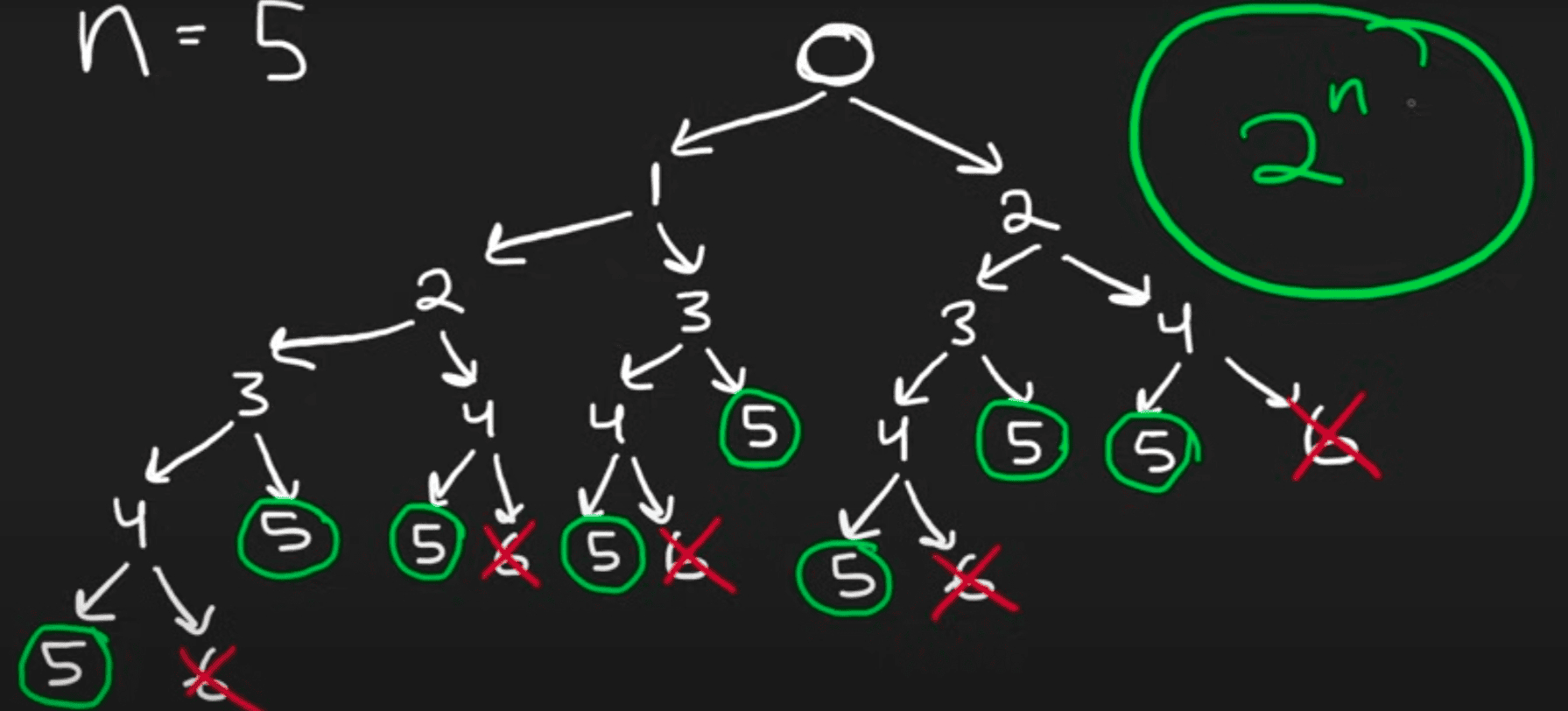
Time Complexity: O(2^n), because each recursion splits into two subproblems.
Space Complexity: O(n), the depth of the recursion stack.
Recursion with Caching:
Time Complexity: O(n^2), because each state is calculated only once.
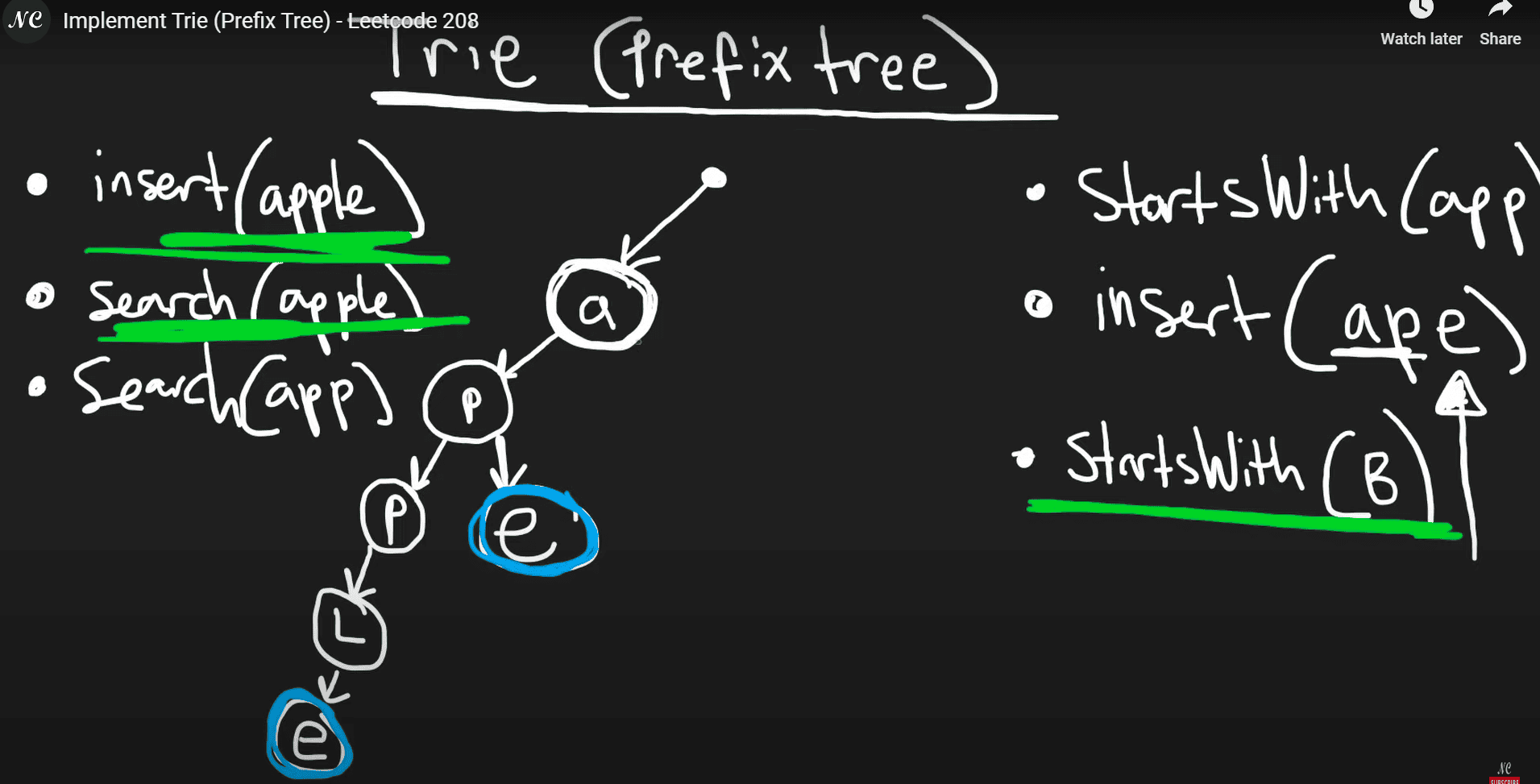
# A prefix tree is particularly efficient for judging string prefixes because the characters at each level are fixed, for example, 26 characters. The time complexity is the size of the character set.classTrie:def __init__(self):self.root = TrieNode()definsert(self, word:str)->None: cur =self.root
for c in word:# Traverse the string if c notin cur.children: cur.children[c]= TrieNode() cur = cur.children[c]# Move to the next pointer cur.isEndChar =Truedefsearch(self, word:str)->bool: cur =self.root
for c in word:if c notin cur.children:returnFalse cur = cur.children[c]return cur.isEndChar # The last character of the string defstartsWith(self, prefix:str)->bool: cur =self.root
for c in prefix:if c notin cur.children:returnFalse cur = cur.children[c]returnTrue
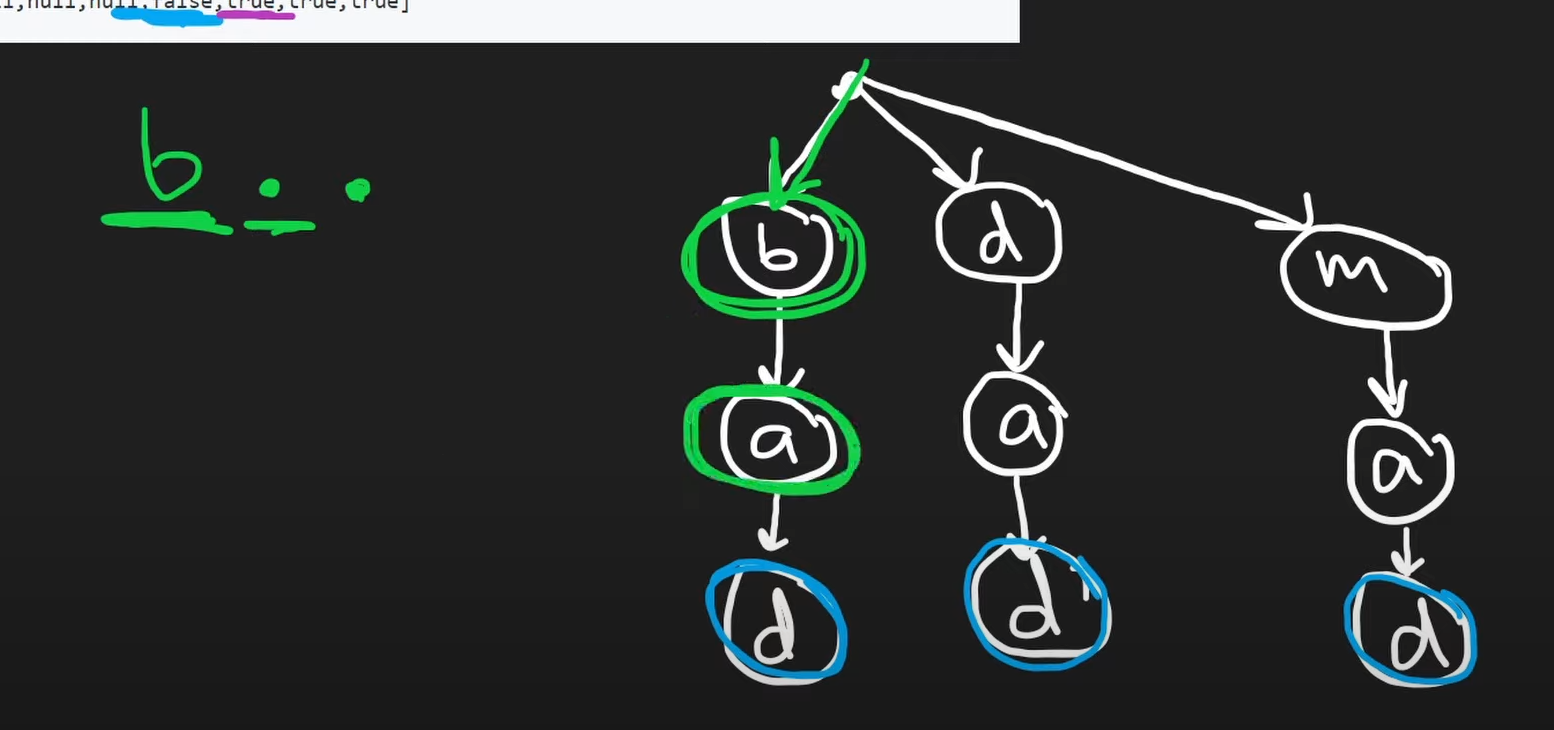
# The sticking point is: how to think recursively to solve the problem. Recursion is essentially determining if it's the same subproblem, and if so, just call it.classTrie:def __init__(self):self.root = TrieNode()definsert(self, word:str)->None: cur =self.root
for c in word:# Traverse the string if c notin cur.children: cur.children[c]= TrieNode() cur = cur.children[c]# Move to the next pointer cur.isEndChar =Truedefsearch(self, word:str)->bool:defisFind(offset, node): cur = node
for i inrange(offset,len(word)): c = word[i]if c !='.':if c notin cur.children:returnFalse cur = cur.children[c]else:# Need to check all child nodes for child in cur.children.values():if isFind(i +1, child):returnTrue# If no match is found returnFalsereturn cur.isEndChar
return isFind(0,self.root)# The last character of the string classWordDictionary:def __init__(self):self.trie = Trie()defaddWord(self, word:str)->None:self.trie.insert(word)defsearch(self, word:str)->bool:returnself.trie.search(word)
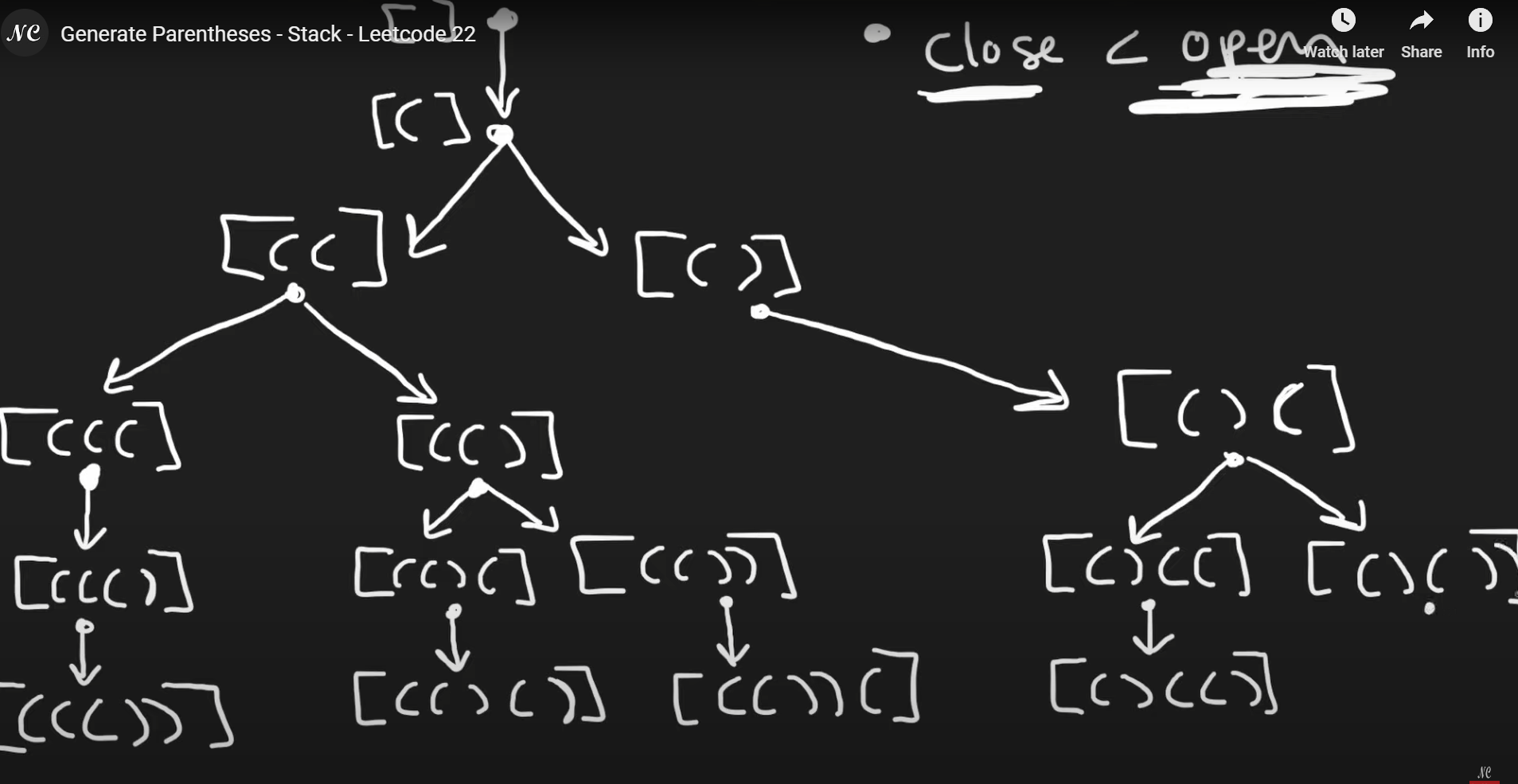
# openN < 3, closeN < 3# openN > closeN can add ')'# openN == closeN == 3, exitclassSolution:defgenerateParenthesis(self, n:int)-> List[str]: stack =[] res =[]# The entire recursive call is the decision tree we drew. The parameters of the recursive call are the two variables we are primarily concerned with, the number of left and right parentheses.defbacktrack(openN, closeN):# Backtrackingif openN == closeN == n: res.append("".join(stack))# Understand that Python's join first selects a "template" or "glue", and then tells the list "please use it to assemble yourself"return# You'll find that backtracking calls the recursive function twice. Each time is a new attempt. And you have to restore the scene. # The restoration of the scene here is the restoration of the stack.if openN < n: stack.append('(') backtrack(openN+1, closeN) stack.pop()# Backtrack to restore the scene, ensuring the state of other recursive branches is correct.if openN > closeN:# The key logic to ensure a valid combination, this actually **prunes** the tree, avoiding recursive calls for invalid combinations. stack.append(')') backtrack(openN, closeN+1) stack.pop() backtrack(0,0)return res
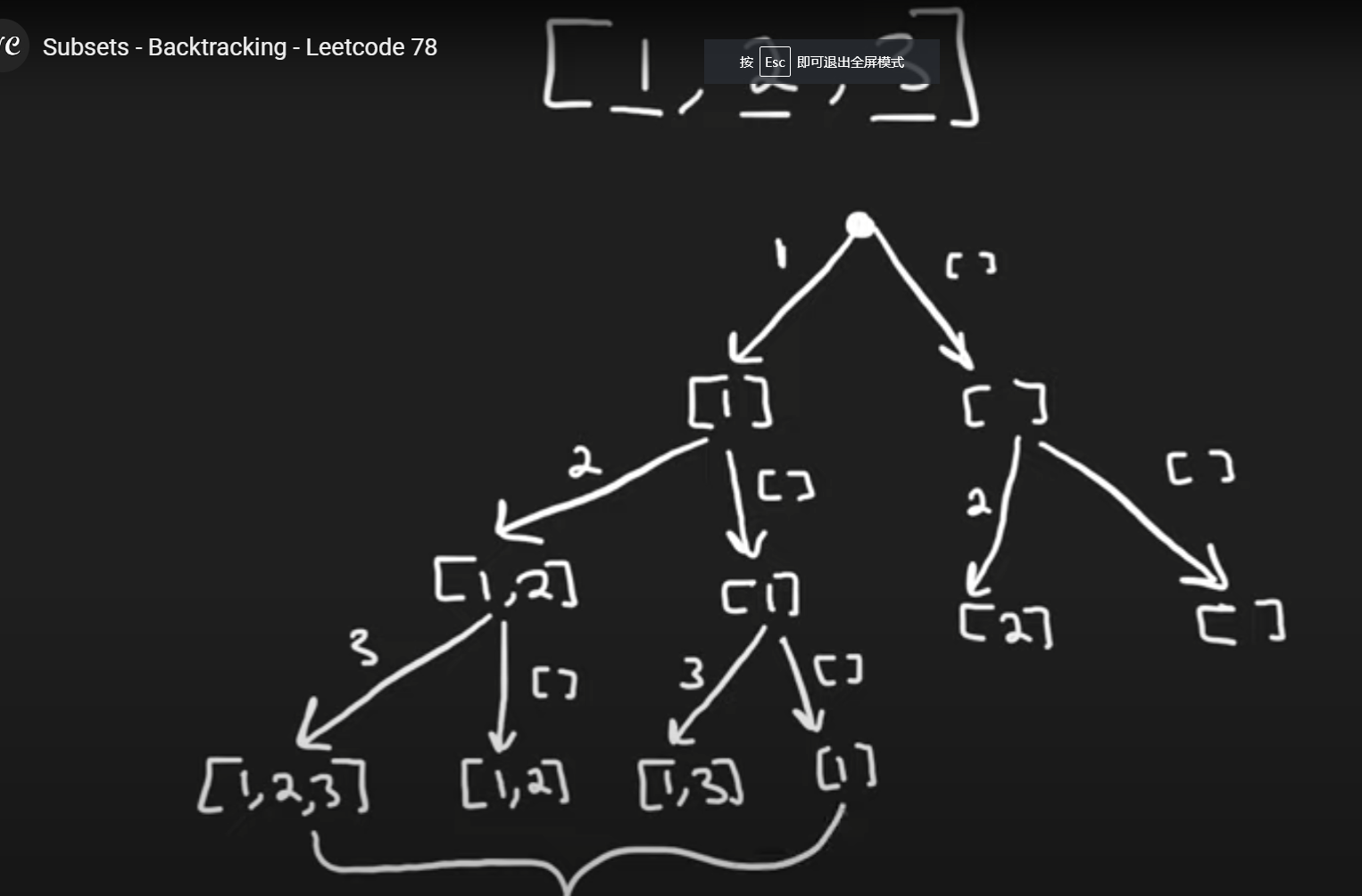
classSolution:defsubsets(self, nums: List[int])-> List[List[int]]:# The sticking point here is: not quite understanding backtracking. # Backtracking is actually a recursive tree or decision tree, where each node makes a decision. If you use brute force, the time complexity will be very high. # There are 2^n permutations and combinations, and our array length is n. We need to traverse the array to try every situation, so the time complexity is n * 2^n. res =[] subsets =[]defdfs(i):# Here i represents the index of the array. if i >=len(nums):# This means every element has been decided. res.append(subsets.copy())# Note that you must use a copy here, because subsets will be modified every time dfs is executed. return# Decide to add nums[i] subsets.append(nums[i])# Then recursively decide the next element. dfs(i +1)# Or decide not to add. Restoring the scene is also restoring the stack. subsets.pop() dfs(i +1) dfs(0)return res
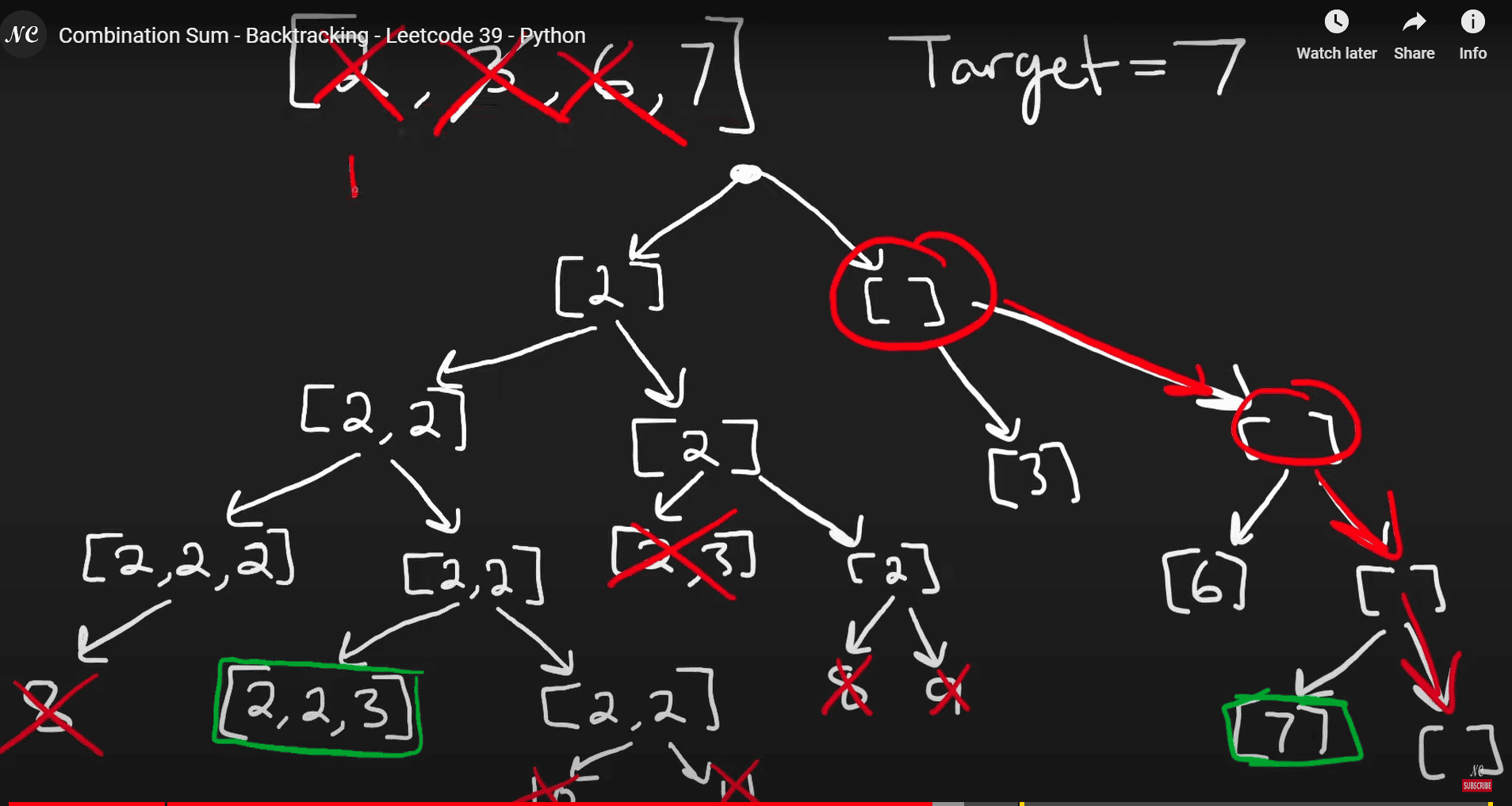
classSolution:defcombinationSum(self, candidates: List[int], target:int)-> List[List[int]]:# Still a decision tree res =[]defdfs(cur, i, total):# Here we need the sum of the current node, the pointer i of nums, and the current result cur # Handle the base case if total == target: res.append(cur.copy())# Note that you need to copy cur here, because this variable will be modified every time return# End recursion if i >=len(candidates)or total > target:return# End recursion # Include the current node cur.append(candidates[i])# Recursive decision dfs(cur, i, total + candidates[i])## Note that i remains unchanged here, because it can still be used, and total needs to be changed # Do not include the current node cur.pop() dfs(cur, i +1, total)# Here i needs to be +1, because it is not included, and total does not change dfs([],0,0)return res
classSolution:defpermute(self, nums: List[int])-> List[List[int]]:# Draw the recursion tree from top to bottom, then come up from the bottom to re-establish the permutation. result =[]# Handle only one element. iflen(nums)==0:return[nums.copy()]for i inrange(len(nums)): num = nums.pop(0)# Remove the first element. perms =self.permute(nums)# Then recursively find the permutations of the remaining elements. for i in perms: perm = i.append(num)# Here i is an array. For each combination, append the removed element back. result.extend(perms)# Get the combination. nums.append(num)# Append the originally removed element back. return result
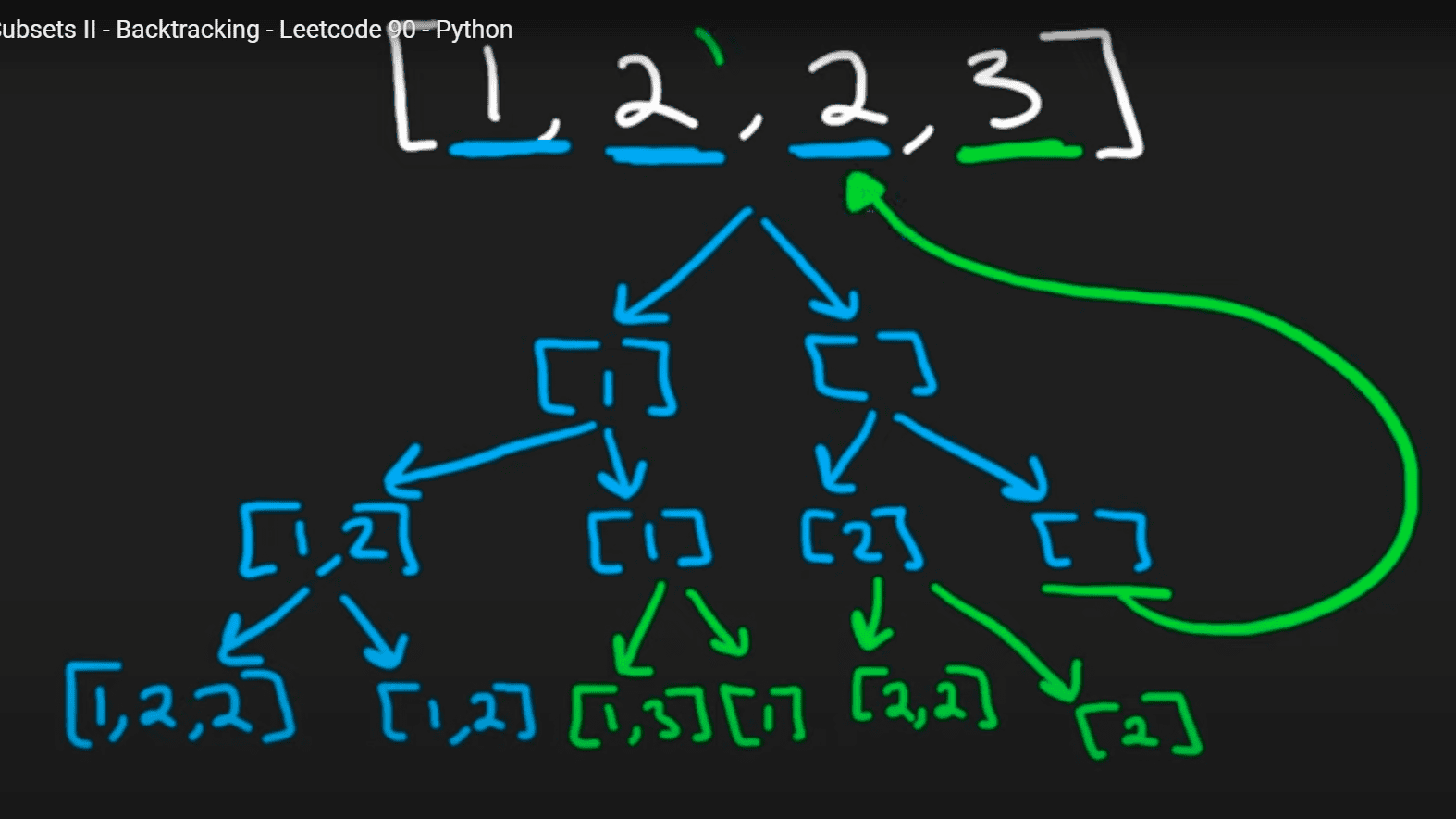
classSolution:defsubsetsWithDup(self, nums: List[int])-> List[List[int]]:# The key is to skip duplicate elements to avoid duplicate combinations. res =[] nums.sort()# Ensure duplicate elements are together. defbacktracking(i, subset):# subset is the result of each recursion. if i ==len(nums):# Pointer reaches the end. return res.append(subset[::])# Copy the set. # include current subset.append(nums[i]) backtracking(i +1, subset)# Recurse on the left subtree. subset.pop()# Restore the value of subset.# not include current while i +1<len(nums)and nums[i]== nums[i +1]:# Skip duplicate elements. i +=1 backtracking(i +1, subset)# Recurse on the right subtree. backtracking(0,[])return res
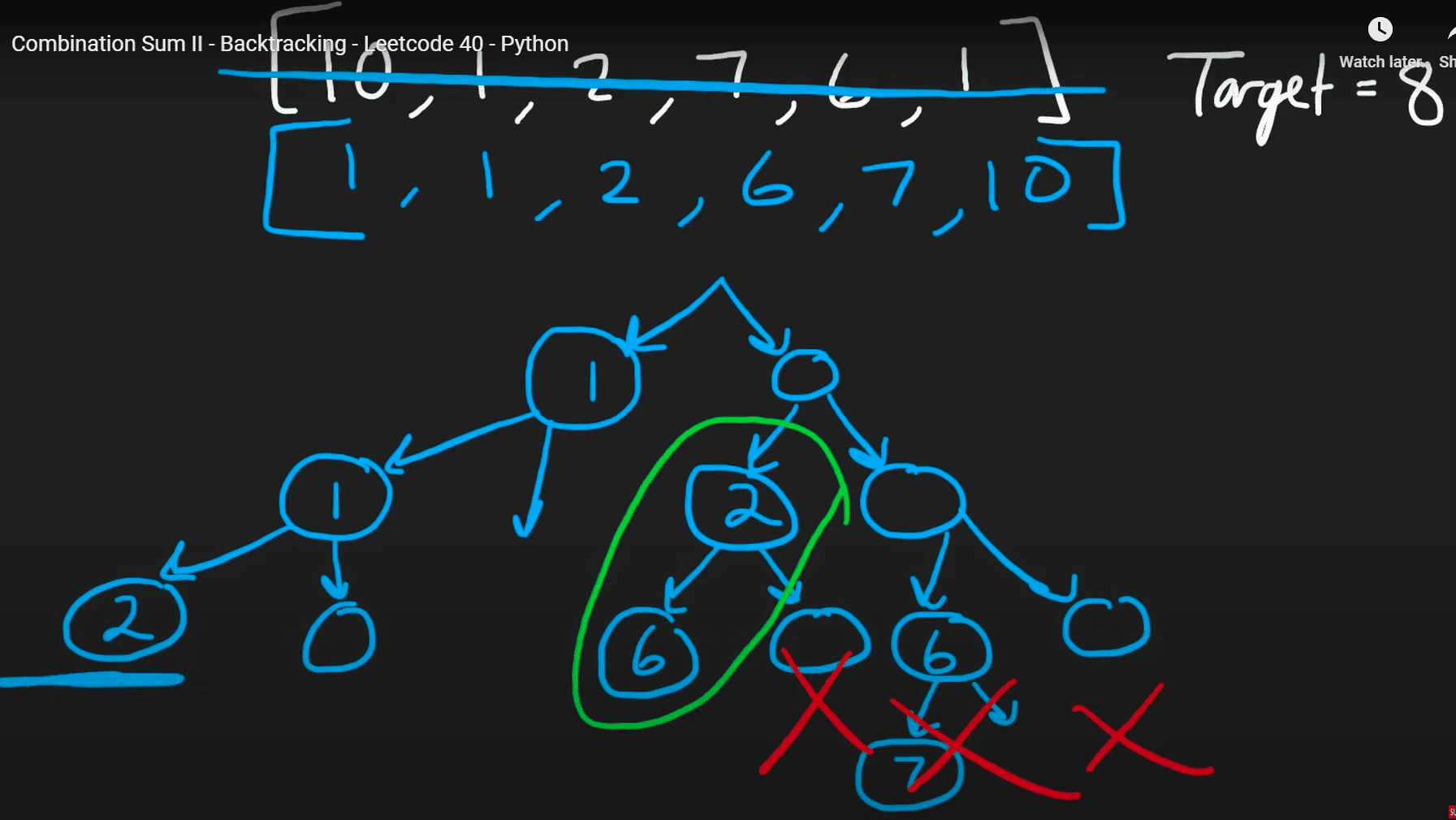
classSolution:defcombinationSum2(self, candidates: List[int], target:int)-> List[List[int]]:# The key point is: the difference here is that there are duplicate elements, so you can't simply use a decision tree. # You need to candidates.sort() res =[]defbacktracking(cur, pos, target):# cur is the current result # Base case if target ==0: res.append(cur.copy())if target <=0:return prev =-1for i inrange(pos,len(candidates)):# This is the key point, you need to skip duplicate nodes and continue to call backtracking. If there are no duplicates, you don't need this for loop. if prev == candidates[i]:continue# Include this element cur.append(candidates[i]) backtracking(cur, i +1, target - candidates[i])# Traverse the left and right subtrees cur.pop()# Return from recursion prev = candidates[i] backtracking([],0, target)return res
classSolution:defexist(self, board: List[List[str]], word:str)->bool: rows, cols =len(board),len(board[0]) path =set()defdfs(r, c, i):if i ==len(word):returnTrueif(r <0or c <0or r >= rows or c >= cols or word[i]!= board[r][c]or(r, c)in path):returnFalse path.add((r,c)) res =(dfs(r +1, c, i +1)or dfs(r -1, c, i +1)or dfs(r, c+1, i +1)ordfs(r, c-1, i +1))path.remove((r,c))return res
for r inrange(rows):for c inrange(cols):if dfs(r,c,0):returnTrue
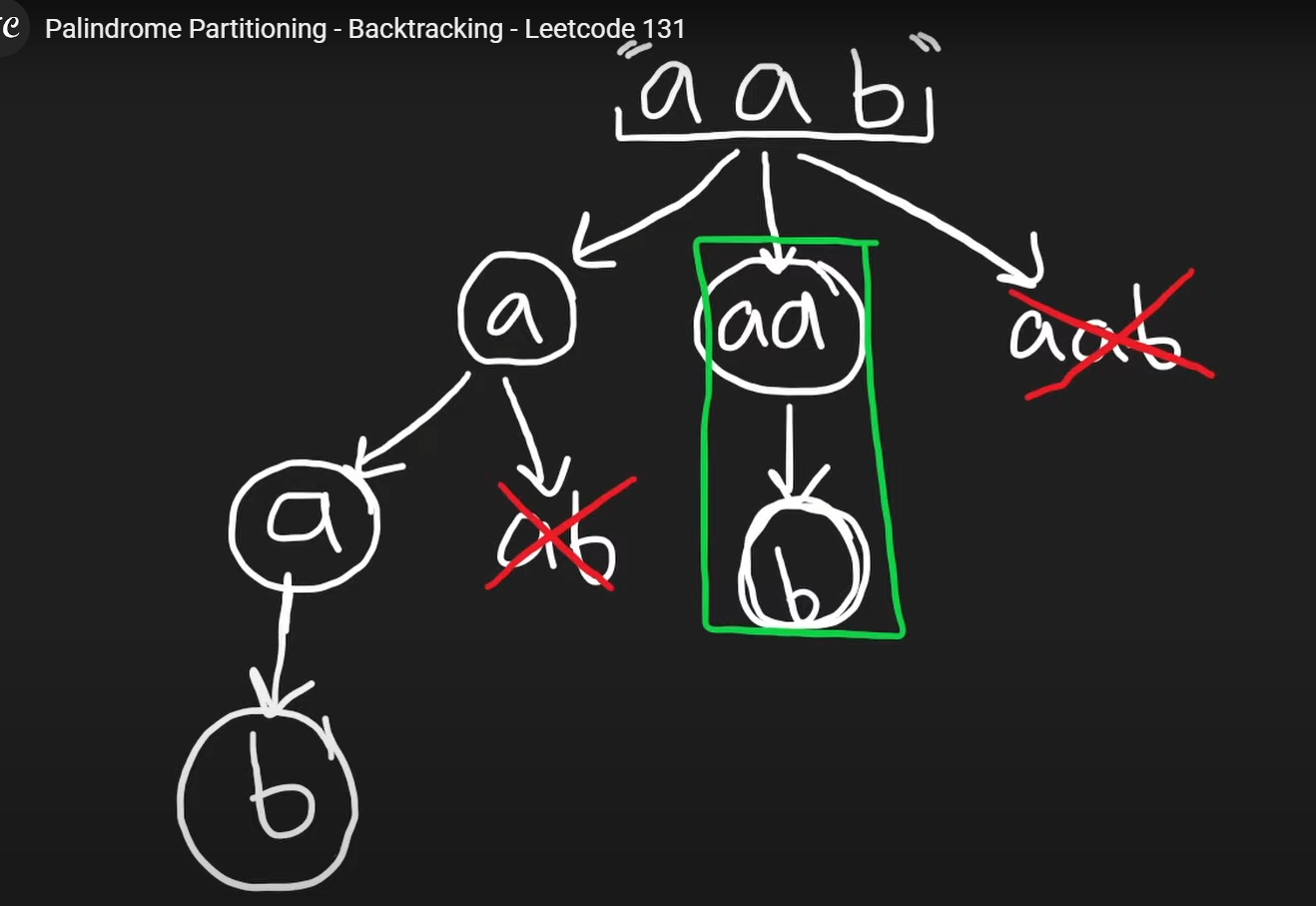
classSolution:defpartition(self, s:str)-> List[List[str]]: res =[] part =[]defdfs(i):if i >=len(s): res.append(part.copy())returnfor j inrange(i,len(s)):ifself.isPal(s, i, j): part.append(s[i:j +1]) dfs(j +1) part.pop() dfs(0)return res
defisPal(self, s, l, r):while l < r:if s[l]!= s[r]:returnFalse l, r = l +1, r -1returnTrue
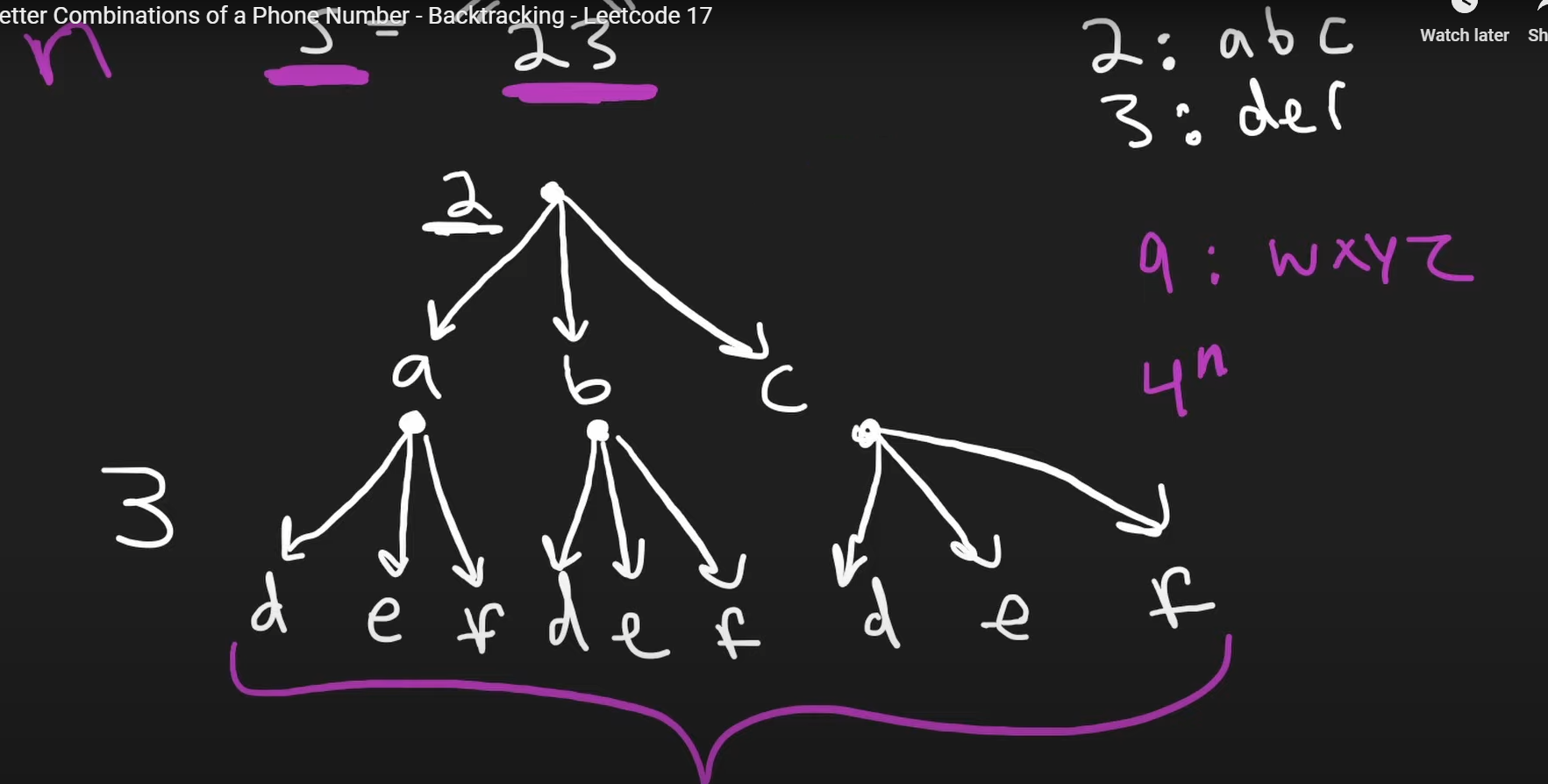
classSolution:defletterCombinations(self, digits:str)-> List[str]: res =[] digital2Char ={'2':'abc','3':'def','4':'ghi','5':'jkl','6':'mno','7':'pqrs','8':'tuv','9':'wxyz'}defdfs(i, curStr):iflen(curStr)==len(digits): res.append(curStr)returnfor c in digital2Char[digits[i]]: dfs(i +1, curStr + c)if digits: dfs(0,'')return res
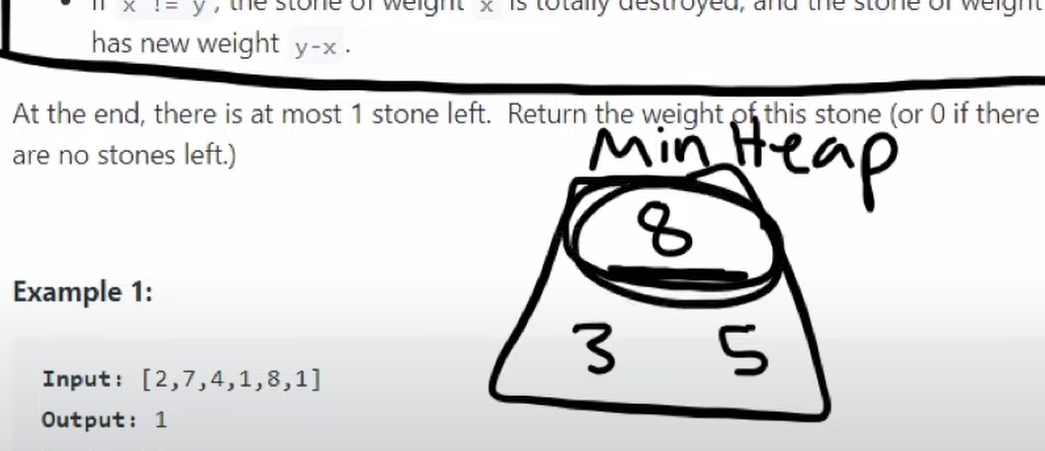
classSolution:deflastStoneWeight(self, stones: List[int])->int: stores =[-s for s in stones] heapq.heapify(stores)whilelen(stores)>1:# When the number of elements in the heap is greater than 2 first = heapq.heappop(stores) second = heapq.heappop(stores)if first < second: heapq.heappush(stores, first - second)# Note that they are all negative numbers stores.append(0)# Boundary case when stores is emptyreturnabs(stores[0])
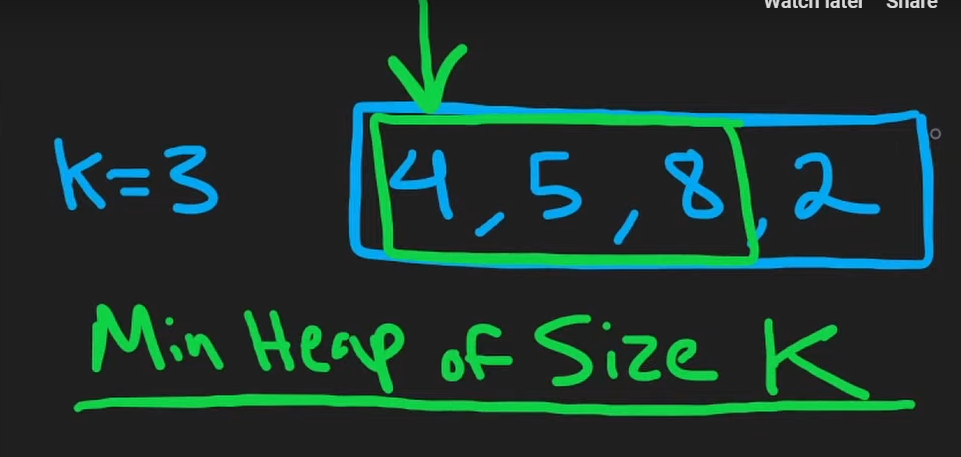
classKthLargest:def __init__(self, k:int, nums: List[int]):self.minHeap,self.k = nums, k
heapq.heapify(self.minHeap)# Time complexity is nlogn whilelen(self.minHeap)> k: heapq.heappop(self.minHeap)defadd(self, val:int)->int: heapq.heappush(self.minHeap, val)# When the total number of elements is greater than k, you need to remove elements from the min-heap # logn time complexity, if it's an array, the complexity is n iflen(self.minHeap)>self.k: heapq.heappop(self.minHeap)returnself.minHeap[0]
# Time complexity is nlognclassSolution:deflastStoneWeight(self, stones: List[int])->int: stores =[-s for s in stones] heapq.heapify(stores)whilelen(stores)>1:# When the number of elements in the heap is greater than 2 first = heapq.heappop(stores) second = heapq.heappop(stores)if first < second: heapq.heappush(stores, first - second)# Note that they are all negative numbers stores.append(0)# Boundary case when stores is empty returnabs(stores[0])
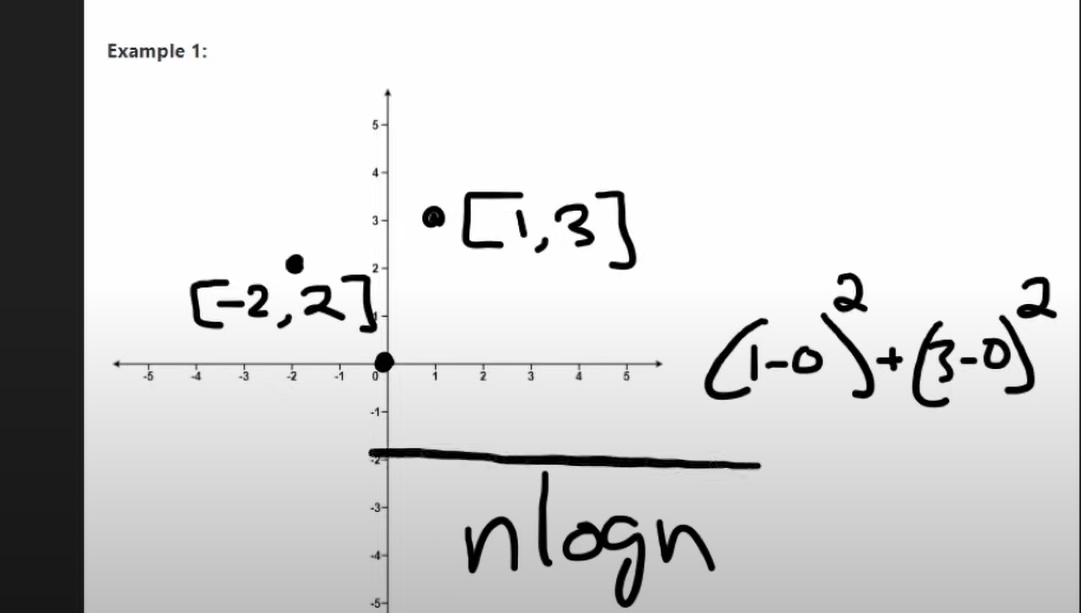
classSolution:defkClosest(self, points: List[List[int]], k:int)-> List[List[int]]:# The key point is to use a min-heap# Calculate the distance minHeap =[]for x, y in points: minHeap.append([x**2+ y**2, x, y]) res =[] heapq.heapify(minHeap)# Note that minHeap here is [10, 1, 2], [8, 1, 2]while k >0: dist, x, y = heapq.heappop(minHeap) res.append([x, y]) k -=1return res
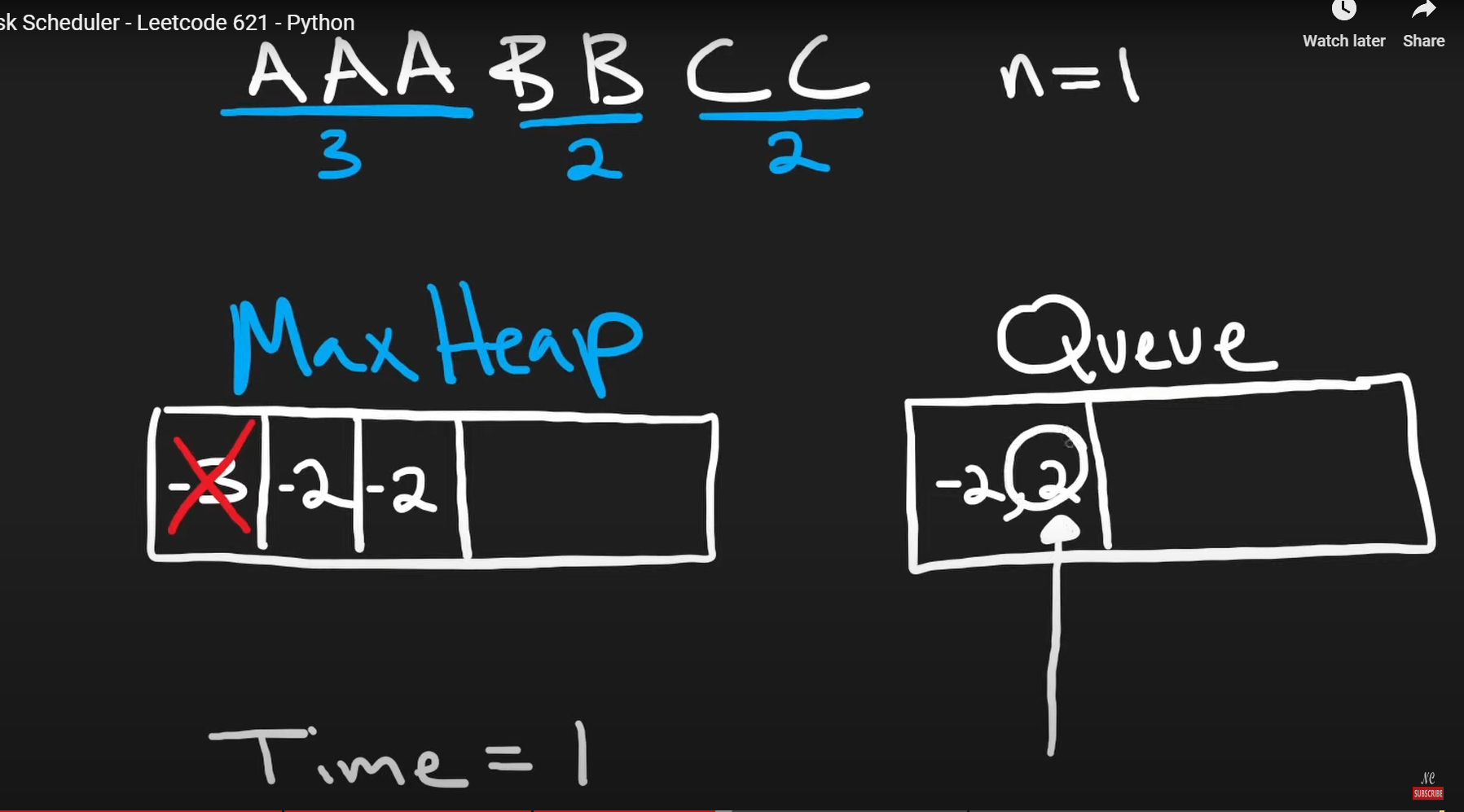
classSolution:defleastInterval(self, tasks: List[str], n:int)->int: counter = Counter(tasks) maxHeap =[-cnt for cnt in counter.values()] heapq.heapify(maxHeap)# Currently to be processed time =0 q = deque()# [-cnt, idletime] Temporarily store and do not processwhile maxHeap or q: time +=1if maxHeap: cnt = heapq.heappop(maxHeap)+1if cnt:# If there are still some q.append([cnt, time + n])if q and q[0][1]== time:# When the idle time is reached, put it back into the heap for processing heapq.heappush(maxHeap, q.popleft()[0])return time
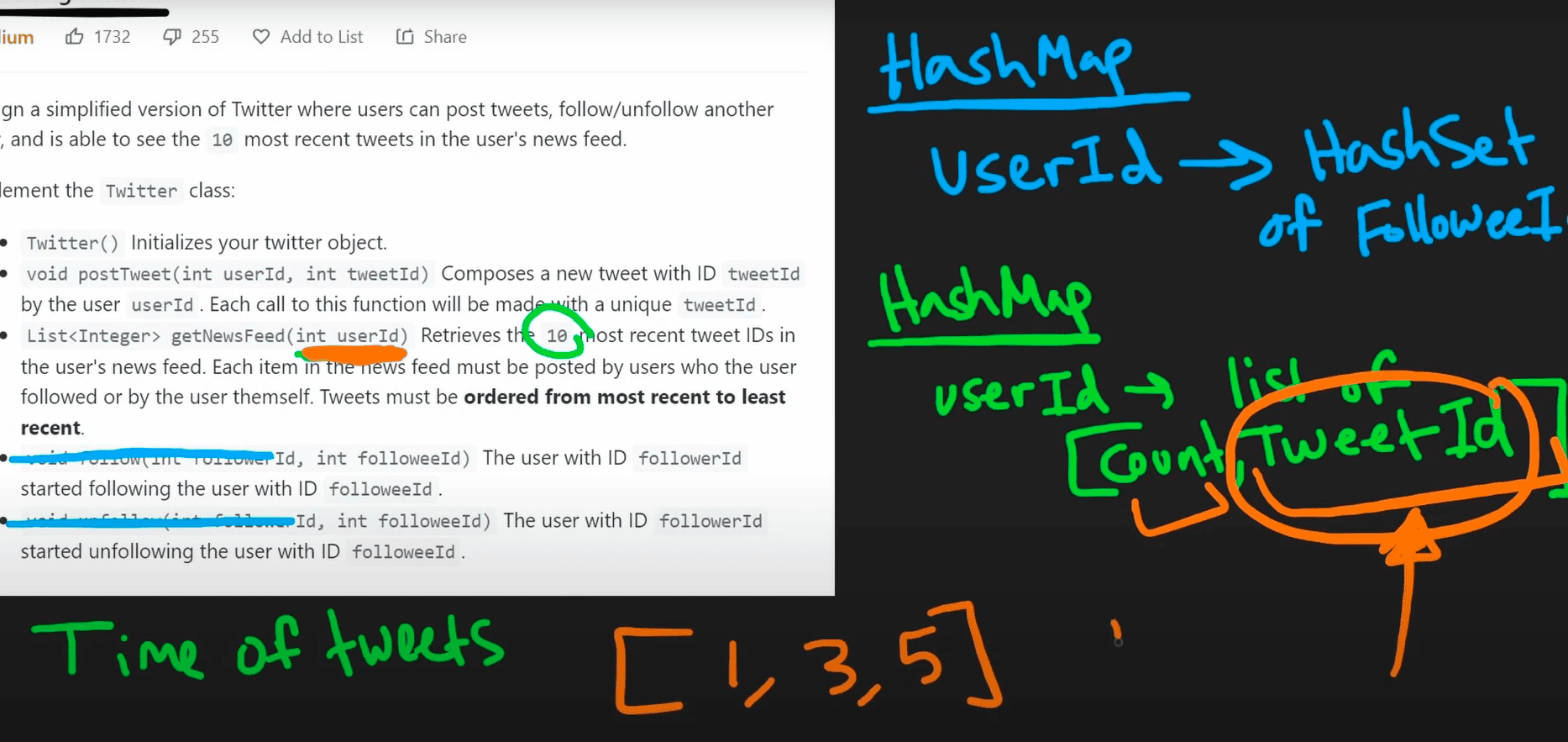
# The use of heaps and hashmaps. There are some usage tips, such as the heap storing index and count as a timeline.classTwitter:def __init__(self):self.followMap = defaultdict(set)# Automatically initializes userId -> [followeeId]self.twitterMap = defaultdict(list)# Automatically initializes userId -> [count, twittwerId]self.count =0# Records the id of the tweet, as a consideration of timedefpostTweet(self, userId:int, tweetId:int)->None:self.twitterMap[userId].append([self.count, tweetId])self.count -=1defgetNewsFeed(self, userId:int)-> List[int]: minHeap =[] res =[]self.followMap[userId].add(userId)# Build the heapfor followee inself.followMap[userId]:if followee inself.twitterMap: index =len(self.twitterMap[followee])-1 count, twitterId =self.twitterMap[followee][index] heapq.heappush(minHeap,[count, twitterId, followee, index -1])# Here index - 1 is to get the previous twittwer heapq.heapify(minHeap)while minHeap andlen(res)<10: count, twitterId, followee, index = heapq.heappop(minHeap) res.append(twitterId)if index >=0:# Get the previous one count, twitterId =self.twitterMap[followee][index] heapq.heappush(minHeap,[count,twitterId,followee,index-1])return res
deffollow(self, followerId:int, followeeId:int)->None:self.followMap[followerId].add(followeeId)defunfollow(self, followerId:int, followeeId:int)->None:if followeeId inself.followMap[followerId]:self.followMap[followerId].remove(followeeId)
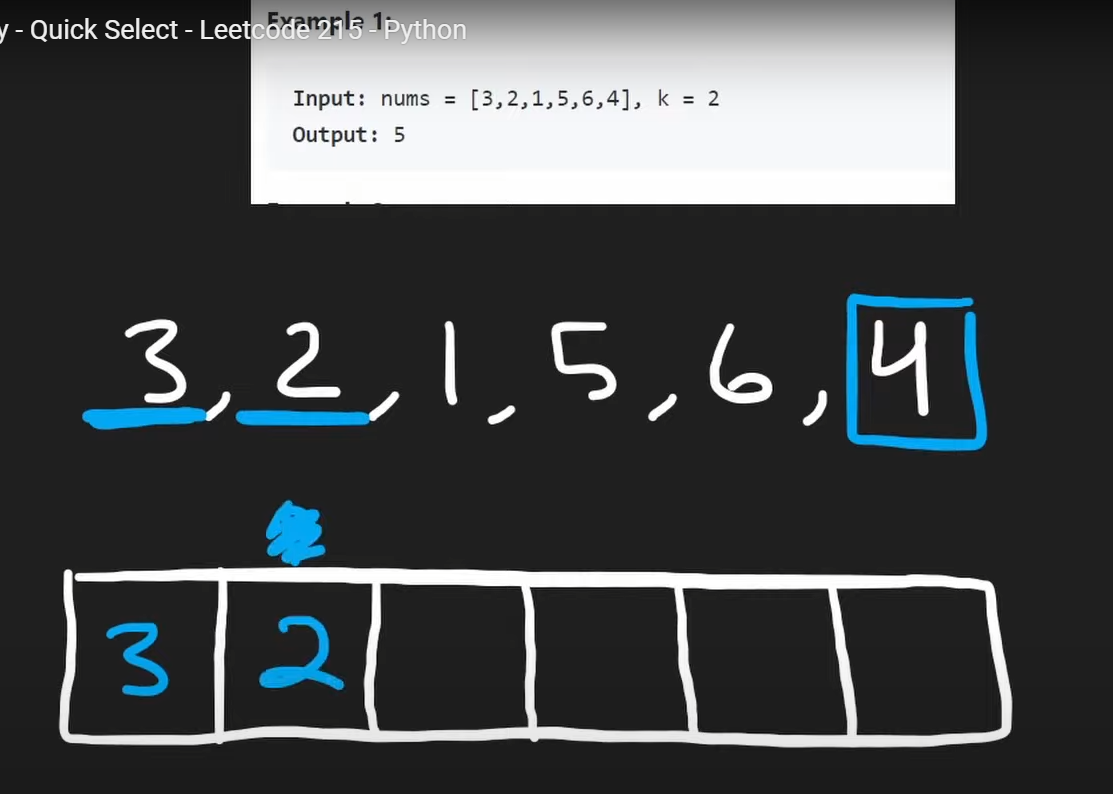
Given an array and an integer k, where k is less than the length of the array, we need to find the k-th smallest element in the array. Assume that all elements in the array are distinct.
Input:
arr[] = {7, 10, 4, 3, 20, 15}
k = 3
Output:
7
Input:
arr[] = {7, 10, 4, 3, 20, 15}
k = 4
Output:
10
After sorting the array, directly return the k-th smallest element.
Implementation Code
functiongetKthSmallest(arr: number[],k: number):number{constsortedArr=arr.sort((a,b)=>a-b);// Sort in ascending order
returnsortedArr[k-1];// Return the k-th smallest element
}
The time complexity of sorting is O(n log n), where n is the length of the array.
The space complexity is O(1) (if sorted in-place) or O(n) (if a new array is created).
You can use a heap to optimize the process of finding the k-th smallest element, avoiding sorting the entire array.
Min-Heap:
Build a min-heap, and pop the top element k-1 times. The final top element is the k-th smallest element.
The time complexity is O(n + k log n).
Max-Heap:
Build a max-heap of size k, and maintain the size of the heap while traversing the array.
If the current element is smaller than the top element of the heap, replace the top element and adjust the heap.
The final top element of the heap is the k-th smallest element.
The time complexity is O(n log k).
functiongetKthSmallestUsingHeap(arr: number[],k: number):number{constmaxHeap=newMaxHeap();for(leti=0;i<arr.length;i++){if(maxHeap.size()<k){maxHeap.insert(arr[i]);// Insert into the heap
}elseif(arr[i]<maxHeap.peek()){maxHeap.extractMax();// Remove the top of the heap
maxHeap.insert(arr[i]);// Insert the new element
}}returnmaxHeap.peek();// The top of the heap is the k-th smallest element
}// Assume MaxHeap is a well-implemented max-heap class
classMaxHeap{privateheap: number[]=[];insert(value: number){this.heap.push(value);this.heapifyUp(this.heap.length-1);}extractMax():number{constmax=this.heap[0];this.heap[0]=this.heap[this.heap.length-1];this.heap.pop();this.heapifyDown(0);returnmax;}peek():number{returnthis.heap[0];}size():number{returnthis.heap.length;}privateheapifyUp(index: number){while(index>0){constparentIndex=Math.floor((index-1)/2);if(this.heap[parentIndex]>=this.heap[index])break;[this.heap[parentIndex],this.heap[index]]=[this.heap[index],this.heap[parentIndex]];index=parentIndex;}}privateheapifyDown(index: number){while(true){constleftChildIndex=2*index+1;constrightChildIndex=2*index+2;letlargestIndex=index;if(leftChildIndex<this.heap.length&&this.heap[leftChildIndex]>this.heap[largestIndex]){largestIndex=leftChildIndex;}if(rightChildIndex<this.heap.length&&this.heap[rightChildIndex]>this.heap[largestIndex]){largestIndex=rightChildIndex;}if(largestIndex===index)break;[this.heap[index],this.heap[largestIndex]]=[this.heap[largestIndex],this.heap[index]];index=largestIndex;}}}
Building the heap: O(n log k).
Space complexity: O(k) (the size of the heap is limited to k).
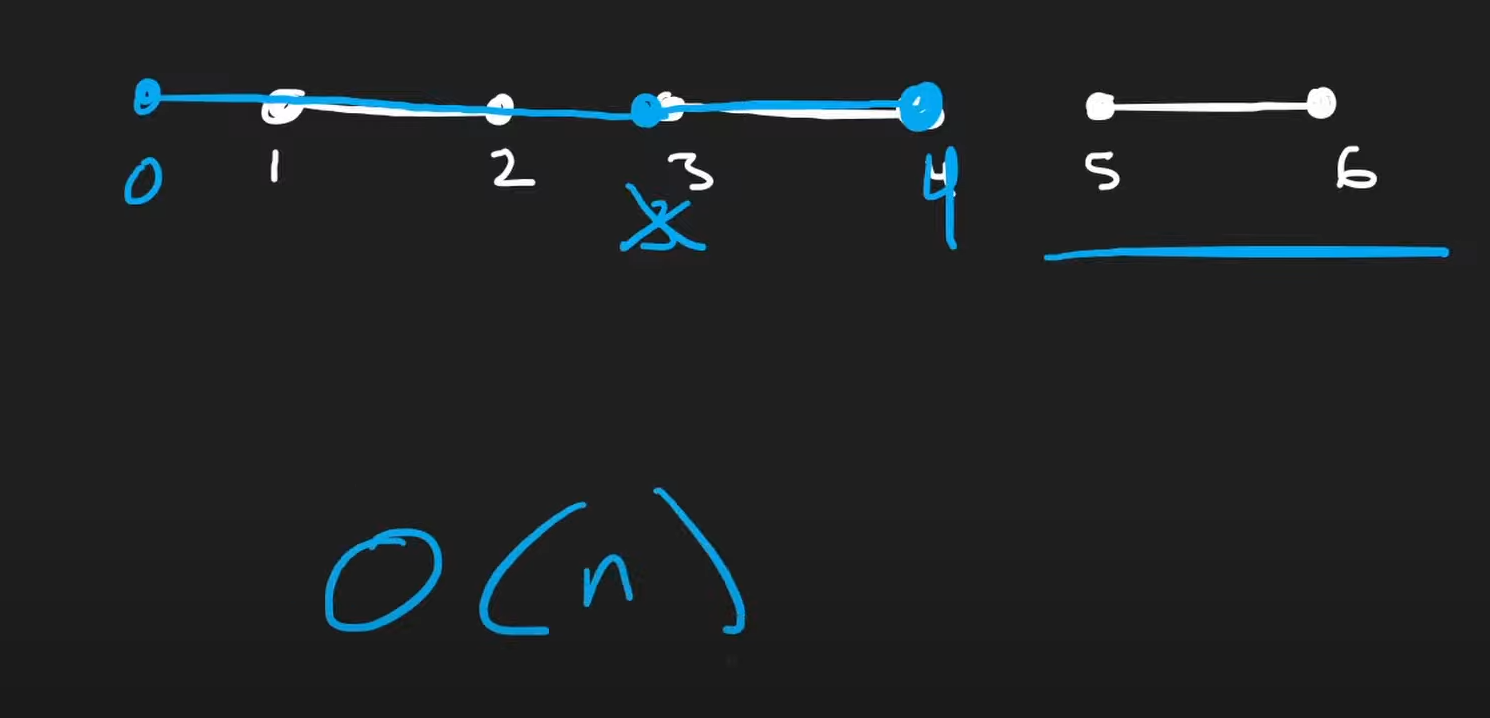
classSolution:definsert(self, intervals: List[List[int]], newInterval: List[int])-> List[List[int]]:# Essentially, you need to check for overlaps. First, think through all the cases, summarize them, don't enumerate them one by one, the code will be a mess. res =[]for i inrange(len(intervals)):if newInterval[1]< intervals[i][0]:# On the left res.append(newInterval)return res + intervals[i:]# Merge all subsequent resultselif newInterval[0]> intervals[i][1]:# On the right res.append(intervals[i])else:# Overlapped, merge them newInterval =[min(newInterval[0], intervals[i][0]),max(newInterval[1], intervals[i][1])]# If the condition on the left above is not met, ensure that newInterval will be inserted res.append(newInterval)return res
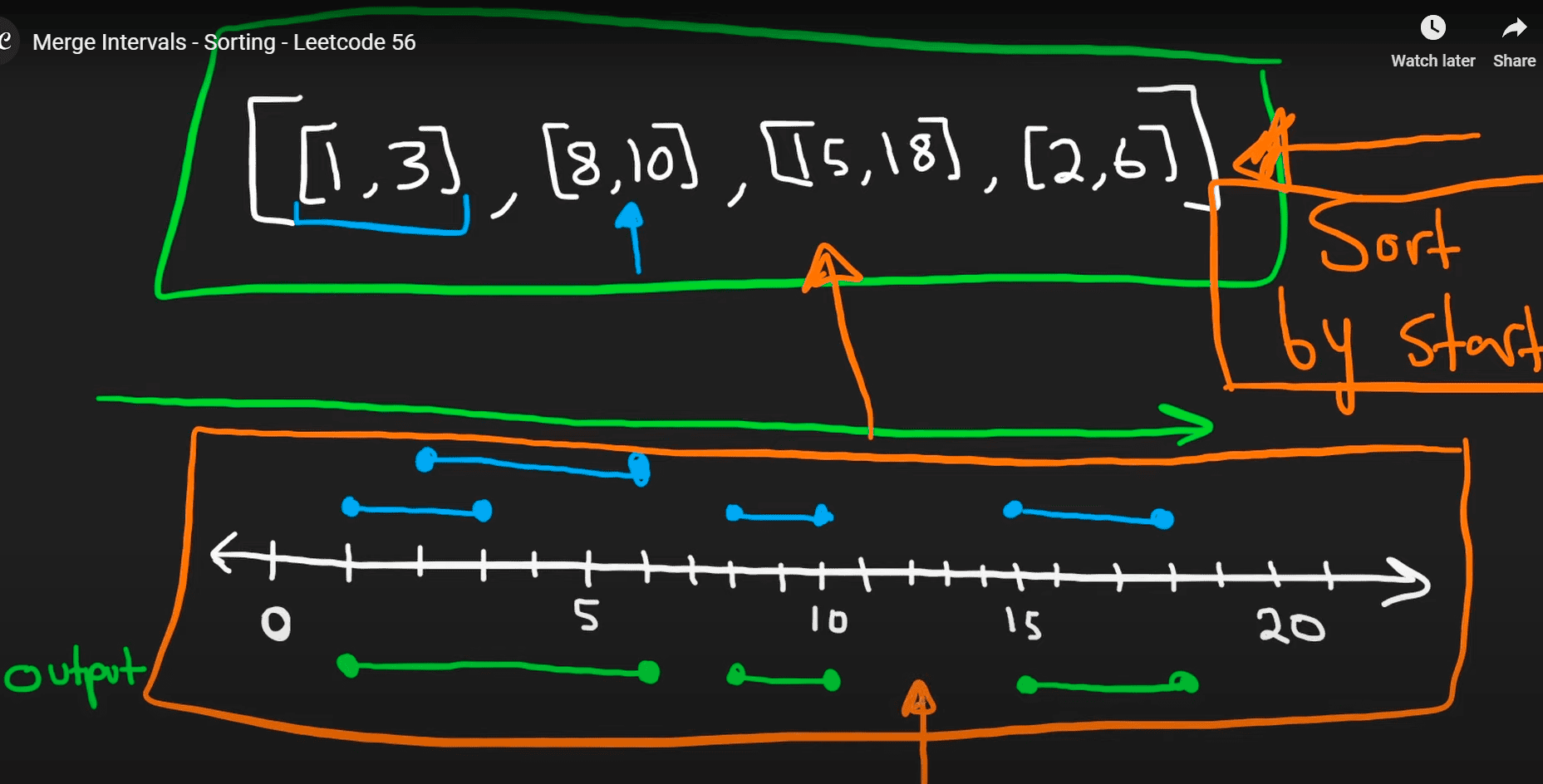
# No black magic, just normal thinkingclassSolution:defmerge(self, intervals: List[List[int]])-> List[List[int]]: intervals.sort(key =lambda i:i[0]) output =[intervals[0]]for start, end in intervals[1:]: lastEnd = output[-1][1]if start <= lastEnd:# Overlap, need to merge output[-1][1]=max(output[-1][1], end)else: output.append([start, end])return output
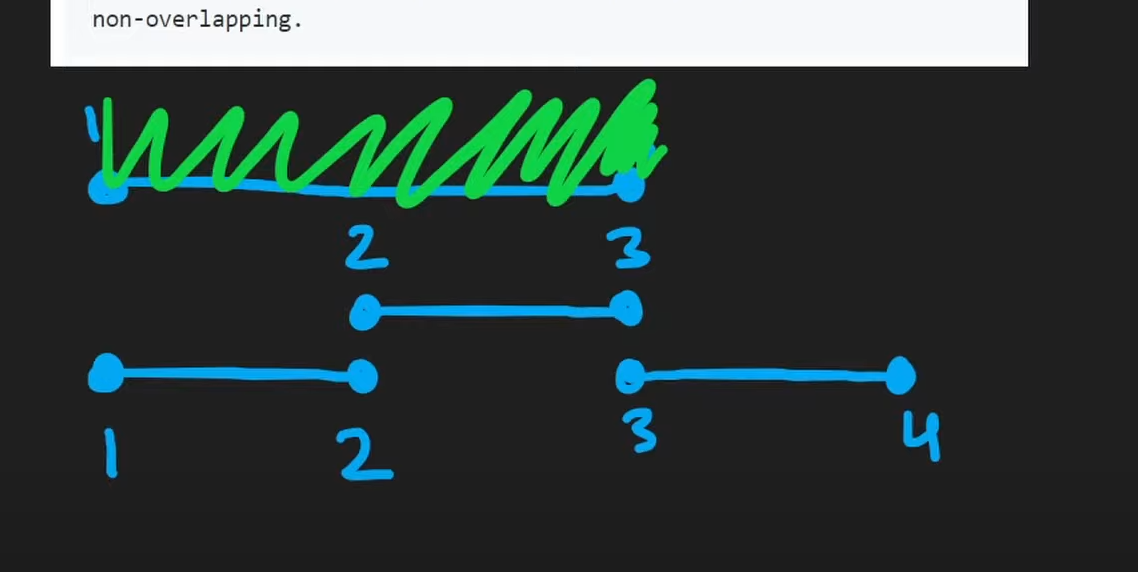
classSolution:deferaseOverlapIntervals(self, intervals: List[List[int]])->int:# The key point is to sort the input# Then if two adjacent intervals overlap. You need to keep the one with the smaller end, because this makes the possibility of overlap smaller intervals.sort() res =0 prevEnd = intervals[0][1]# Need to keep the end of the previous mergefor start, end in intervals[1:]:if start >= prevEnd:# No overlap prevEnd = end
else: res +=1 prevEnd =min(end, prevEnd)# Remove one. It's not really removed here, just mergedreturn res
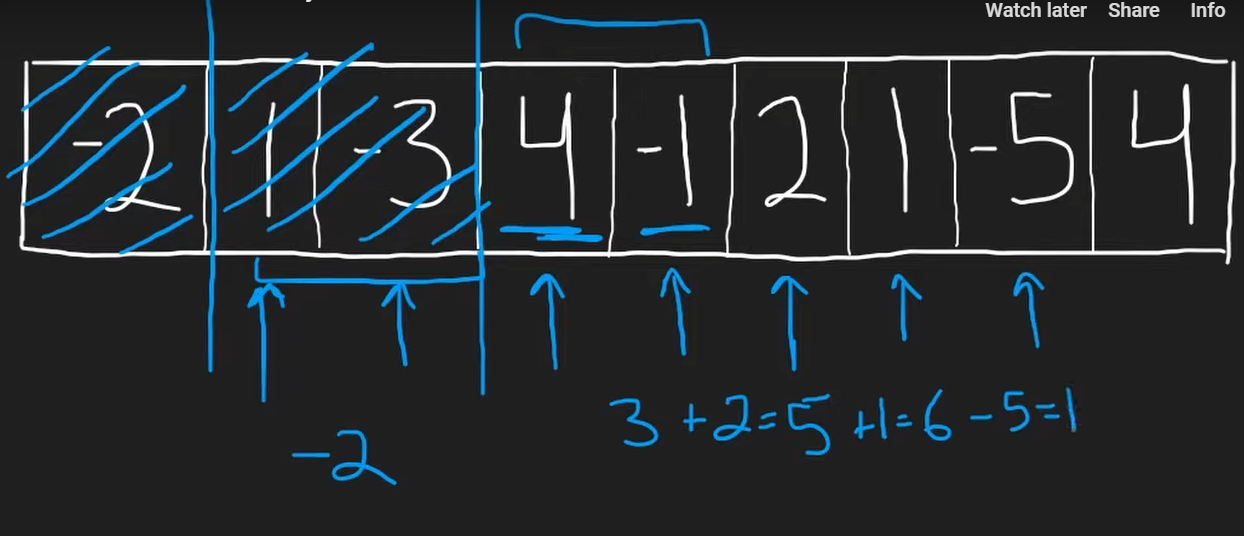
# This uses a greedy algorithm. When you are no longer helping the total sum, and it becomes 0 or negative, you discard it. Because you are not helping to find the maximum sum.classSolution:defmaxSubArray(self, nums: List[int])->int: maxSum = nums[0]# Record the current maximum sum curSum =0# Calculate the sumfor i in nums:if curSum <0:# If it's not helping the sum, just get rid of it curSum =0 curSum += i
maxSum =max(curSum, maxSum)return maxSum
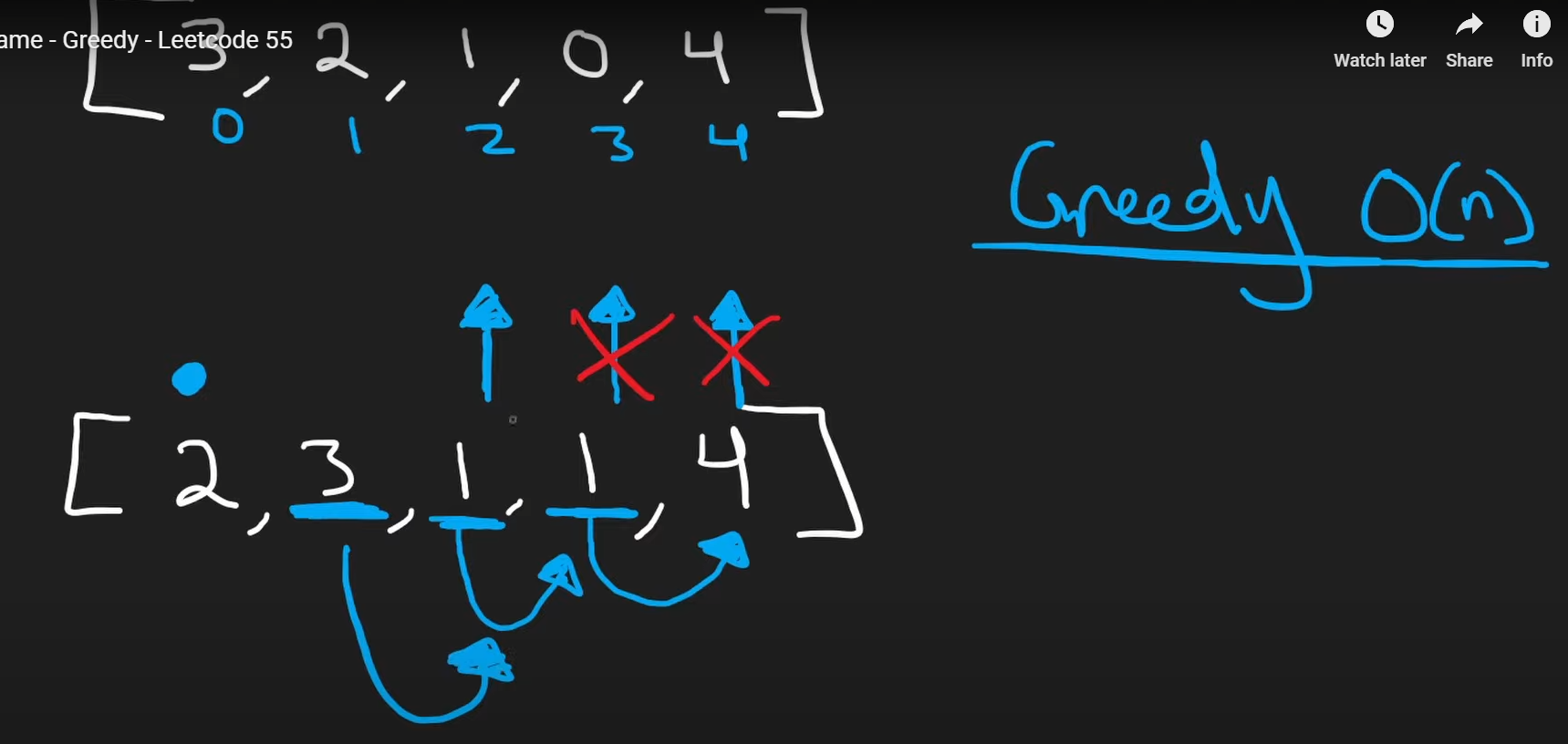
classSolution:defcanJump(self, nums: List[int])->bool:# This is a dp problem, which can be solved by brute force.# The worst-case time complexity is n^n, because this is a decision tree, and using it or not is 2^n. The branch here is n, so it's n^n.# By caching repeated calculations, the time complexity can be reduced to n^2 (why n^2? Because the cache is based on your last visit, which is two for loops).# The time complexity of the greedy algorithm can reach n.# The core of the greedy algorithm is to go from right to left, and judge whether the last element can reach the next target. goal =len(nums)-1for i inrange(len(nums)-1,-1,-1):# From back to front, the step is -1if i + nums[i]>= goal:# This means the previous number can reach the end, so we move the end one step forward. goal = i
returnTrueif goal ==0elseFalse
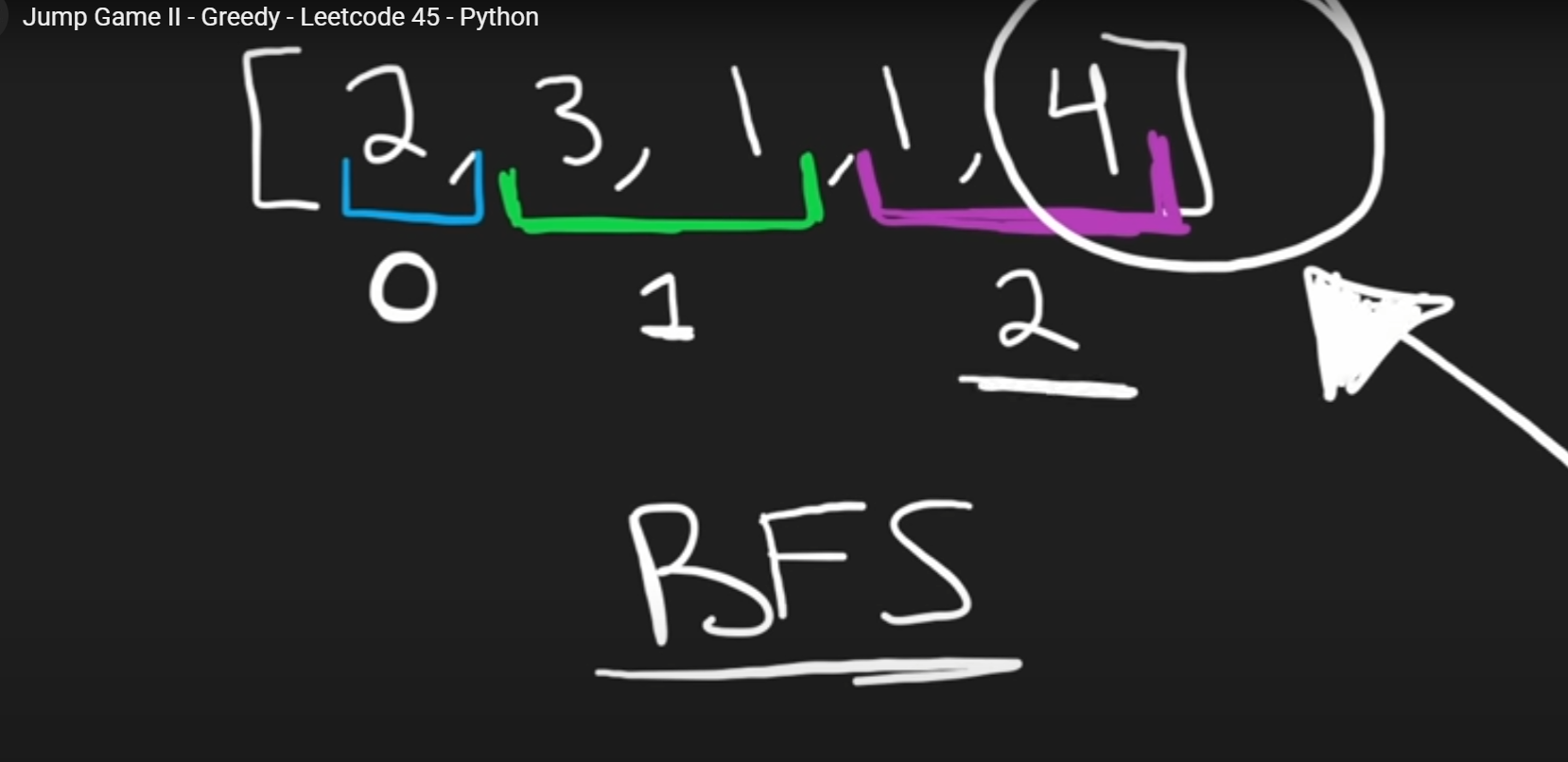
classSolution:defjump(self, nums: List[int])->int:# The key point is to calculate the farthest distance that can be jumped currently. Then calculate the number of blocks, which is the number of jumps. res =0 l =0# Moving window r =0 fartest =0while r <len(nums)-1:# Not yet reached the end# BFS traversal, what is the farthest distance that can be jumpedfor i inrange(l, r +1): fartest =max(i+nums[i], fartest) l = r +1# Update the sliding window r = fartest
# Each time the sliding window is updated, it represents the number of jumps res +=1return res
# Intuitive solution. A bit hard to understand.classSolution:defcanCompleteCircuit(self, gas: List[int], cost: List[int])->int:ifsum(gas)<sum(cost):return-1 total =0 res =0for i inrange(len(gas)): total +=(gas[i]- cost[i])if total <0: total =0# Reset res = i +1# Next onereturn res
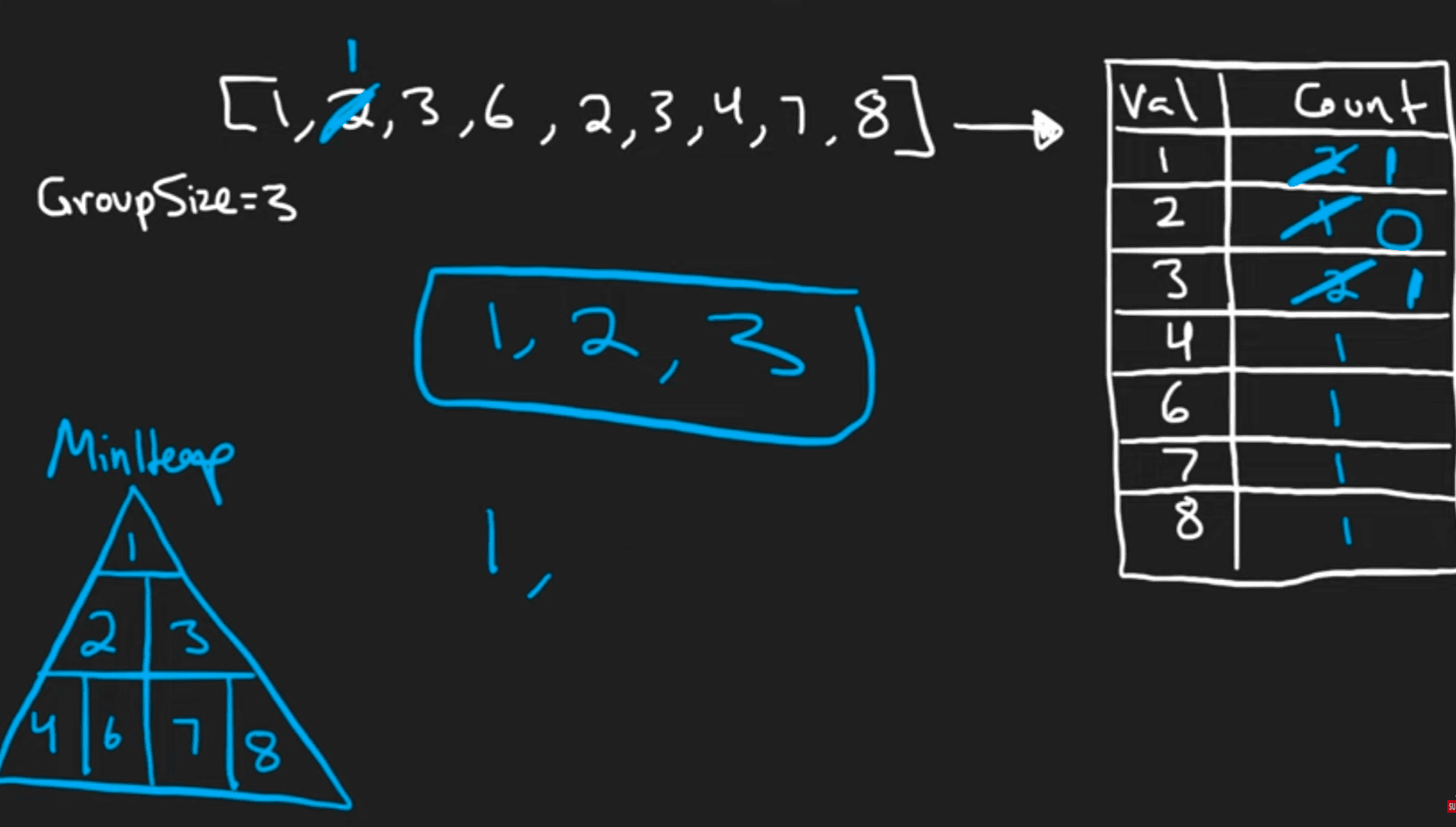
classSolution:defisNStraightHand(self, hand: List[int], groupSize:int)->bool:# The key point is: always take the smallest value, then group it. If the group is successful, subtract the count of this value. # Need to count the number of each value.iflen(hand)% groupSize:returnFalse count ={}# Or use Counterfor i in hand: count[i]=1+ count.get(i,0)# Assemble all keys into a heap minHeap =list(count.keys()) heapq.heapify(minHeap)while minHeap: first = minHeap[0]for i inrange(first, first + groupSize):if i notin count:# If not found in the hashmap, it means the group was not formed successfullyreturnFalse count[i]-=1# If the group is successful, subtract one from the countif count[i]==0:# This number has been completely groupedif i != minHeap[0]:# This means the grouped number is no longer the smallest number, and a number has been missedreturnFalse heapq.heappop(minHeap)returnTrue
classSolution:defmergeTriplets(self, triplets: List[List[int]], target: List[int])->bool: res =set()# Remove duplicatesfor i in triplets:if i[0]> target[0]or i[1]> target[1]or i[2]> target[2]:# Eliminate elements greater than the targetcontinue# Meets the conditionfor index, v inenumerate(i):if v == target[index]:# This means it contains the target element res.add(index)# Because we eliminated the greater ones, the rest must be less than or equal to. If we can find three equal ones, it means we can definitely find them.returnlen(res)>=3
classSolution:defpartitionLabels(self, s:str)-> List[int]:# Don't use a sliding window, don't get stuck in a rut. Here, use a hashmap to save the last index of each letter.# Judge whether the index of the previous character is less than this last index. If it is, it means it cannot be partitioned yet.# end: records the last index of the current partition. hashmap ={}# char -> last index of sfor i, v inenumerate(s): hashmap[v]= i
res =[] size =0# Records the length of the partition end =0# Records the current end positionfor i, v inenumerate(s): size +=1if hashmap[v]> end:# Update the longest position of the current partition end = hashmap[v]if i == end:# This means the farthest distance has been reached res.append(size)# No need to update end, because the following are all different characters, it will be updated automatically size =0# Start partitioning againreturn res
classSolution:defcheckValidString(self, s:str)->bool:# Greedy algorithm:# leftMin when * is empty (the minimum quantity is# leftMax when * is ( (the maximum quantity is# These two values are updated every time ) or * is encountered. # Only when leftMin is 0, it means it's a perfect match.# When leftMax is negative, it means it doesn't match.# dp algorithm: for *, use a decision tree to judge each case. leftMin, leftMax =0,0for i in s:if i =="*": leftMin -=1 leftMax +=1if i =='(': leftMin +=1 leftMax +=1if i ==')': leftMin -=1 leftMax -=1if leftMin <0:# When leftMin is less than 0, it means it doesn't meet the requirement, reset to 0. leftMin =0if leftMax <0:returnFalsereturn leftMin ==0
classSolution:defclimbStairs(self, n:int)->int:# The key is that the decision is a repeated decision every time. We store the information of the previous decision to avoid repeated calculations.# Here is to calculate how many ways to walk. The normal decision tree dfs has a time complexity of 2^n.# But through dp calculation, we only need to walk once. Calculate the already calculated values from the bottom. one, two =1,1for i inrange(n-1):# Traverse the number of stairs. It's clear when you draw a picture. temp = one
one = one + two
two = temp
return one
classSolution:defminCostClimbingStairs(self, cost: List[int])->int:# Essentially, you need to convert the decision tree into a dp array.# From the simplest case# The time complexity is O(n), where n is actually the number of subproblems. cost.append(0)for i inrange(len(cost)-3,-1,-1):# Calculate the minimum cost cost[i]=min(cost[i]+ cost[i+1], cost[i]+ cost[i+2])returnmin(cost[0], cost[1])
Graph
Given an undirected graph, how to check if there is a cycle in the graph?
Input:
n = 4 (number of vertices)
e = 4 (number of edges)
Edge set: { 0-1, 1-2, 2-3, 0-2 }
Output: Yes (cycle exists)
Example:
Graph: Cycle exists
Input:
n = 4 (number of vertices)
e = 3 (number of edges)
Edge set: { 0-1, 1-2, 2-3 }
Output: No (no cycle exists)
Example:
Graph: No cycle exists
We all know that:
Algorithm + Data Structure = Program
Therefore, we need to create a data structure to represent an undirected graph. The following are two common data structures:
Adjacency List If vertex 1 is connected to vertices 2 and 3, the adjacency list is represented as: { 1: [2, 3] }
Adjacency Matrix In JavaScript, you can use a Map to implement it.
Solution 1: Disjoint Set Union (DSU)
Initialization: Each vertex is an independent set.
Union Operation: Traverse all edges. If two vertices belong to different sets, merge them.
Cycle Detection: If two vertices already belong to the same set, it means a cycle exists.
Solution 2: Depth-First Search (DFS) or Breadth-First Search (BFS)
Visited Flag: Use a boolean array to record whether each node has been visited.
Cycle Detection: If an adjacent node of the current node has been visited and is not its parent, it means a cycle exists.
The following code implements an undirected graph based on an adjacency list and provides three methods for detecting cycles: Disjoint Set, DFS, and BFS.
/*
Graph using adjacency list. Support operations:
1. Traverse by DFS/BFS
2. hasCircleByDfs
3. hasCircleByBfs
4. hasCircleByDss (Disjoint Set)
*/classGraph{constructor(){this.allVertexes=[];this.allEdges=[];this.adList=newMap();}// Add vertex
addV(v){if(!this.adList.has(v)){this.adList.set(v,[]);}this.allVertexes.push(v);}// Add edge
addE(source,dest){if(!this.adList.has(source)){this.addV(source);}if(!this.adList.has(dest)){this.addV(dest);}this.adList.get(source).push(dest);this.adList.get(dest).push(source);this.allEdges.push({source,dest});}// Remove vertex
removeV(v){for(letadVofthis.adList.get(v)){this.removeE(v,adV);}this.adList.delete(v);}// Remove edge
removeE(source,dest){this.adList.set(source,this.adList.get(source).filter((v)=>v!==dest));this.adList.set(dest,this.adList.get(dest).filter((v)=>v!==source));}// Print adjacency list
print(){for(letvofthis.adList.keys()){letcons="";for(letdestofthis.adList.get(v)){cons+=dest+" ";}console.log(v+" -> "+cons);}}// Detect cycle using Disjoint Set
hasCircleByDss(){constdss=newDisjointSet();this.allVertexes.forEach((v)=>{dss.makeSet(v);});returnthis.allEdges.some((e)=>dss.union(e.source,e.dest));}// Detect cycle using BFS
bfs(start){constqueue=[start];constresult=[];constvisited={};visited[start]=true;while(queue.length){constcurV=queue.shift();result.push(curV);this.adList.get(curV).forEach((dest)=>{if(!visited[dest]){visited[dest]=true;queue.push(dest);}});}returnresult;}hasCircleByBfs(){constparent={};constvisited={};constqueue=[];for(leti=0;i<this.allVertexes.length;i++){constnode=this.allVertexes[i];if(!visited[node]){visited[node]=true;queue.push(node);while(queue.length){constcurV=queue.shift();visited[curV]=true;constallAdNodes=this.adList.get(curV);for(letj=0;j<allAdNodes.length;j++){constdest=allAdNodes[j];if(!visited[dest]){visited[dest]=true;parent[dest]=curV;queue.push(dest);}elseif(dest!==parent[curV]){returntrue;}}}}}returnfalse;}// Detect cycle using DFS
dfsRecursive(start){constresult=[];constvisited={};constadList=this.adList;(functiondfs(v){if(!v)returnnull;visited[v]=true;result.push(v);adList.get(v).forEach((dest)=>{if(!visited[dest]){returndfs(dest);}});})(start);returnresult;}dfsIterative(start){constresult=[];constvisited={};conststack=[start];visited[start]=true;while(stack.length){constcurV=stack.pop();result.push(curV);this.adList.get(curV).forEach((dest)=>{if(!visited[dest]){visited[dest]=true;stack.push(dest);}});}returnresult;}hasCircleUtil(node,visited,parent){visited[node]=true;constadList=this.adList.get(node)||[];for(leti=0;i<adList.length;i++){if(adList[i]===parent)continue;if(visited[adList[i]])returntrue;consthasCycle=this.hasCircleUtil(adList[i],visited,node);if(hasCycle)returntrue;}returnfalse;}hasCircleByDfs(){constvisited={};constallV=this.allVertexes;for(leti=0;i<allV.length;i++){if(visited[allV[i]])continue;constflag=this.hasCircleUtil(allV[i],visited,null);if(flag)returntrue;}returnfalse;}}// Disjoint Set implementation
classDisjointSet{constructor(){this.map=newMap();}makeSet(data){this.map.set(data,-1);}find(x){constparent=this.map.get(x);if(parent<0){returnx;}else{returnthis.find(this.map.get(x));}}union(x,y){constxparent=this.find(x);constyparent=this.find(y);if(xparent!==yparent){this.map.set(xparent,this.map.get(xparent)+this.map.get(yparent));this.map.set(yparent,xparent);}else{returntrue;}}console_print(){console.log(JSON.stringify([...this.map.entries()]));}}// Test code
constg=newGraph();constvertices=["A","B","C","D","E","F"];for(constvofvertices){g.addV(v);}g.addE("A","B");g.addE("A","D");g.addE("B","C");g.addE("D","E");g.addE("E","F");g.addE("A","E");// Add a cycle
g.print();console.log("Has Circle (DSS):",g.hasCircleByDss());console.log("Has Circle (DFS):",g.hasCircleByDfs());console.log("Has Circle (BFS):",g.hasCircleByBfs());
Method
Time Complexity
BFS/DFS
O(V + E)
Disjoint Set
O(n) → O(log n) (after optimization with path compression and union by rank)
References
LeetCode
— Platform for practicing data structure and algorithm problems
NeetCode Roadmap
— Curated LeetCode problem roadmap organized by pattern
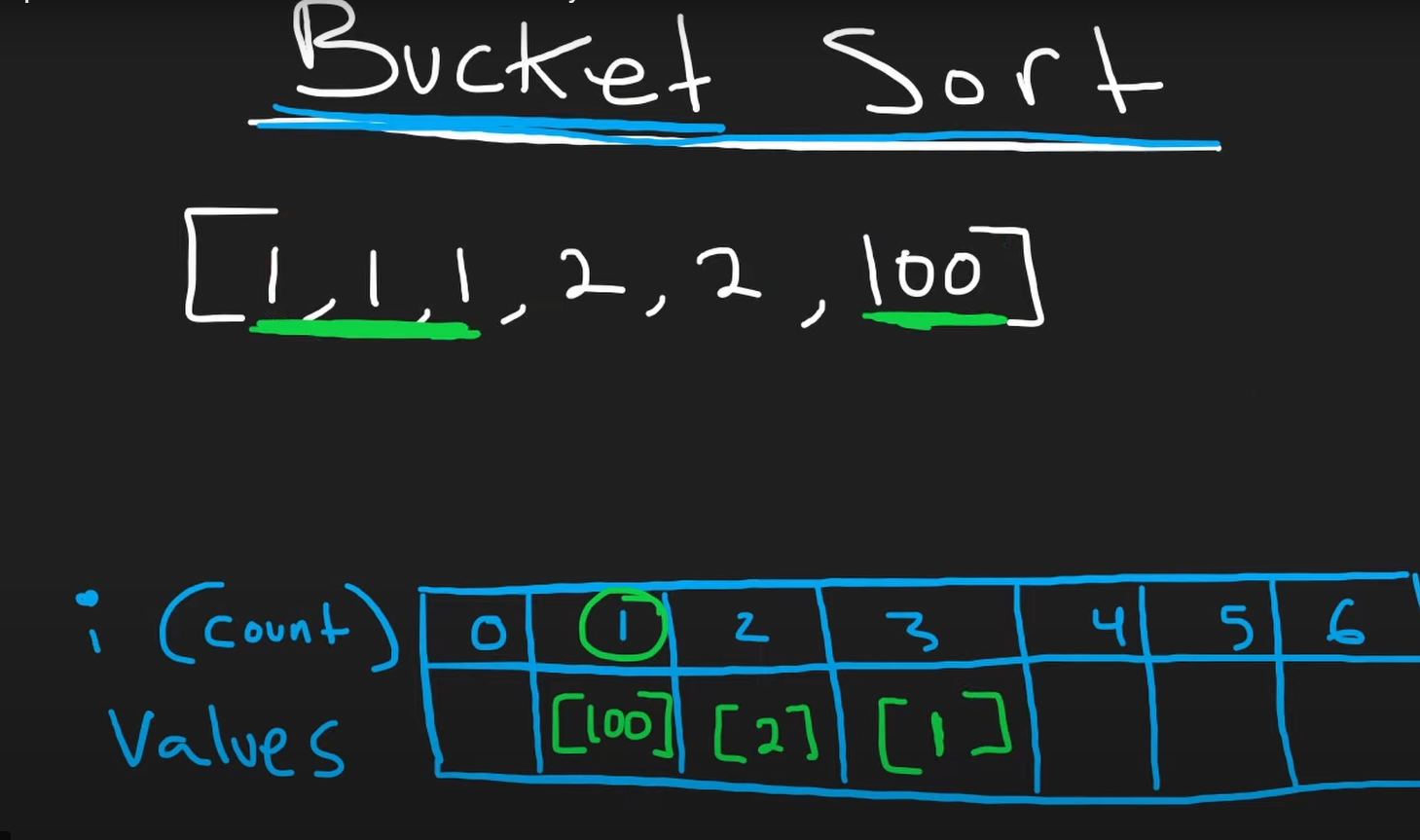
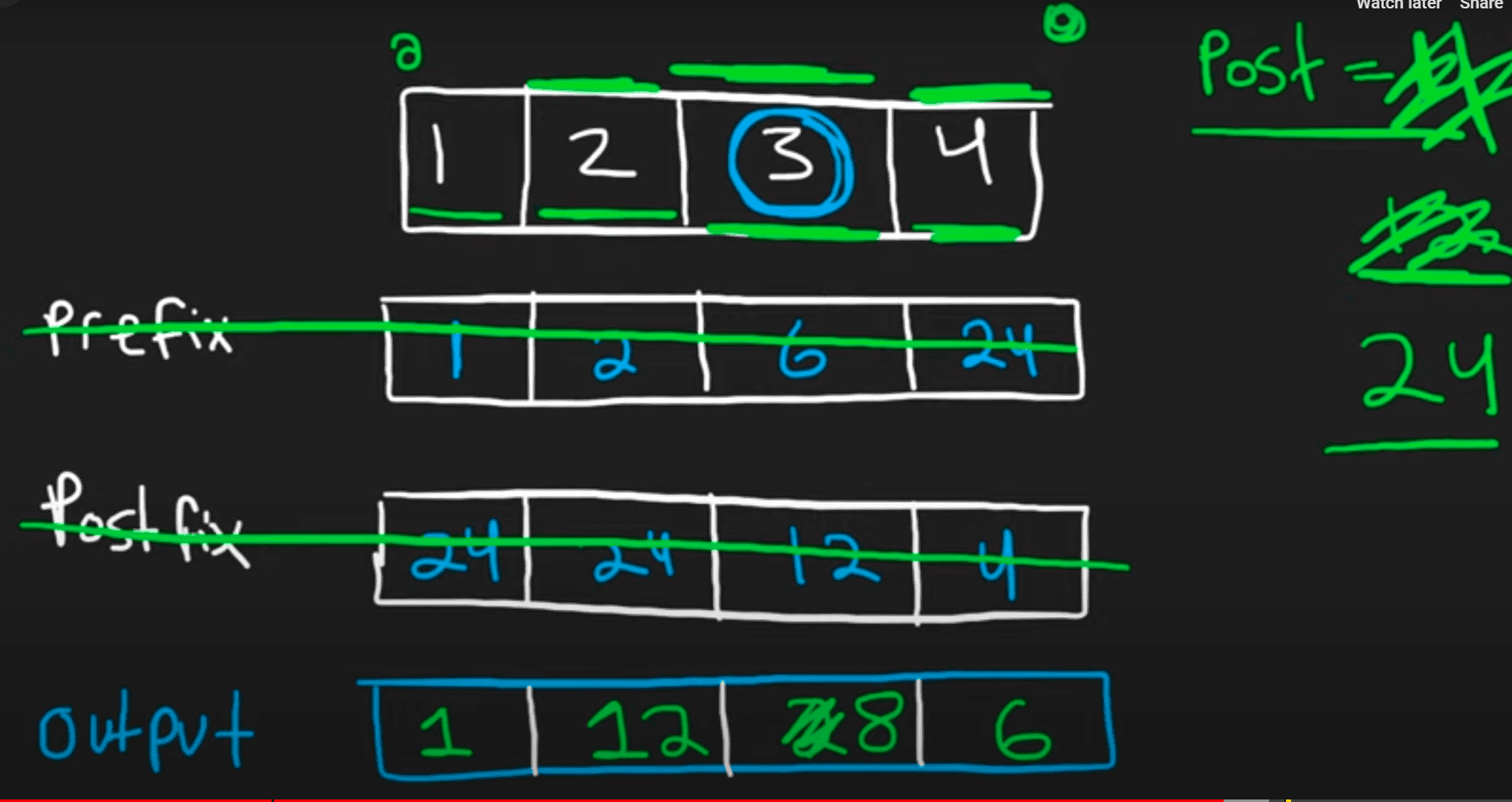
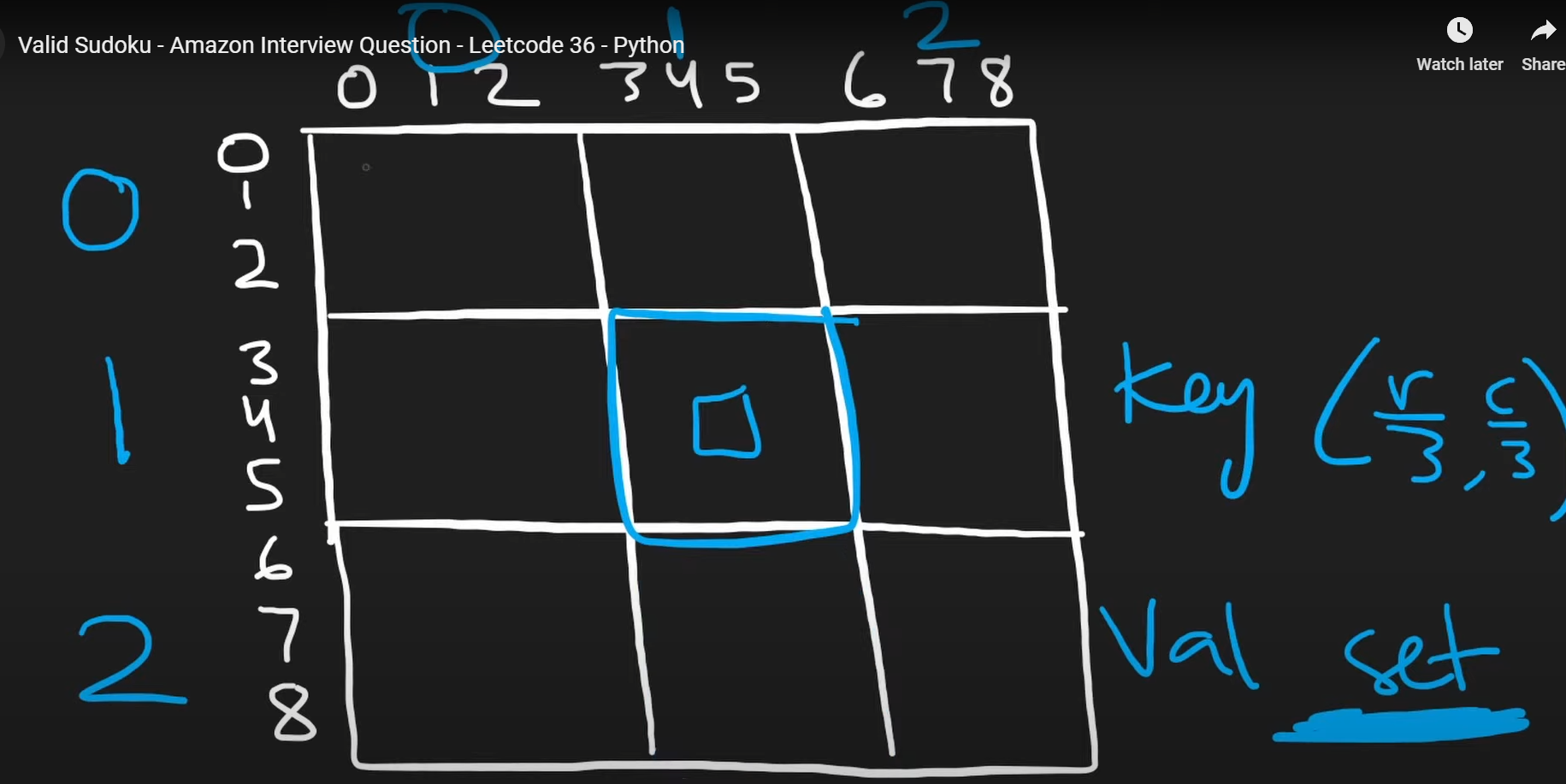
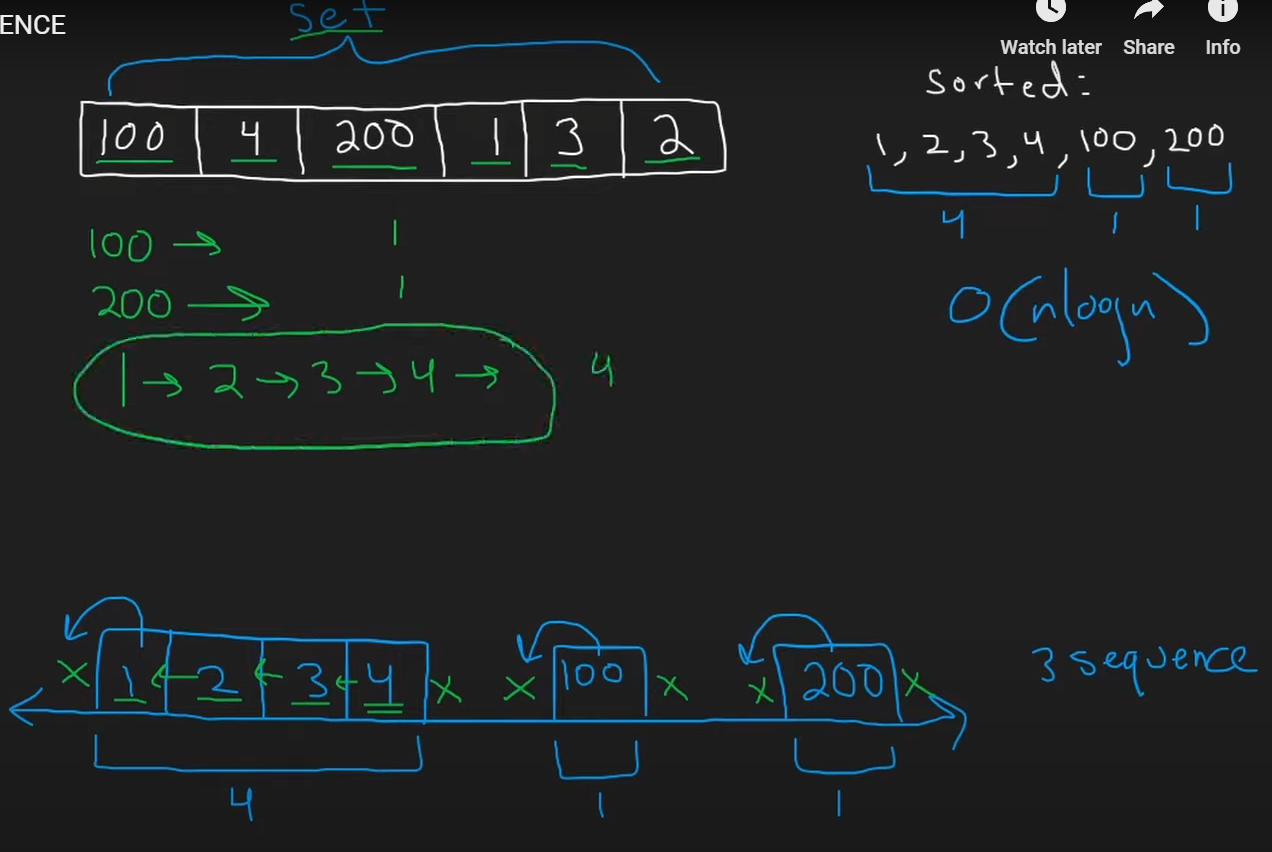
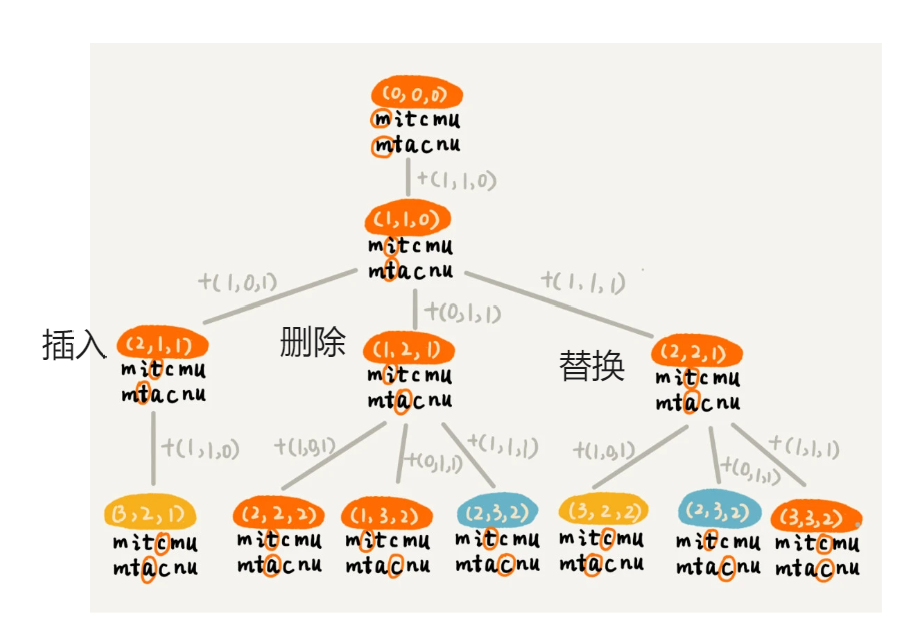
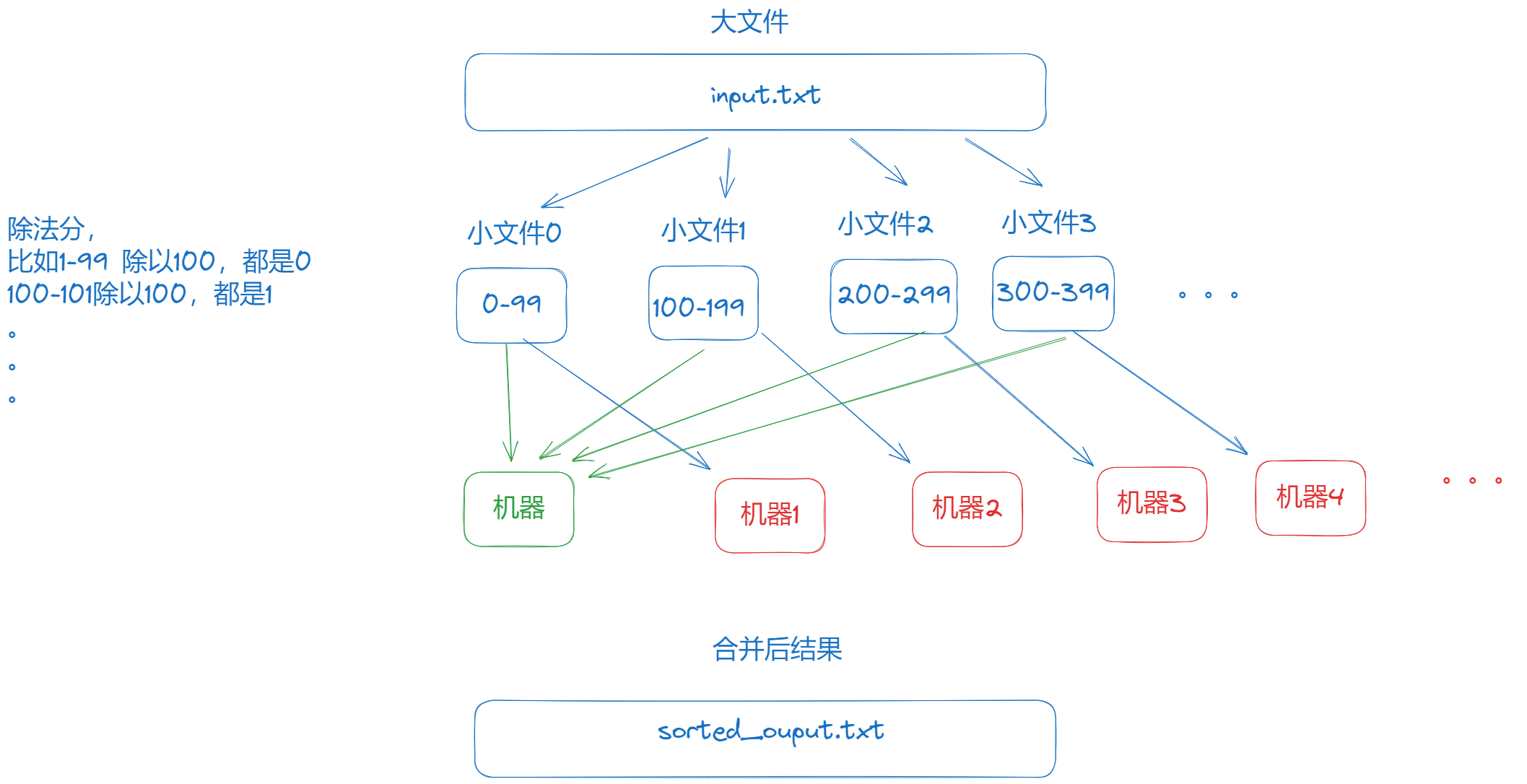
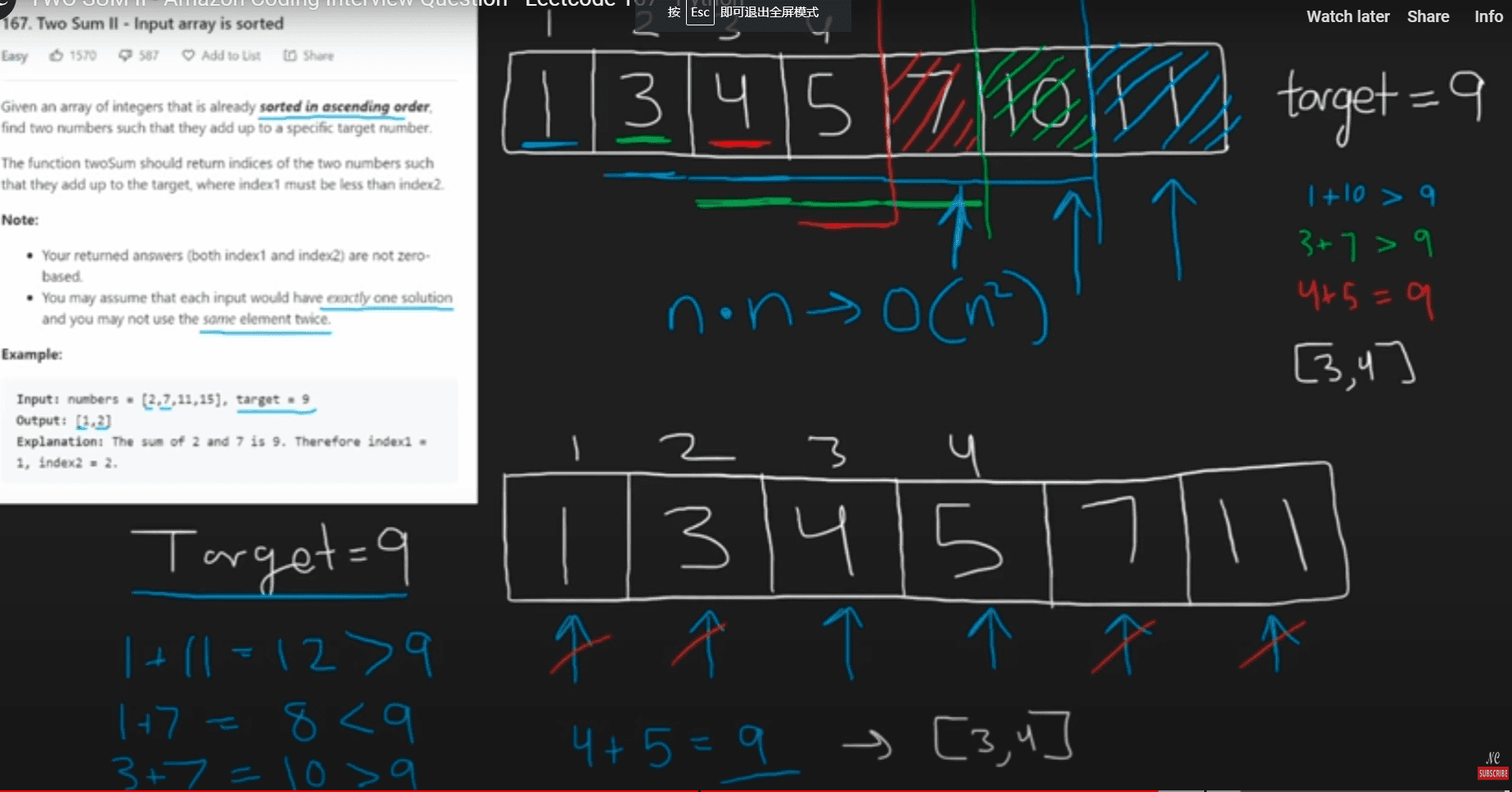
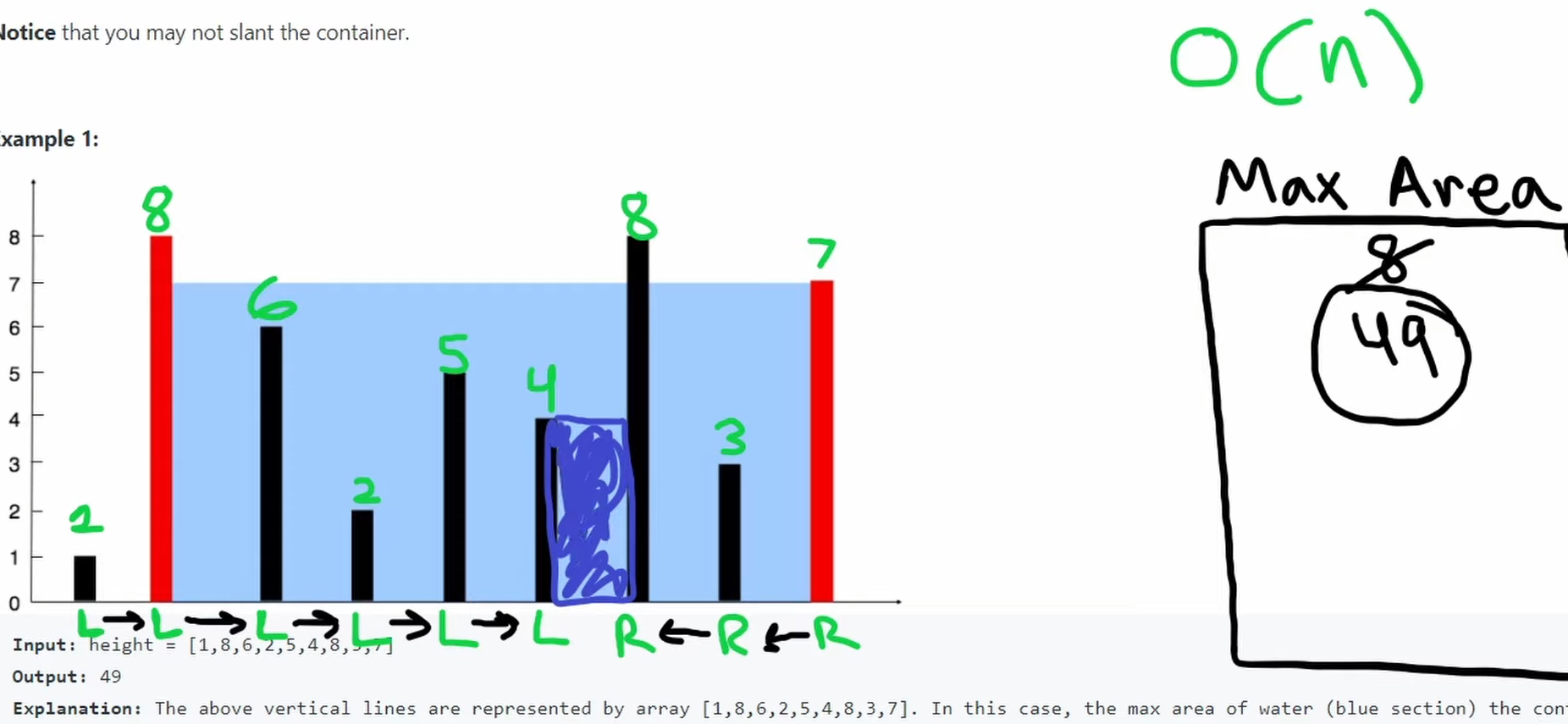
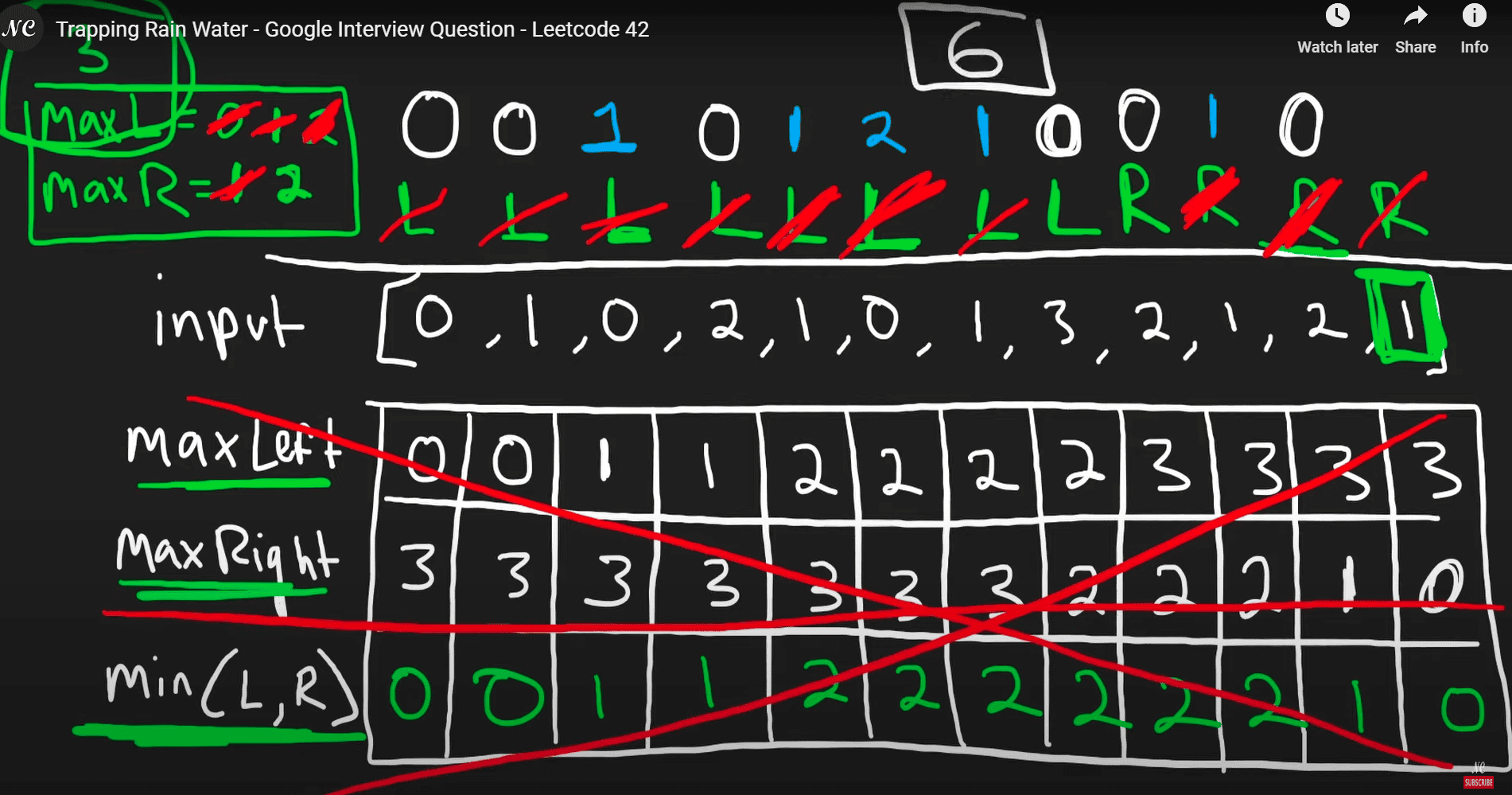
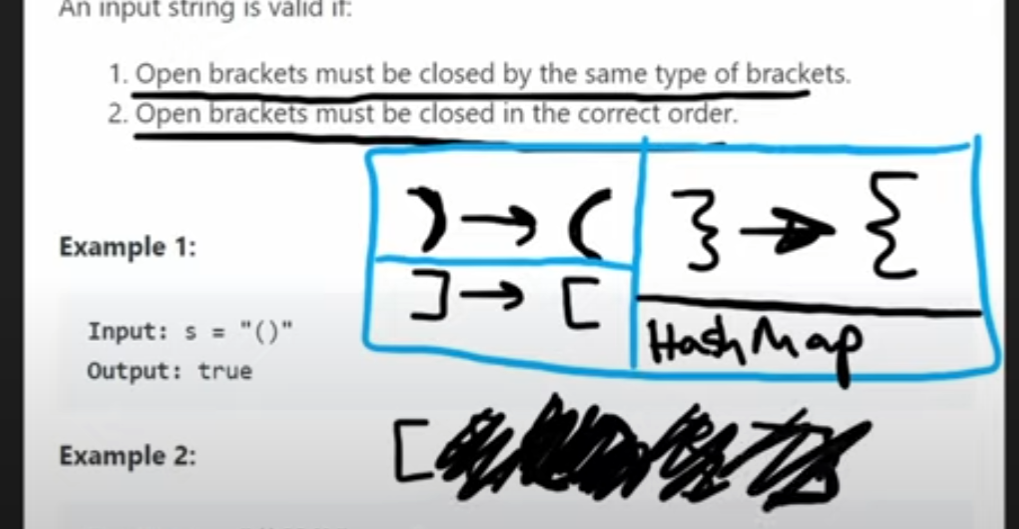
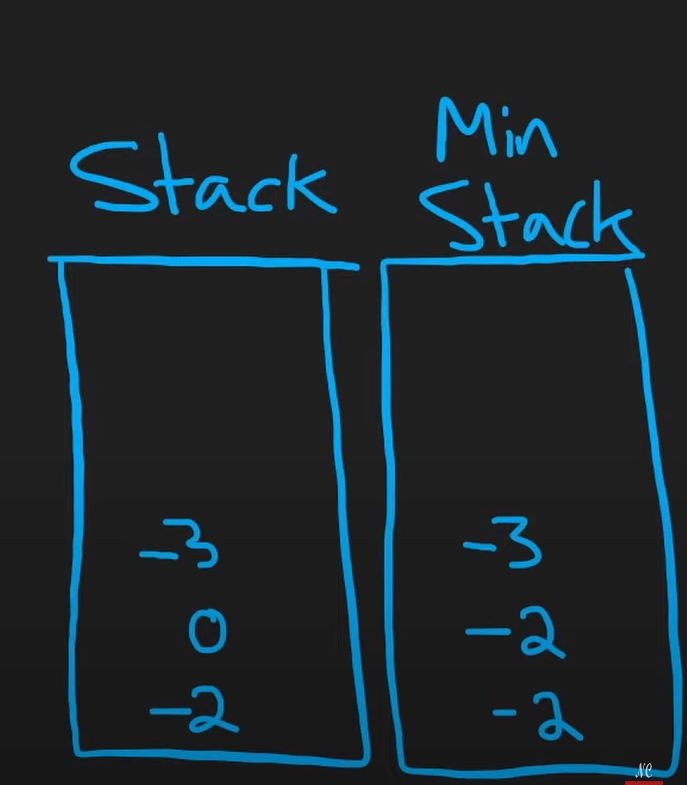
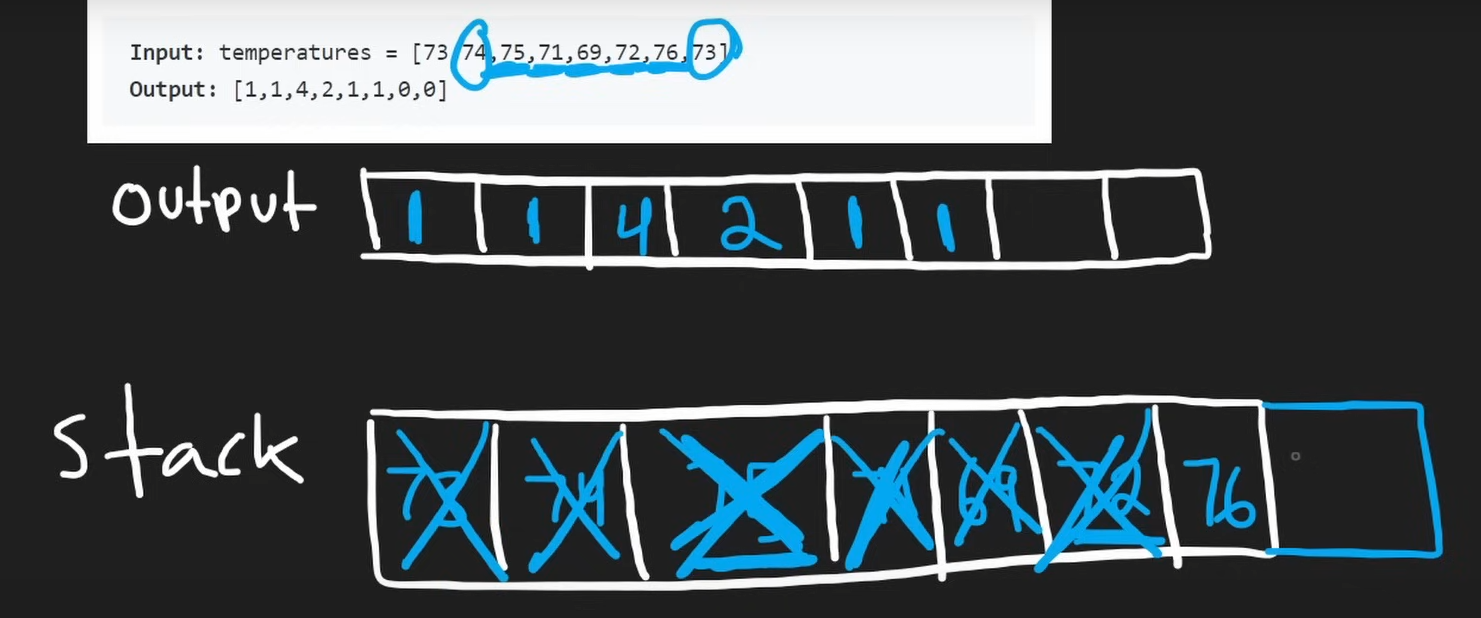
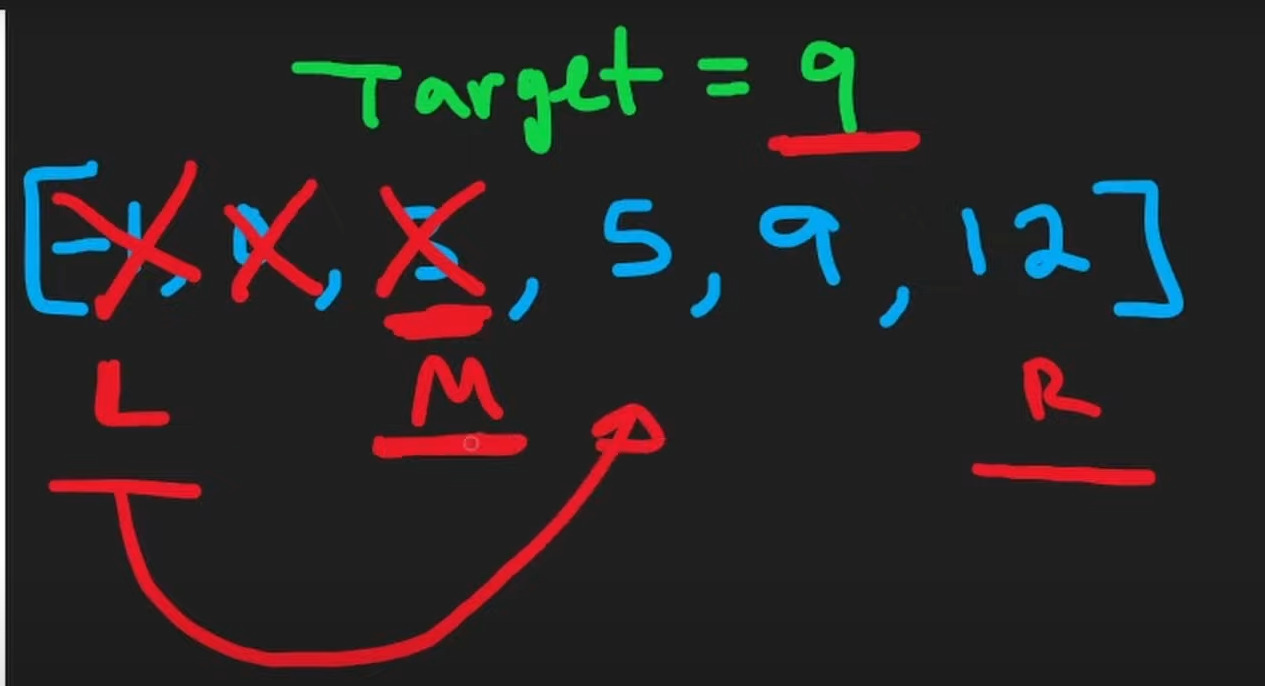
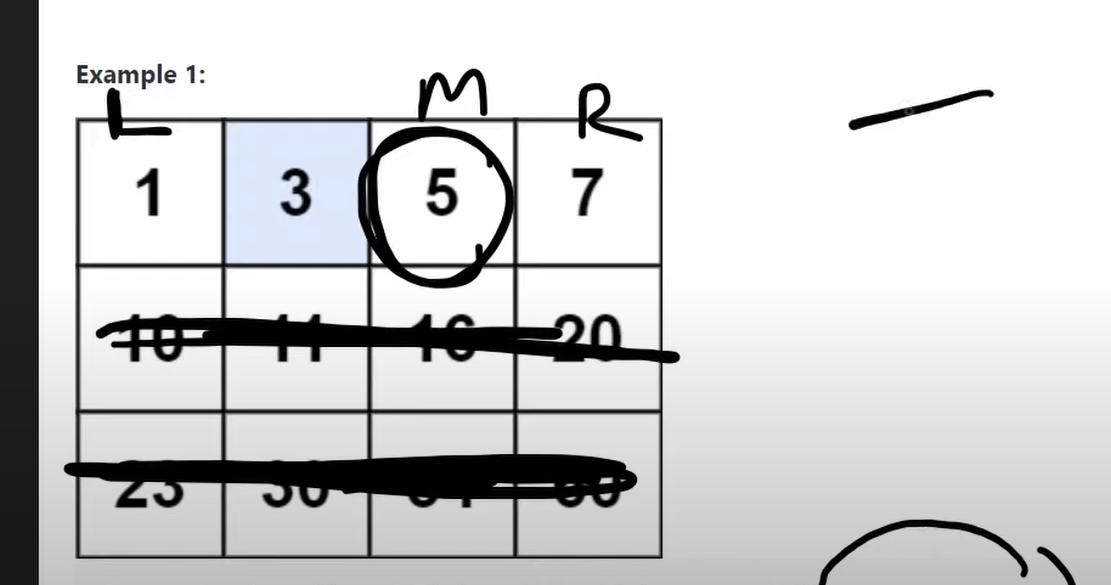
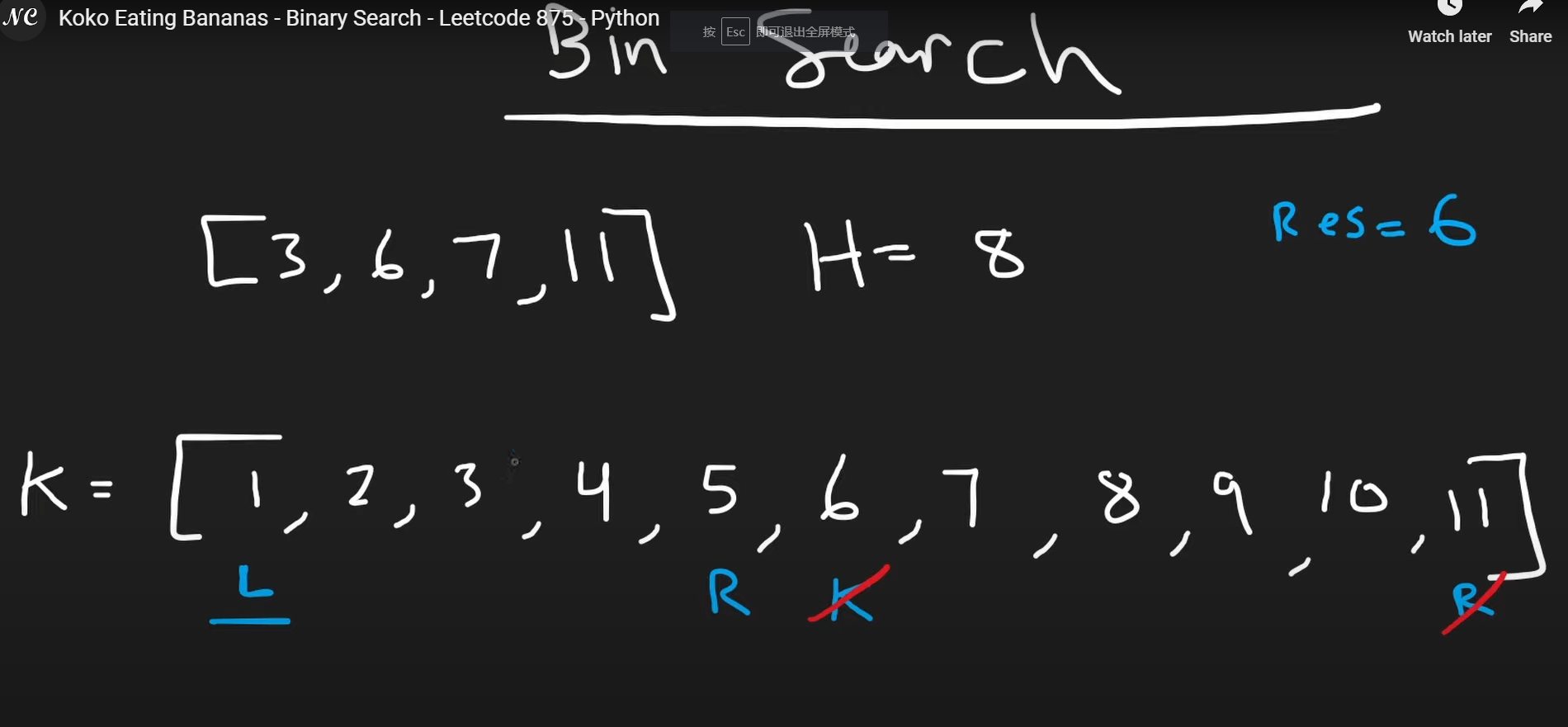
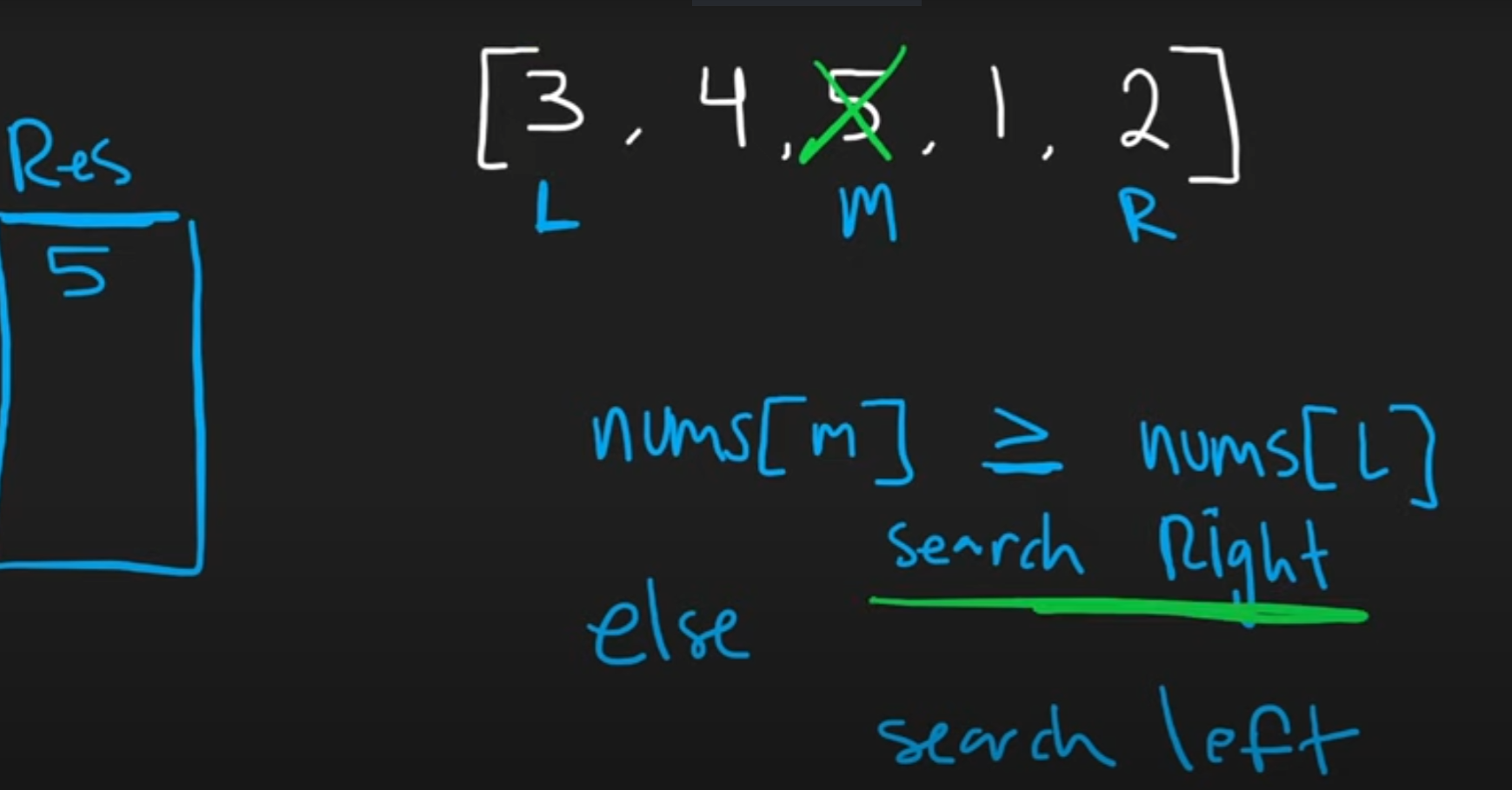
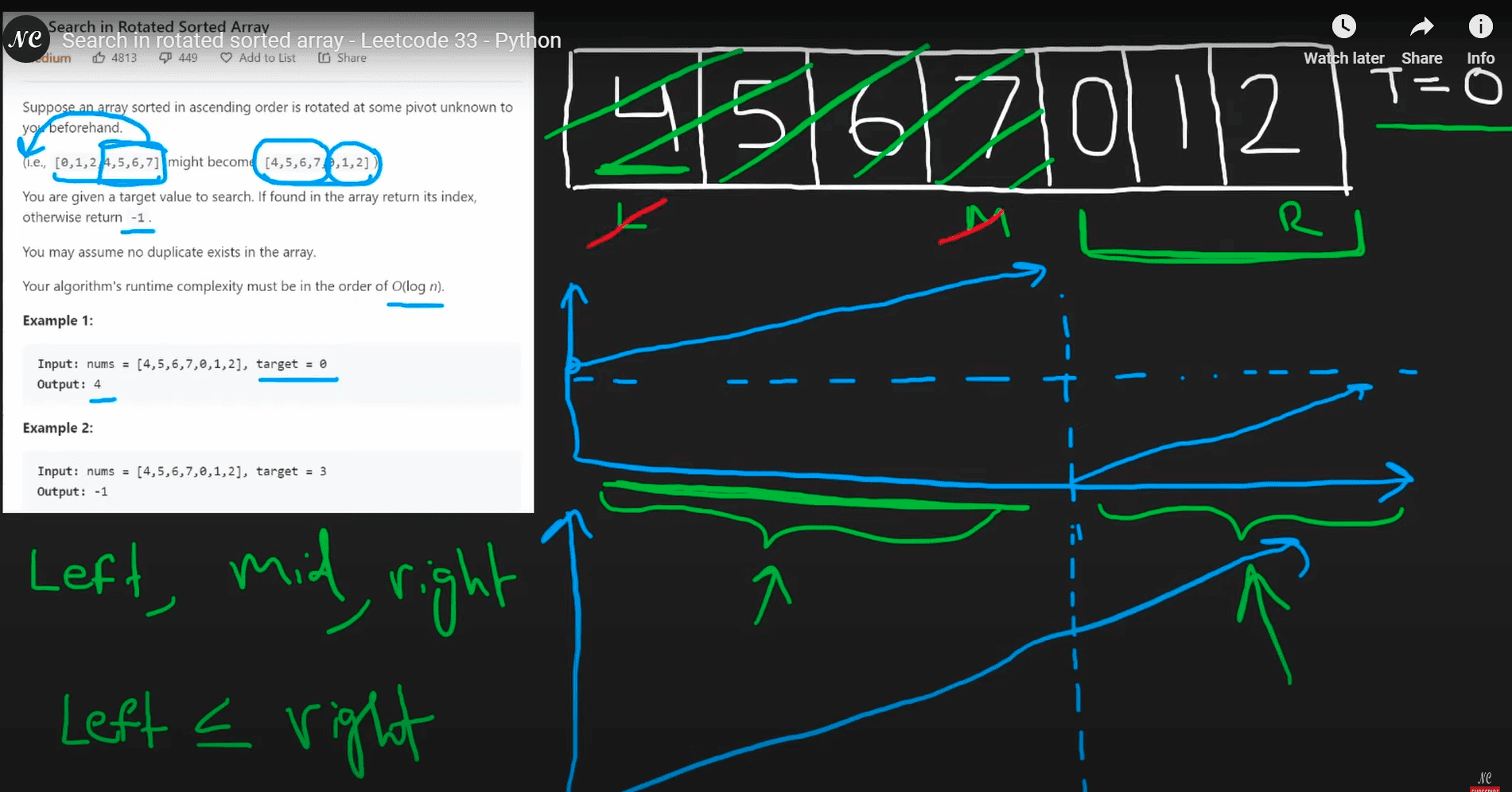
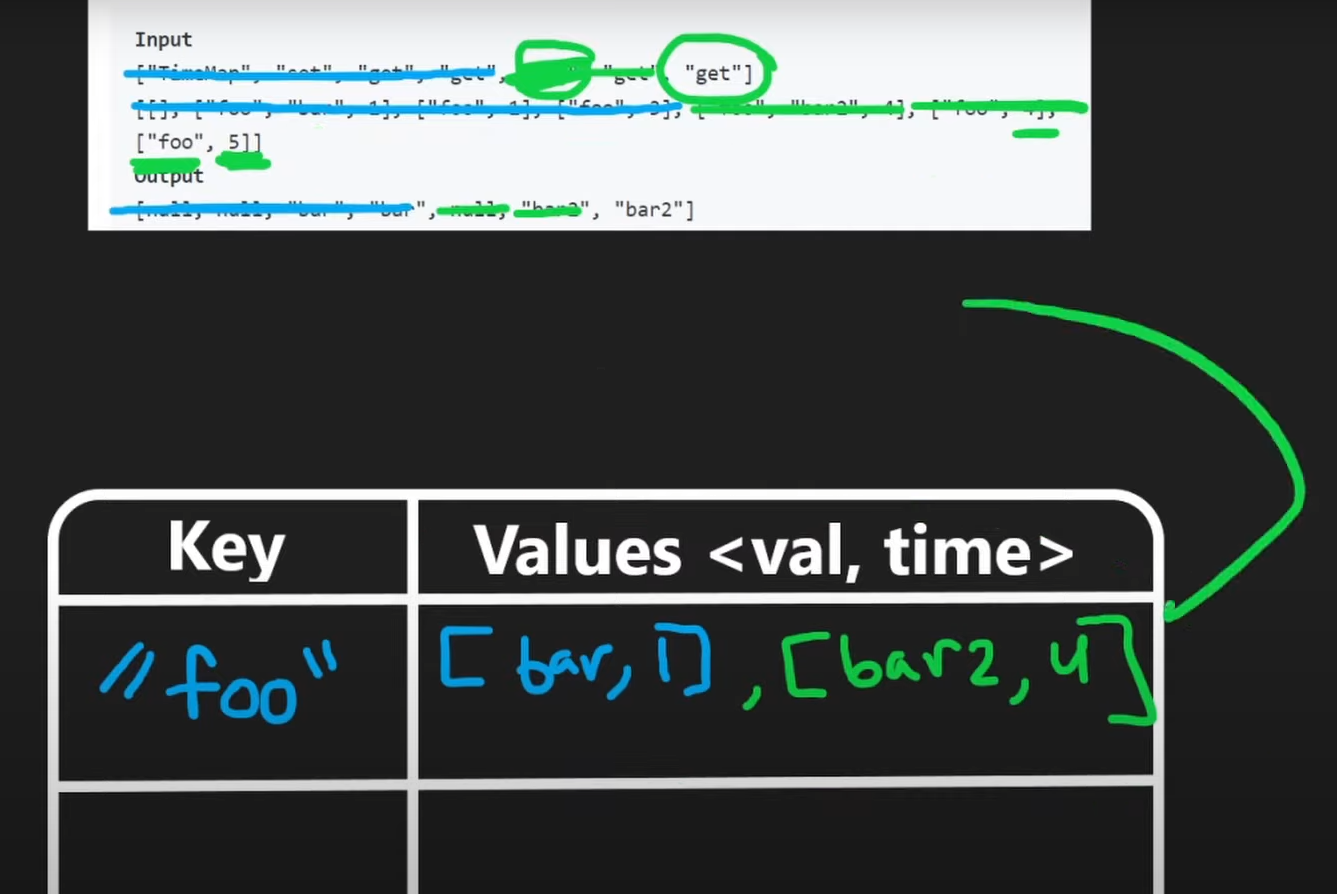
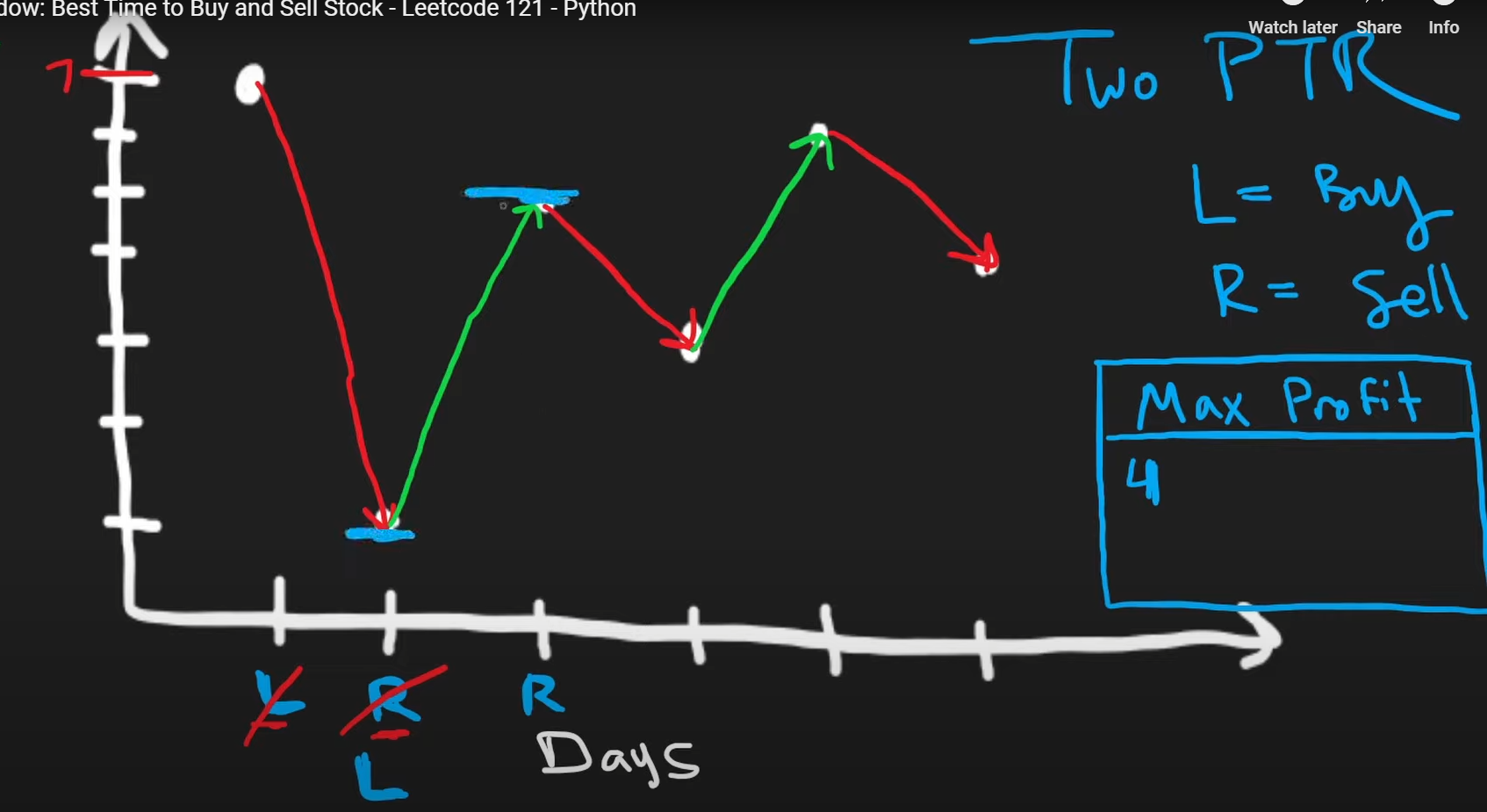
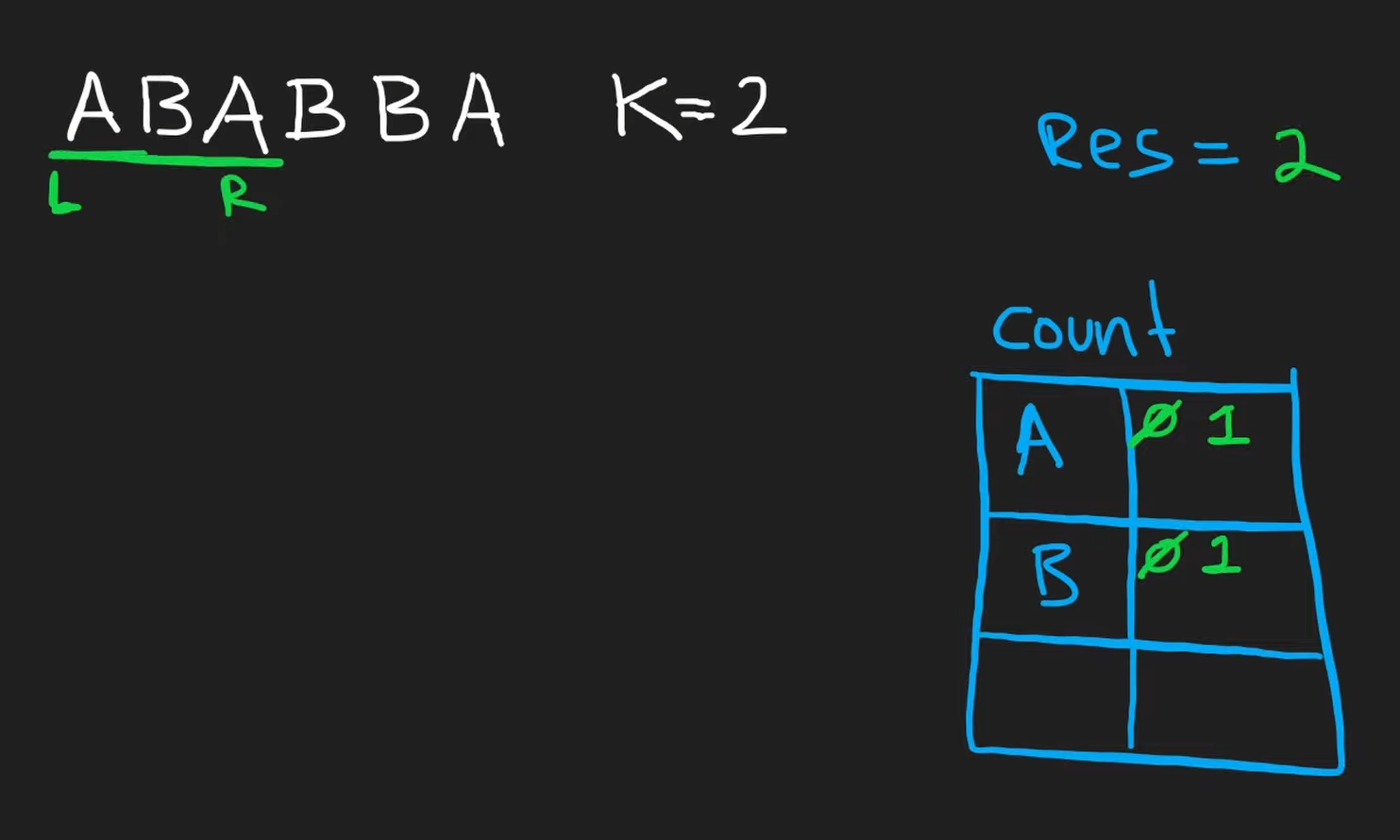
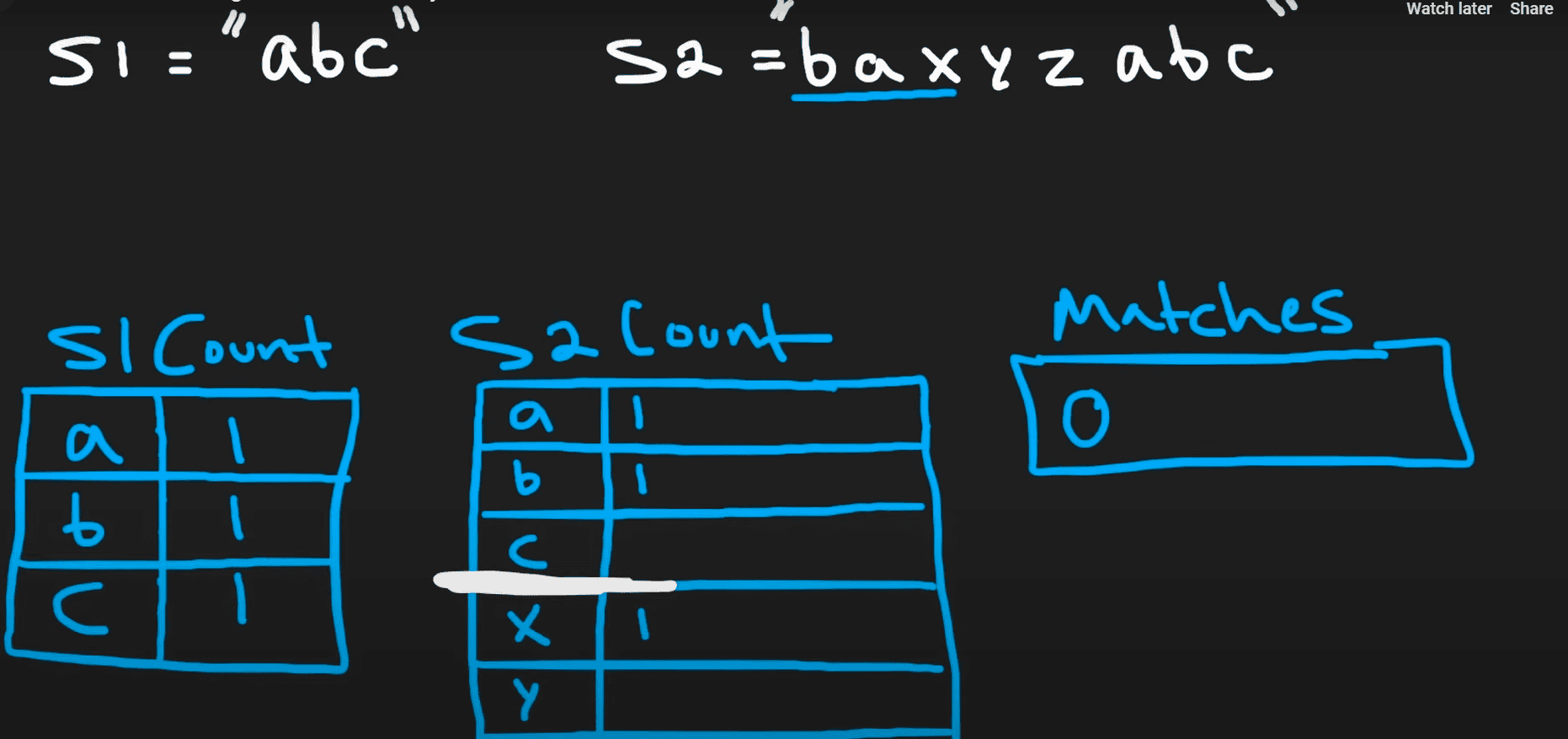
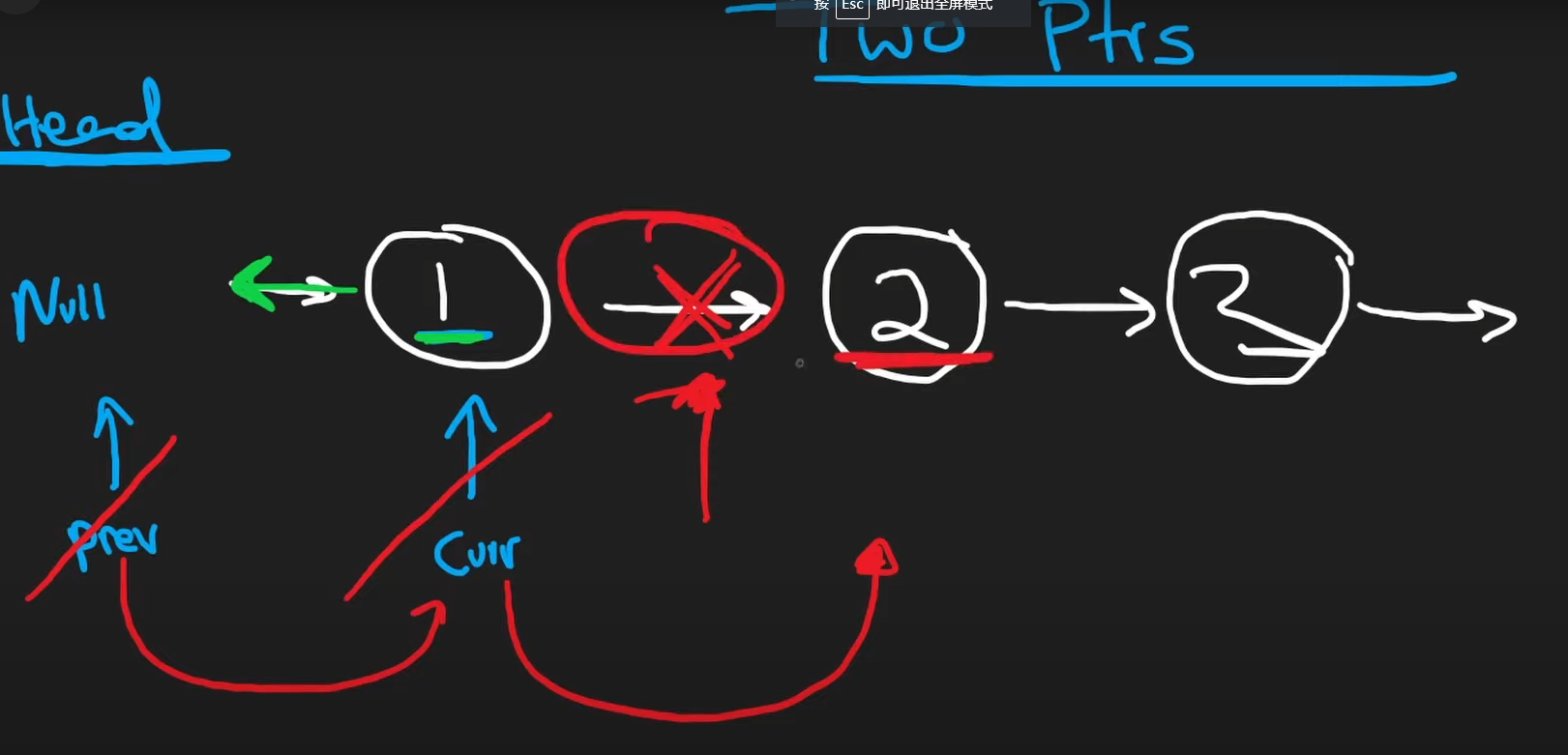
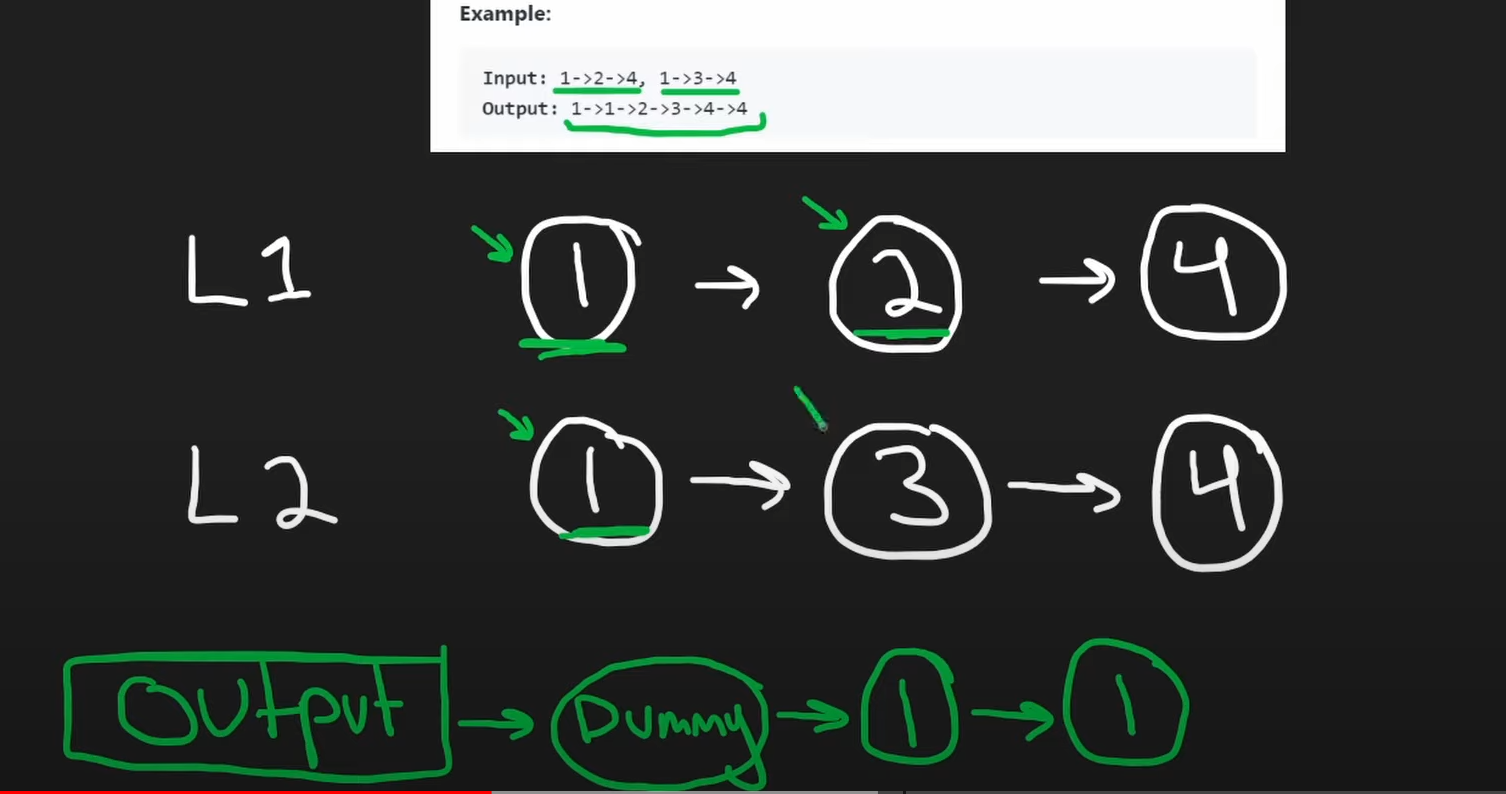
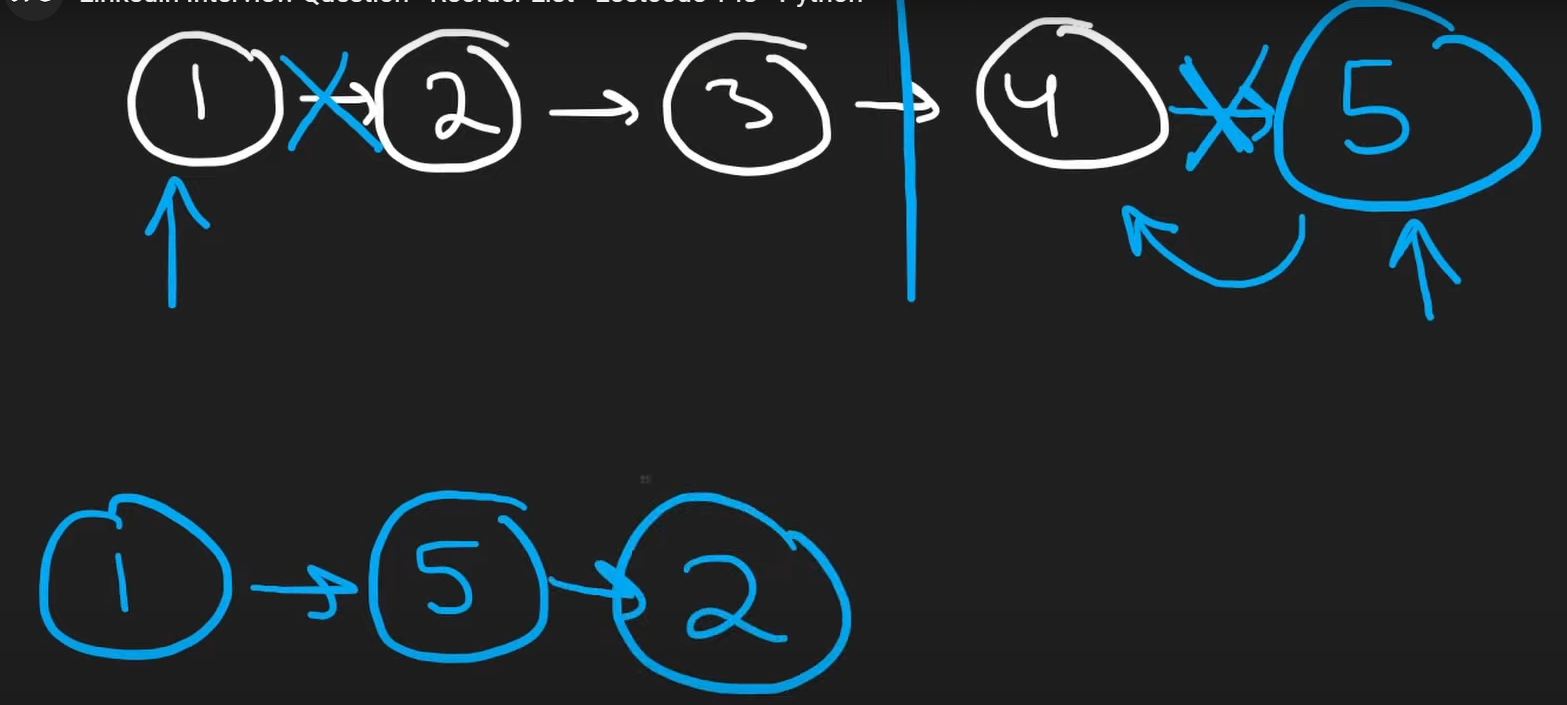
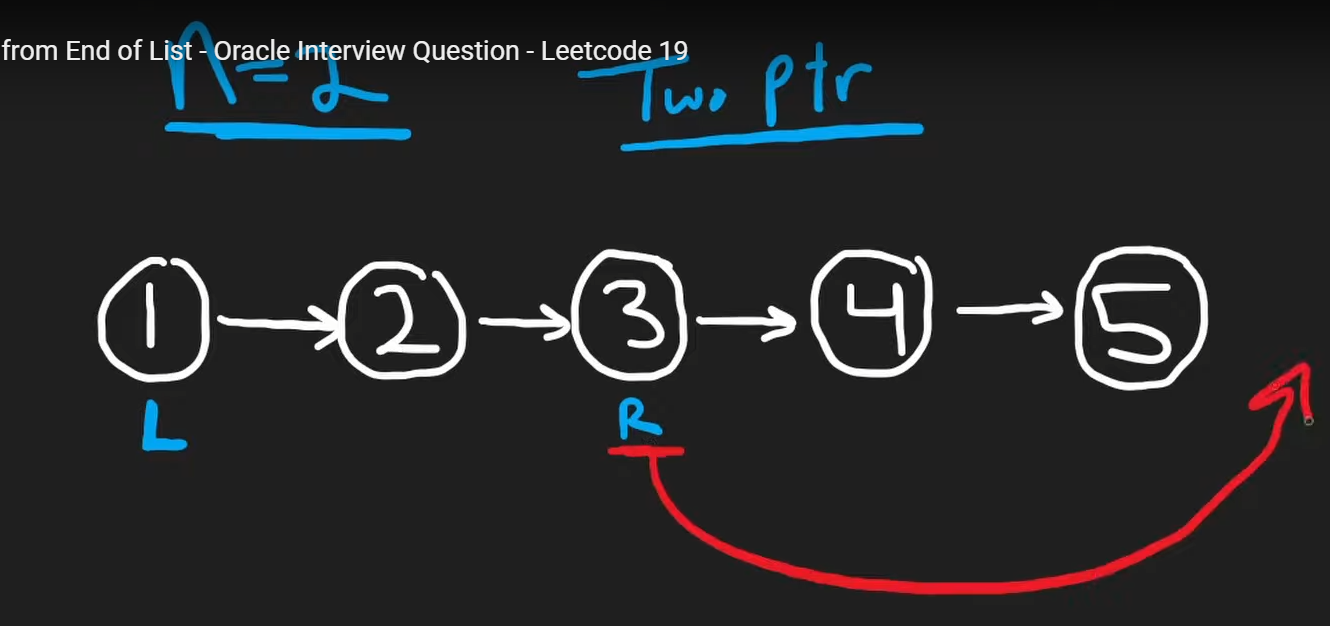
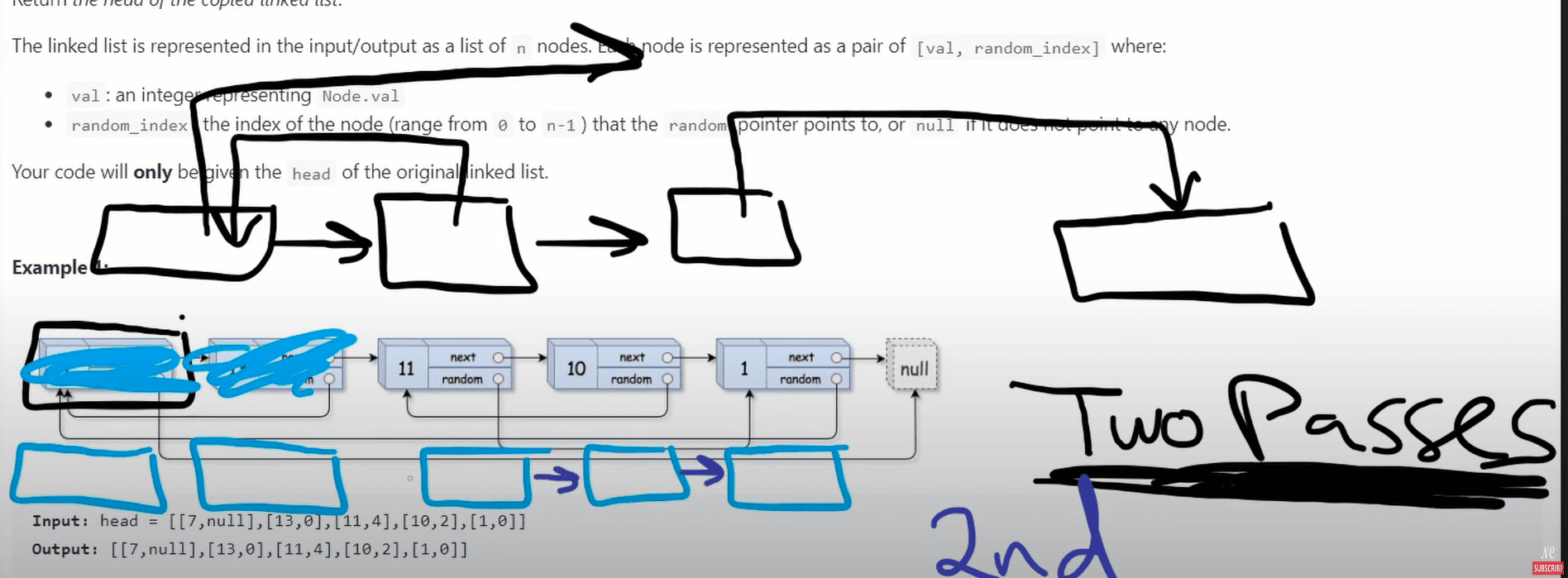
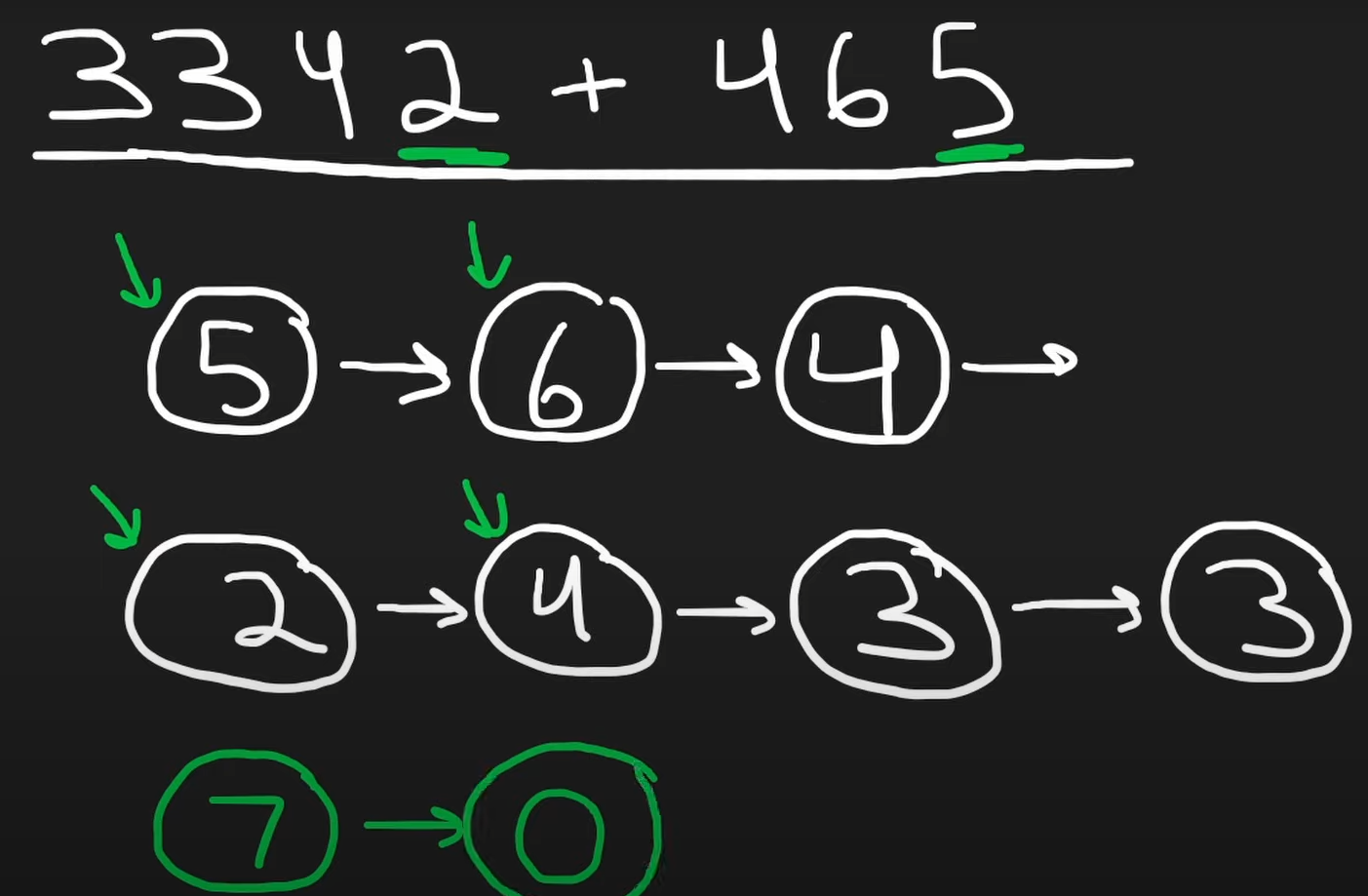
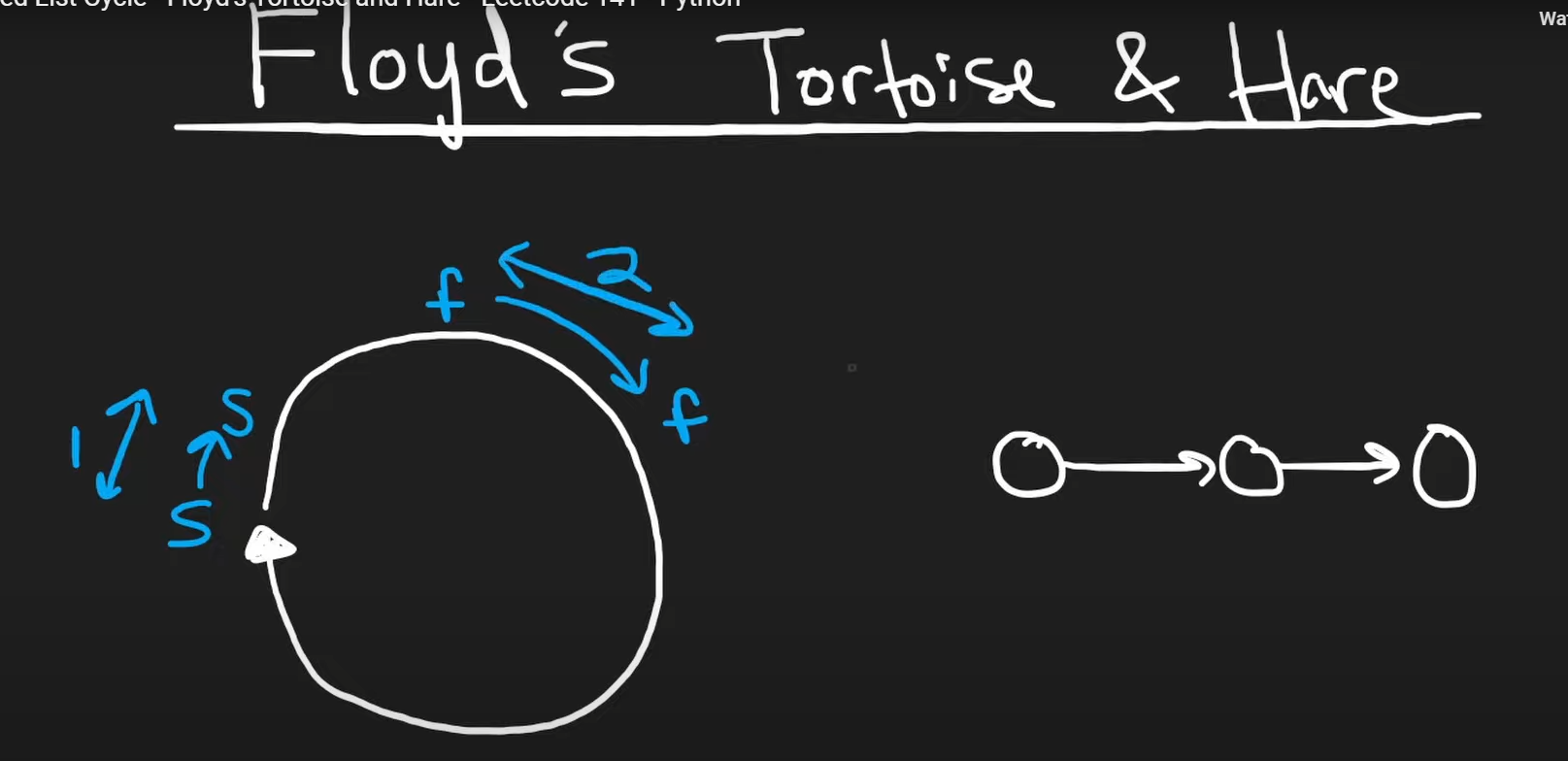
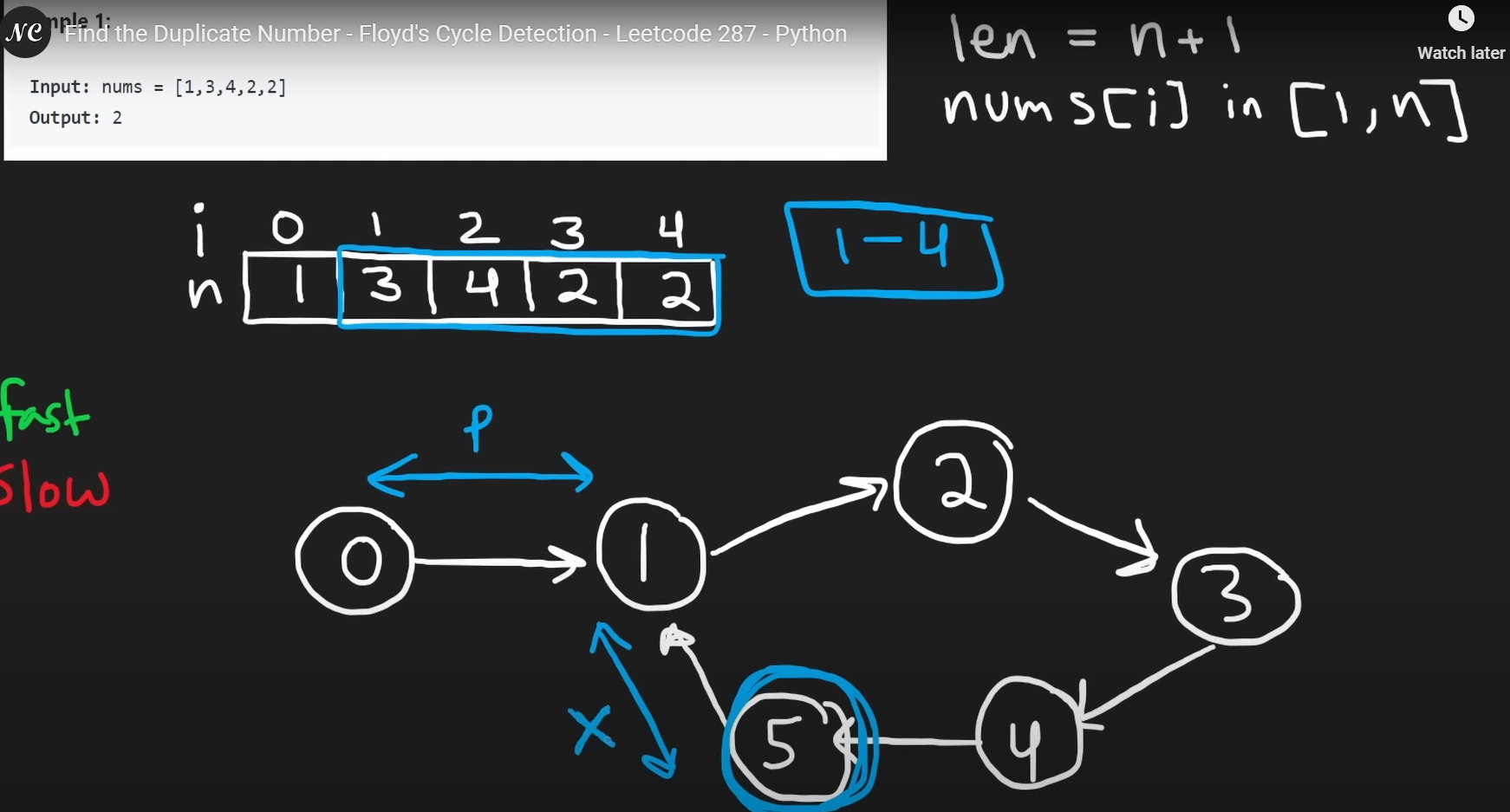
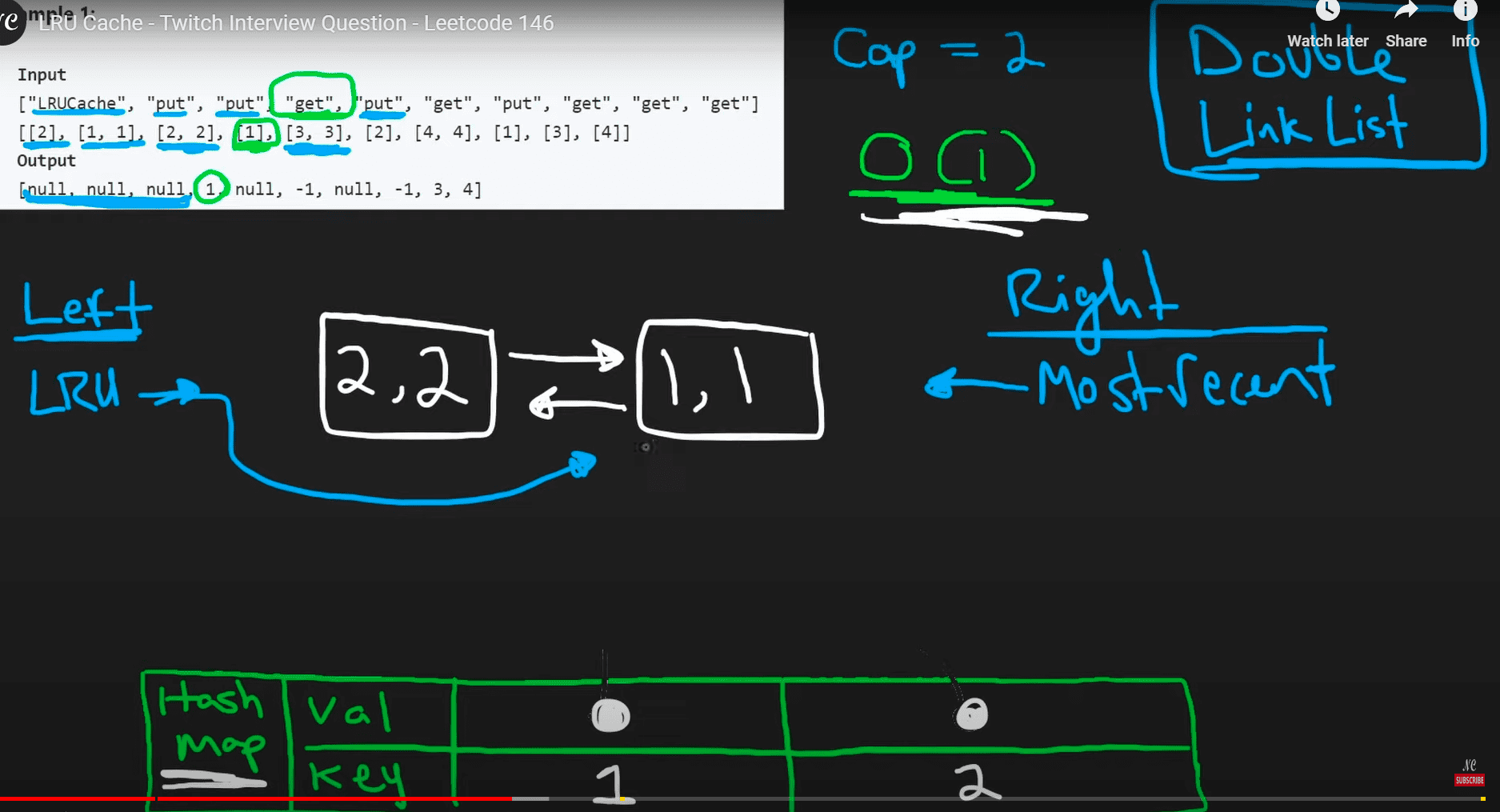
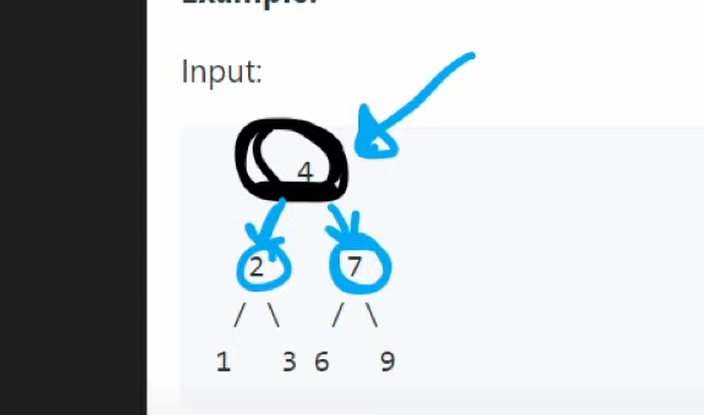
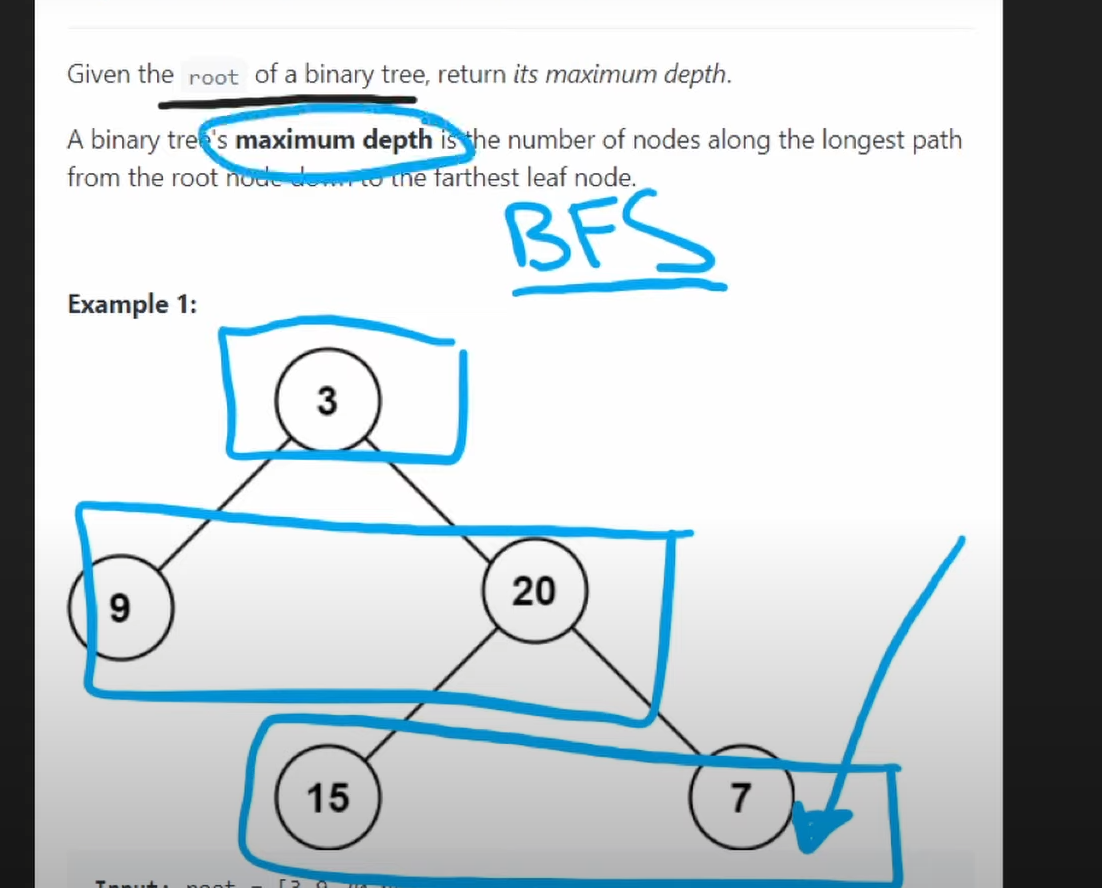 This is the best example for understanding tree traversal.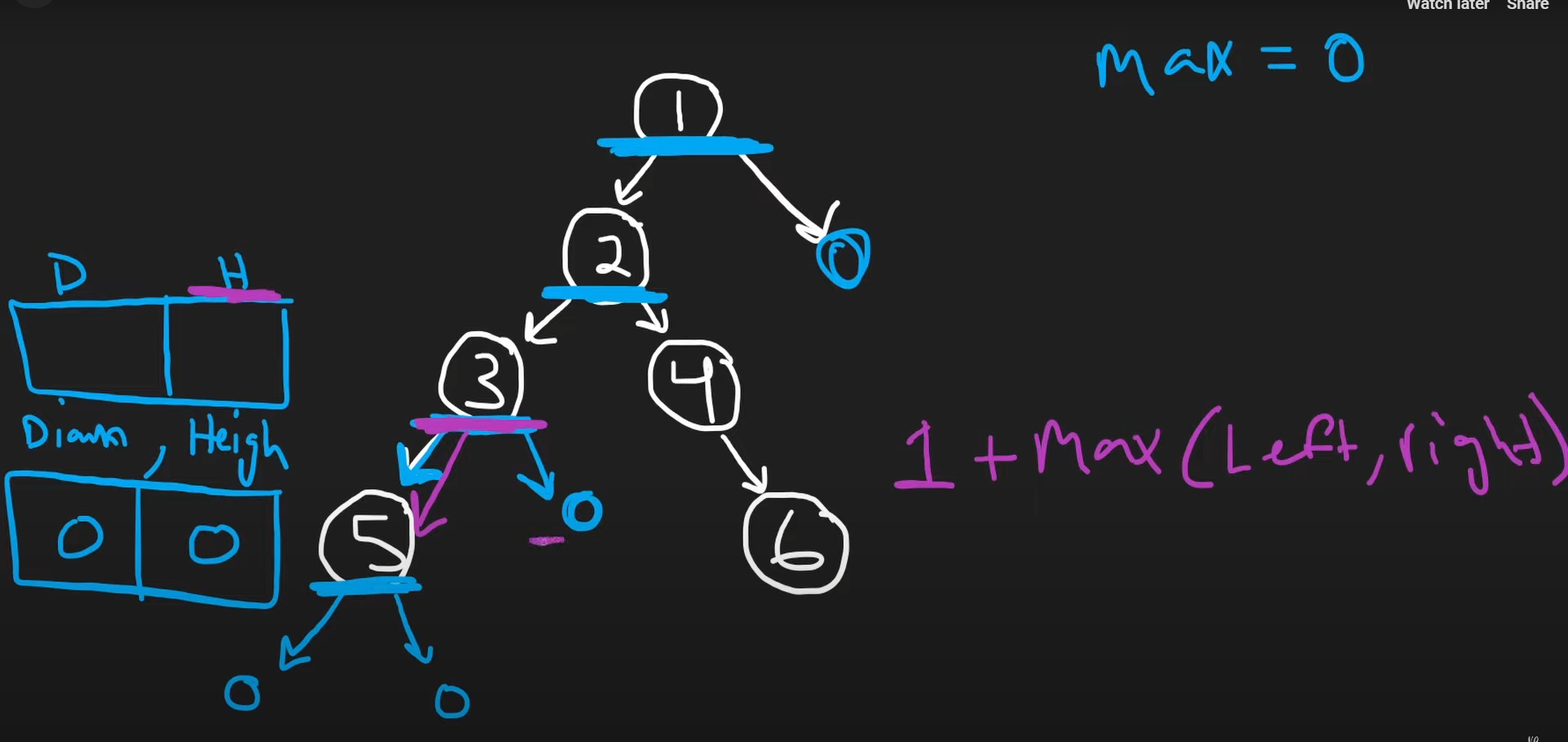
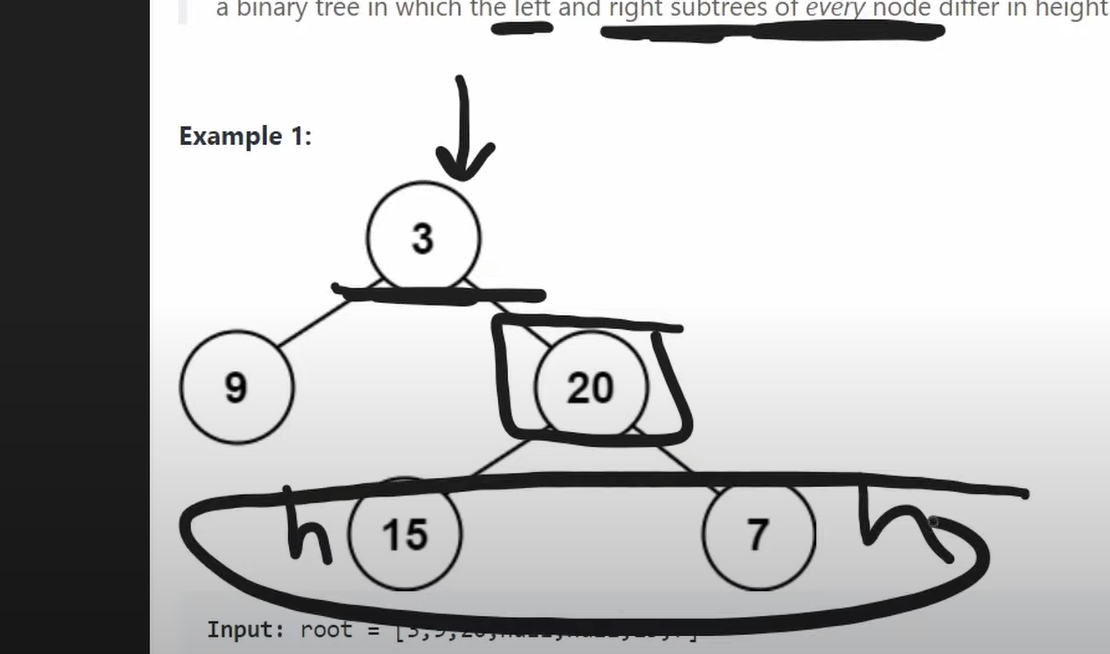
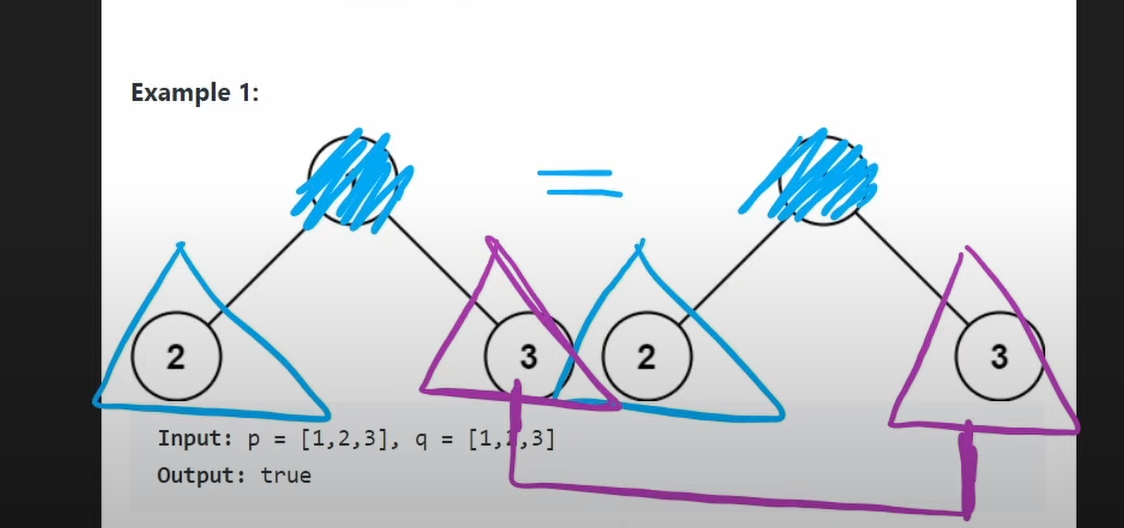
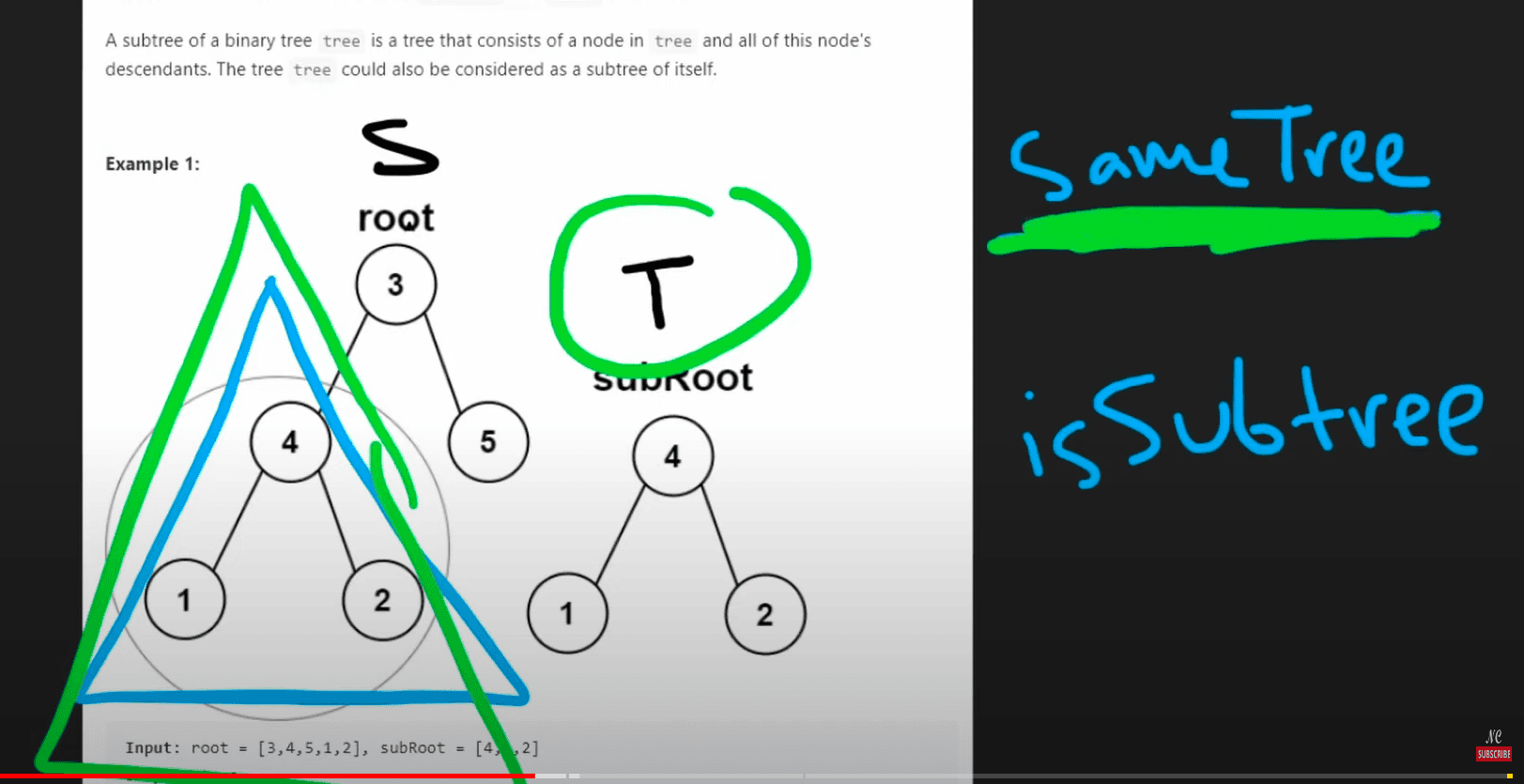
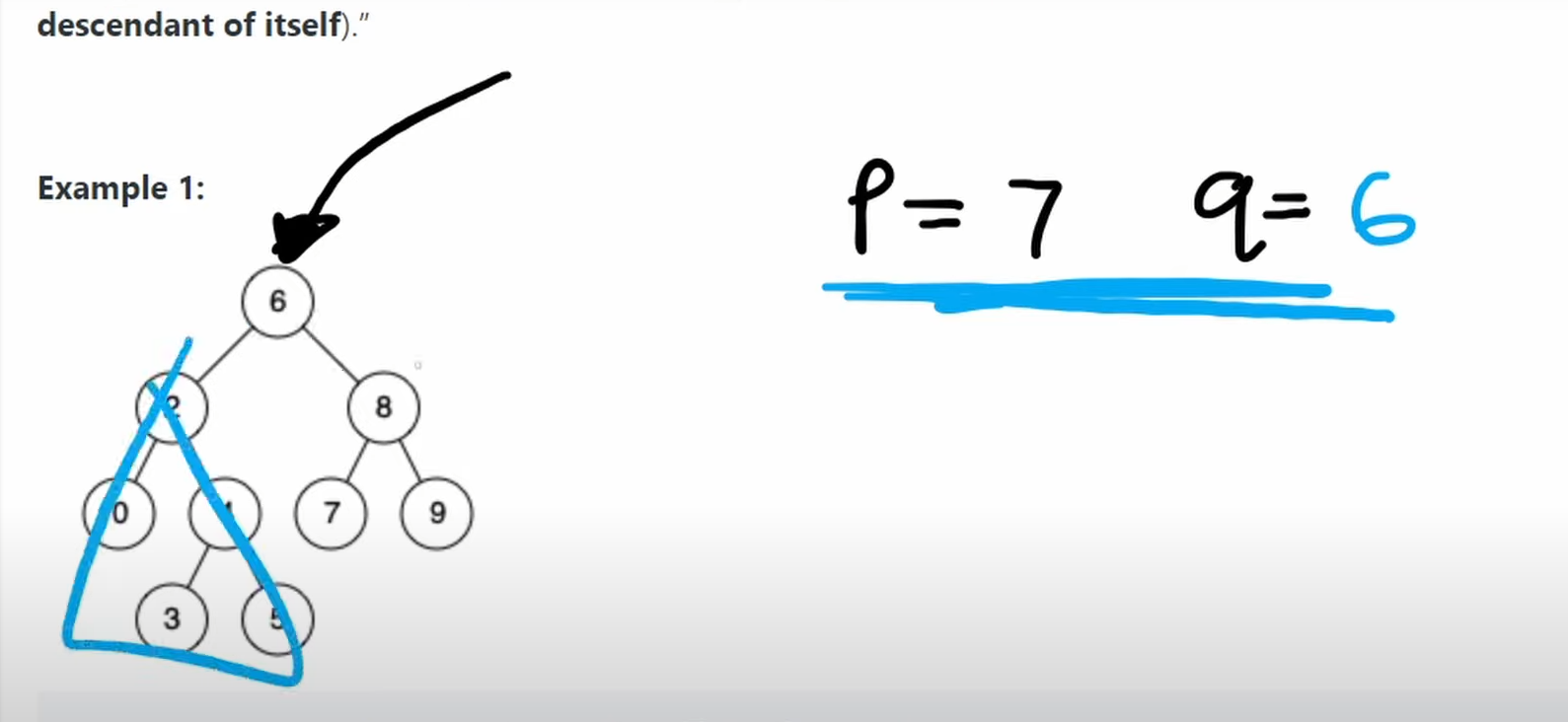
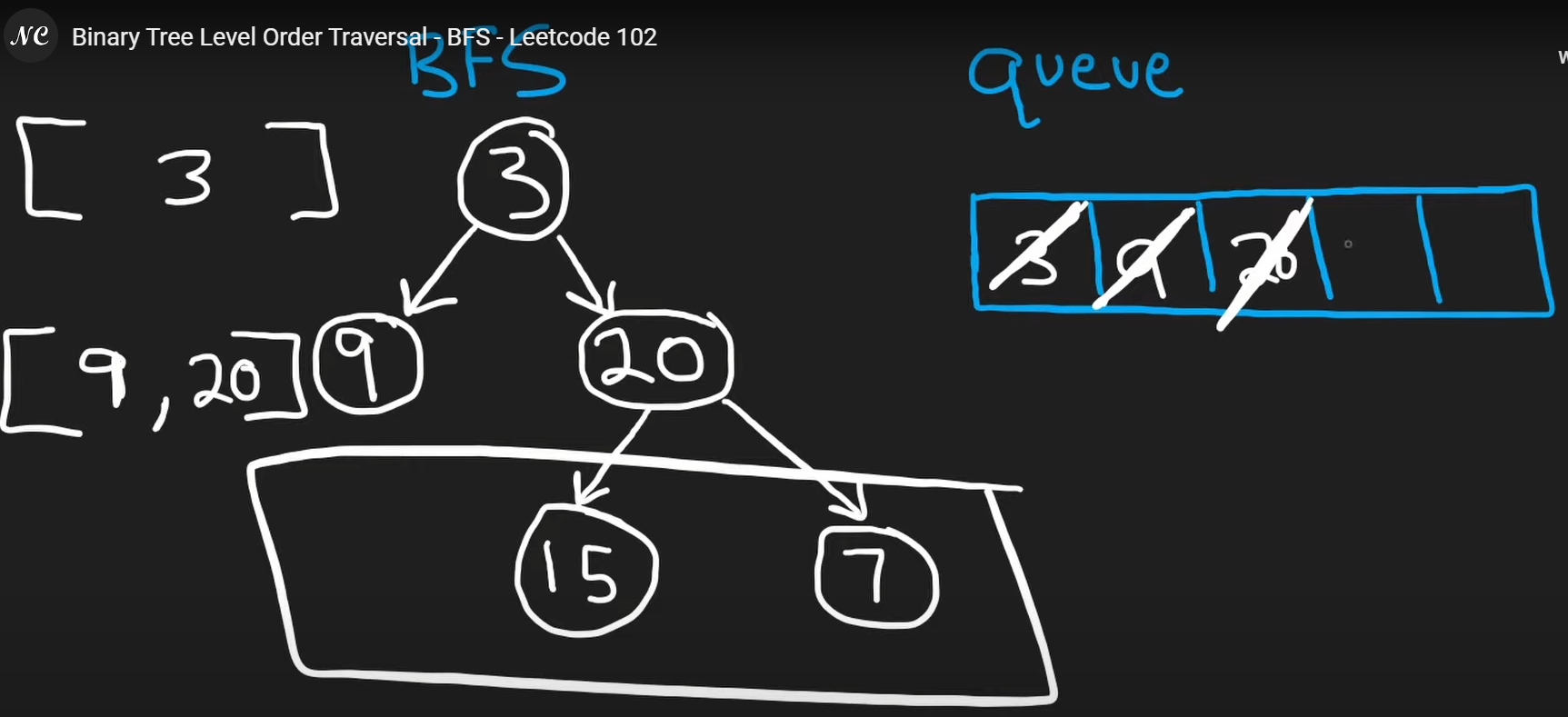
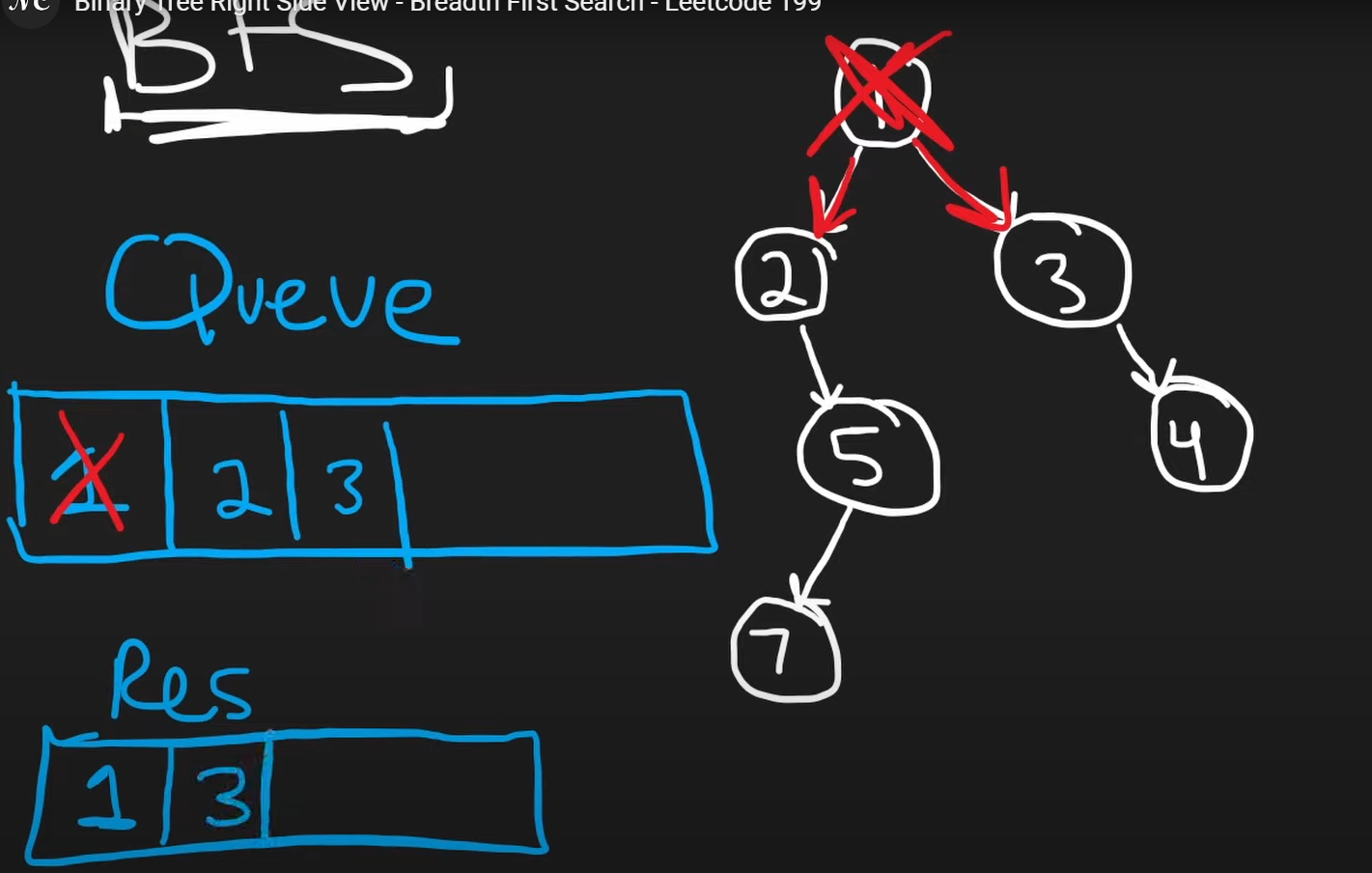
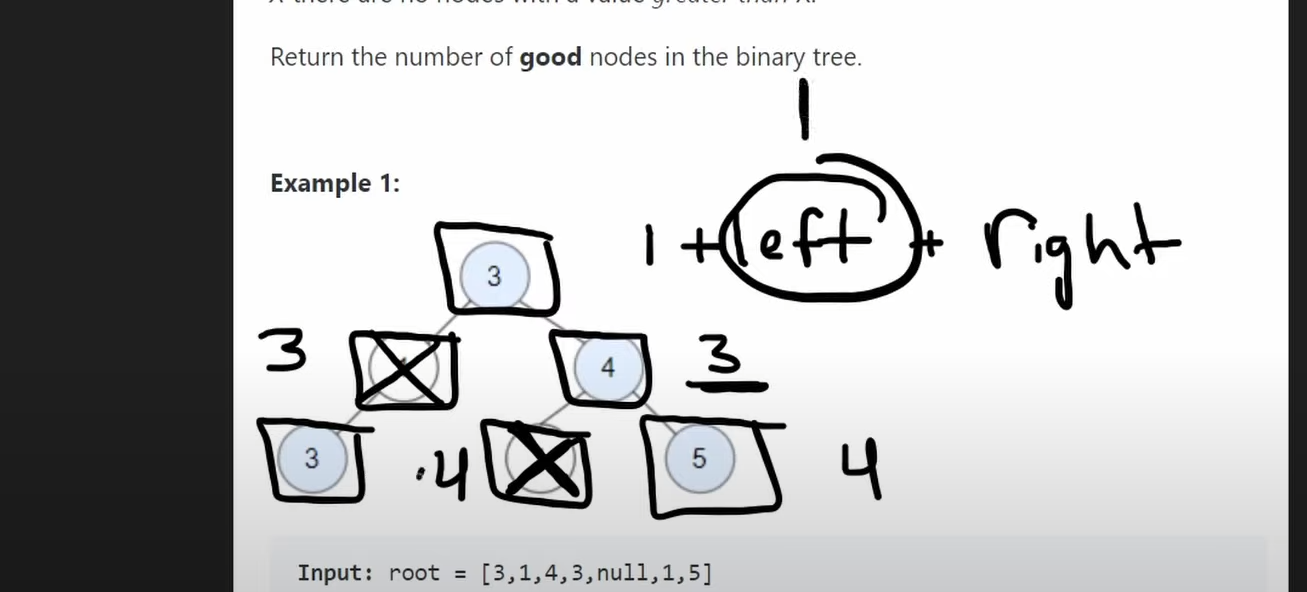
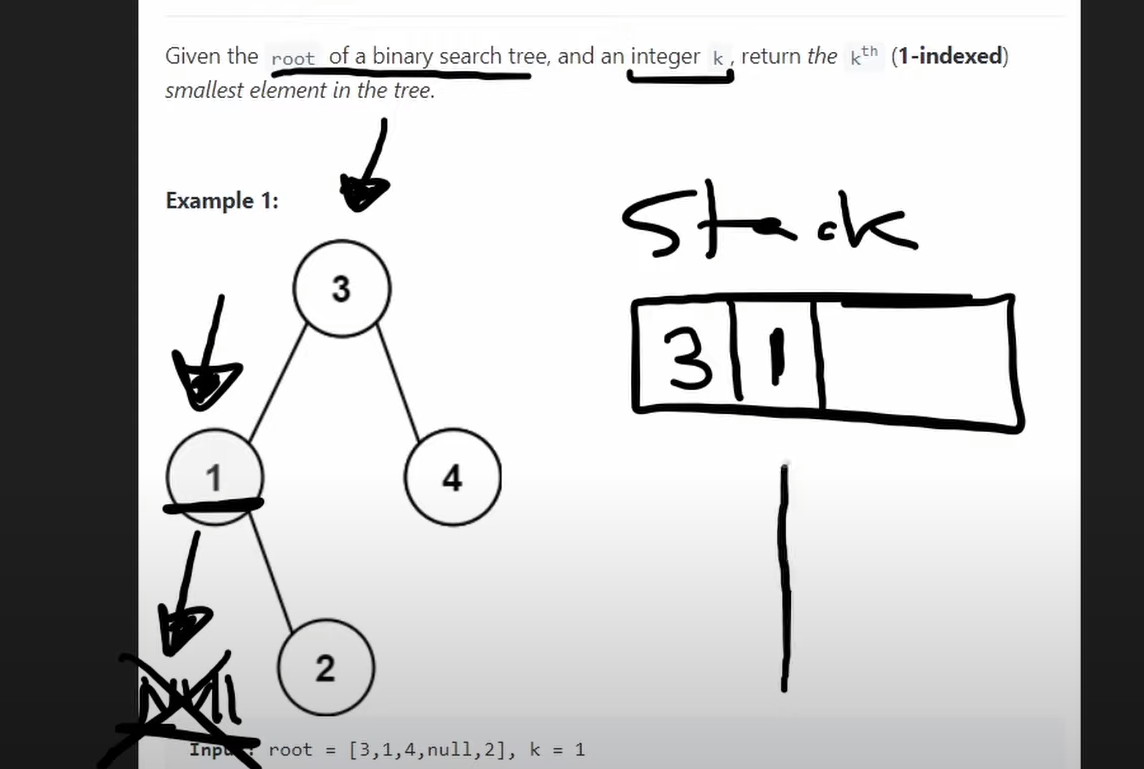
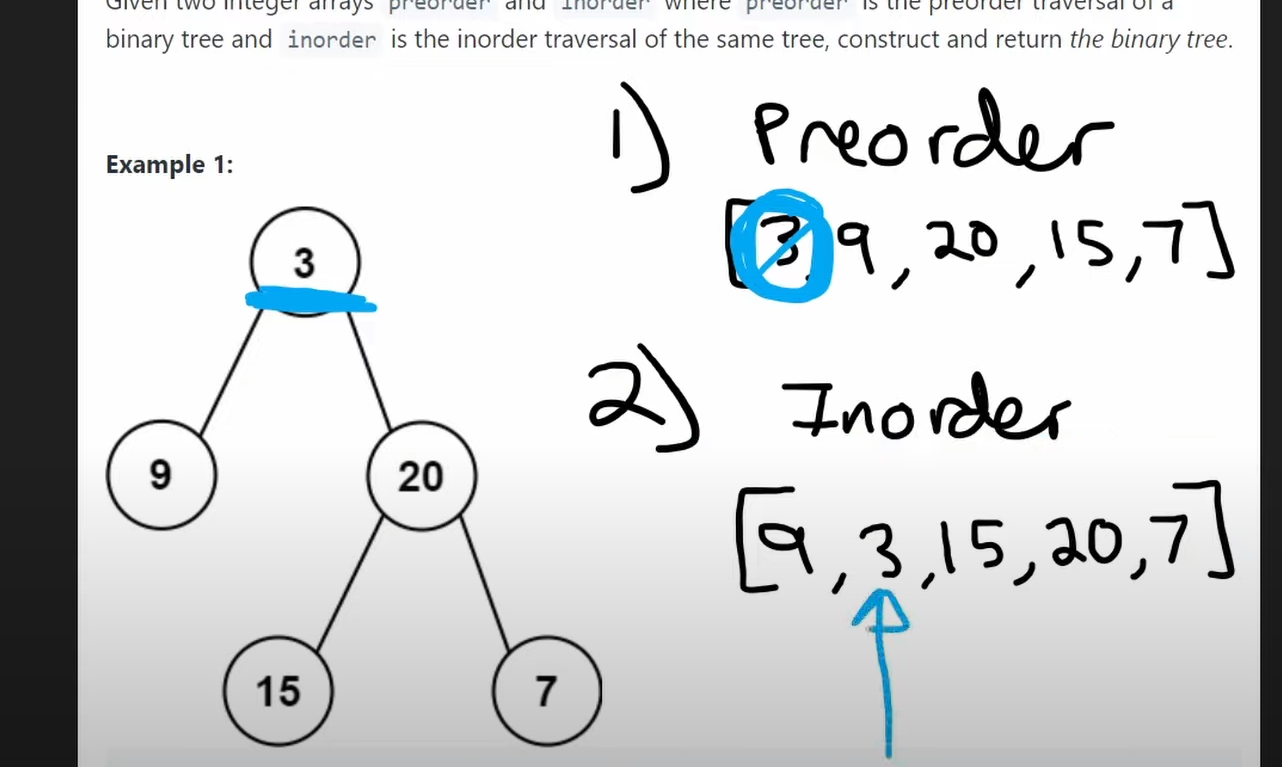
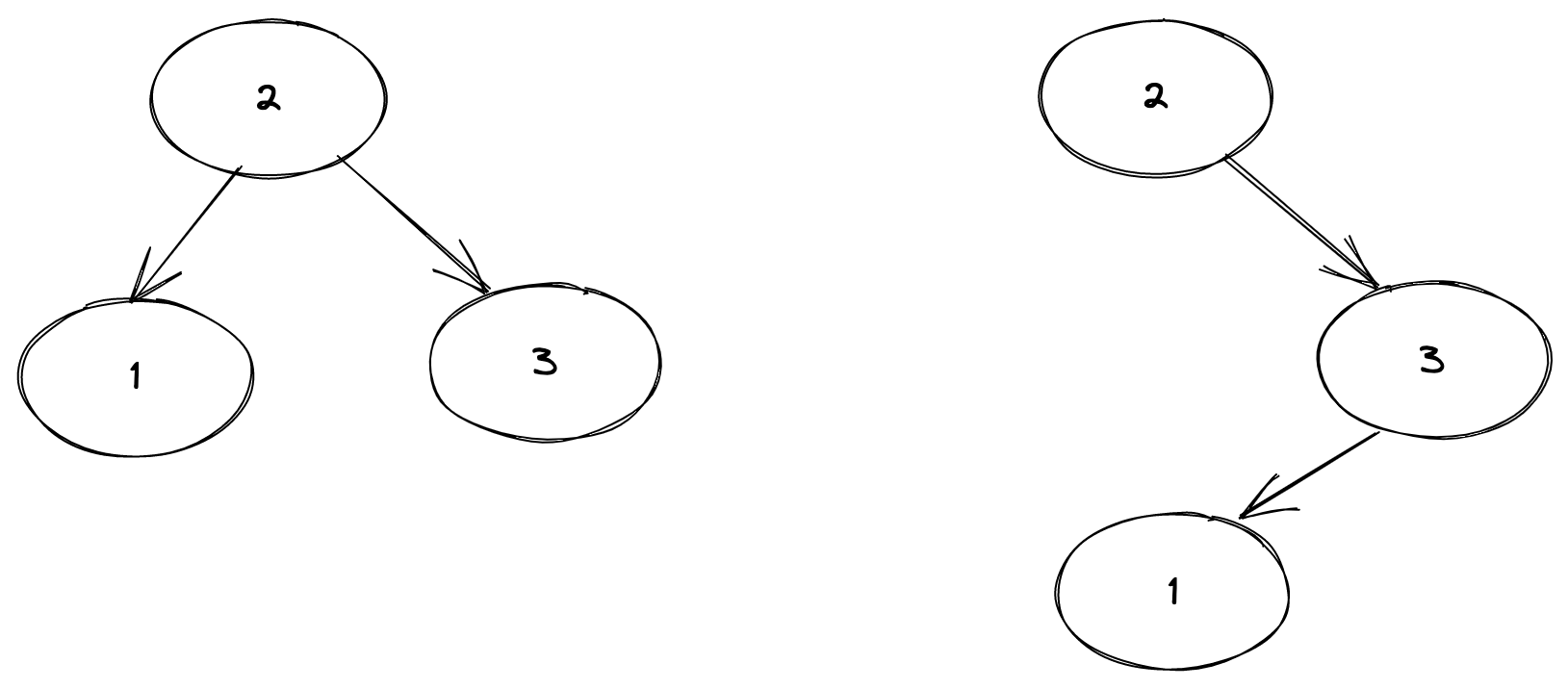
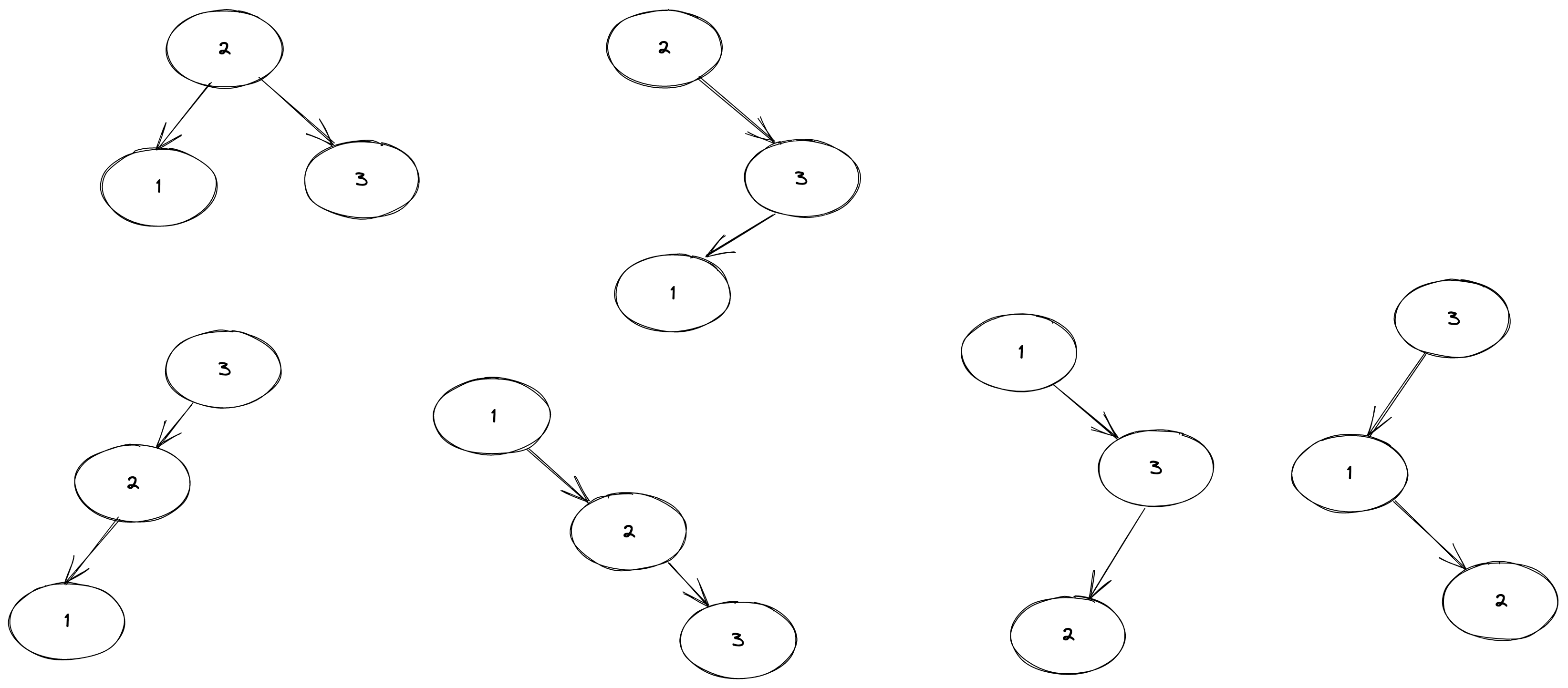 To calculate the number of unique BSTs with