The Minimalist Startup Rules for Programmers
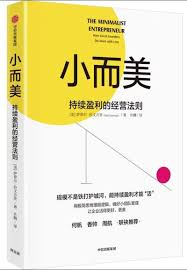
- My rating: 5 / 10
- Purchase Link
This book shares Sahil Lavingia’s personal experiences on how to create and grow small digital businesses in a minimalist way. It emphasizes not chasing unicorn goals but focusing on profitability, with low-risk, reusable small business models to help ordinary people achieve their entrepreneurial dreams.
What I Liked 🔗︎
High Practicality: The book provides numerous real-world examples and tool recommendations, making it suitable for beginners to quickly get started.
Clear Logic: Progressing from cognition to practice, and then to sales and customer relationship management, it builds upon itself in a logical and well-structured manner.
- Highly Inspirational: Breaks away from traditional entrepreneurial thinking, emphasizing starting small to lower the barriers to entrepreneurship.
What I Disliked 🔗︎
- Some content is somewhat theoretical: Certain practical steps could be elaborated on in more detail.
- Lacks in-depth analysis: There is relatively little analysis of failure cases, which may affect readers’ risk awareness.
Key Takeaways 🔗︎
Minimalist Cognition 🔗︎
How to Start 🔗︎
- Digital Content: Sell knowledge through videos, e-books, podcasts, and courses (like Lynda.com).
- Physical Products: Selling innovative products (such as glowing electronic vests) on platforms like Kickstarter.
- Connecting Services: Offering intermediary services, charging fixed fees or percentage-based fees (such as Craigslist).
- SaaS: Developing software that solves specific problems (such as Festival asynchronous voice messaging app).
These business types can be categorized into four types of utility:
- Time utility: Saving time or improving efficiency.
- Form utility: Changing the form or function of a product.
- Possession utility: Transferring ownership of items to those who need them.
- Place utility: Moving products to places where there is greater demand.
Action Guide 🔗︎
- Action Speaks Louder Than Words: Ideas are worthless; what matters is starting.
- Master the Right Mindset: No book can cover everything; the key is learning how to start and develop a business.
- Consumer-Focused: Choose fields with fast feedback and plenty of iteration opportunities, such as SaaS, digital products, or connecting services.
Customer Validation 🔗︎
Rapid Prototyping: Utilize modern tools to conduct customer validation with minimal cost, avoiding leading questions.
Niche Market First: Choose a market of moderate size with less competition and where customers are willing to pay.
Discovery over Implementation: Creating a product is a discovery process, while technology is the application of science.
Effective Quantum: At least enable some users to do things they couldn’t do before. Example: Gumroad initially had only 2700 lines of code, manually handling payments and file uploads, but it solved the core problems.
Productization 🔗︎
- Digital products are never ready: The key is to solve problems and make customers willing to pay.
Like + Monetization + Growth Value: Choose a direction that interests you and can be monetized.
Pricing Strategy: Unless it’s an ad model, it must be charged. Prices can be adjusted based on demand, or even define higher tiers for super users.
Aesthetics is Not Key: Customers are willing to pay even with flaws (like Craigslist).
Sales 🔗︎
Customers are the business model: Grow together with customers, identify problems, and improve the fit between products and the market.
Sales start with discussing problems: Share your stories and values to attract like-minded people.
- Output values: Like-minded people will find you and collaborate with you.
- Community teaching: Regularly share knowledge, inspire ideas, and gain an in-depth understanding of customer needs.
- Learn from Customers: Customers’ attention is a sign of trust, don’t waste it.
- Post-Marketing Reflections: You don’t need complex marketing for the first 100 customers; focus on one high-quality channel.
- Early growth relies on manual sales, later on word-of-mouth.
- Repeat customers are key: Ensure time and resources are allocated to expand new businesses.
- Review Failures: Transform every failure into insight.
- Small and Reliable Customers Are More Important: Like Mailchimp focusing on small business customers.
- Customers Are the Business Plan: Embrace customer education and focus on customer needs.
Extreme Minimalism Practice 🔗︎
Funding Channels 🔗︎
Friends, family, angel investors
Wealth management companies, seed-stage venture capital
Rolling funds, crowdfunding, ICO
Recruitment 🔗︎
Write job descriptions before jumping into action; consider outsourcing or hiring independent contractors.
Recommended books: Jeff Hyman’s “Recruiting Rock Stars.”
Corporate Structure 🔗︎
- When there are enough customers, establish a limited liability company (LLC or S-corporation).
- Tool recommendation: ZenBusiness.
Prototyping Tools 🔗︎
- Invision, Bubble, Draftbit, SimpleSite.
Customer Verification 🔗︎
- Recommended books: Rob Fitzpatrick’s “The Mum Test.”
Quick Build 🔗︎
- Manual/semi-automated process, set a 2-3 day deadline to build solutions and charge for them.
- Recommended resources: Sean Ellis’s “Hacking Growth,” Kevin Kelly’s “1,000 True Fans.”
Common Marketing Channels 🔗︎
- Cold email, LinkedIn (B2B), content marketing, paid advertising, social media marketing.
Check Market Fit 🔗︎
- Methods to improve fit: Adjust messaging, features, pricing.
- High fit performance: Proactive recommendations, low churn rate, price insensitive.
- Recommended books: Steve Blank’s “The Startup User Manual”.
High Market Fit 🔗︎
- Profitability over growth.
- Recommended books: Tim Ferriss’s “The 4-Hour Workweek,” Michael Gerber’s “The E-Myth Revisited.”
Company Names 🔗︎
- The name doesn’t matter; success will make the name feel right.
Create a website + Facebook page 🔗︎
- Create a website using platforms like Carrd, Gumroad, Wix.
- Create an email address and social media accounts.
- Accept payments using Square or Stripe.
Pricing 🔗︎
- Pricing based on fixed cost or value, tiered fees (Basic, Professional, Enterprise).
- Recommended book: “Predictably Irrational”.
Sales: Acquire 100 Customers 🔗︎
- Invite friends for coffee or a meal, thank you for your support and feedback.
- Honest, open, always friendly.
- Don’t over-sell, but share the journey and learning.
Thank you for your patronage 🔗︎
- When reaching 100 customers, thank them through some means.
Summary and Reflection 🔗︎
《The Minimalist Startup Rules for Programmers》 is a practical guide on how to start and grow a digital business with minimal cost. It not only provides rich tools and methods but also emphasizes the importance of customer relationships and market fit.
Do ordinary people need to master these rules?
Whether you are a programmer or an entrepreneur in other fields, these principles can help you reduce entrepreneurial risks, quickly identify market demand, and achieve sustainable growth through continuous optimization.
New articles on AI agents, full-stack engineering, and a one-person company
I email new writing about AI and agents, full-stack engineering, and building a one-person company. No spam, and you can unsubscribe anytime.