The Anthology of Balaji
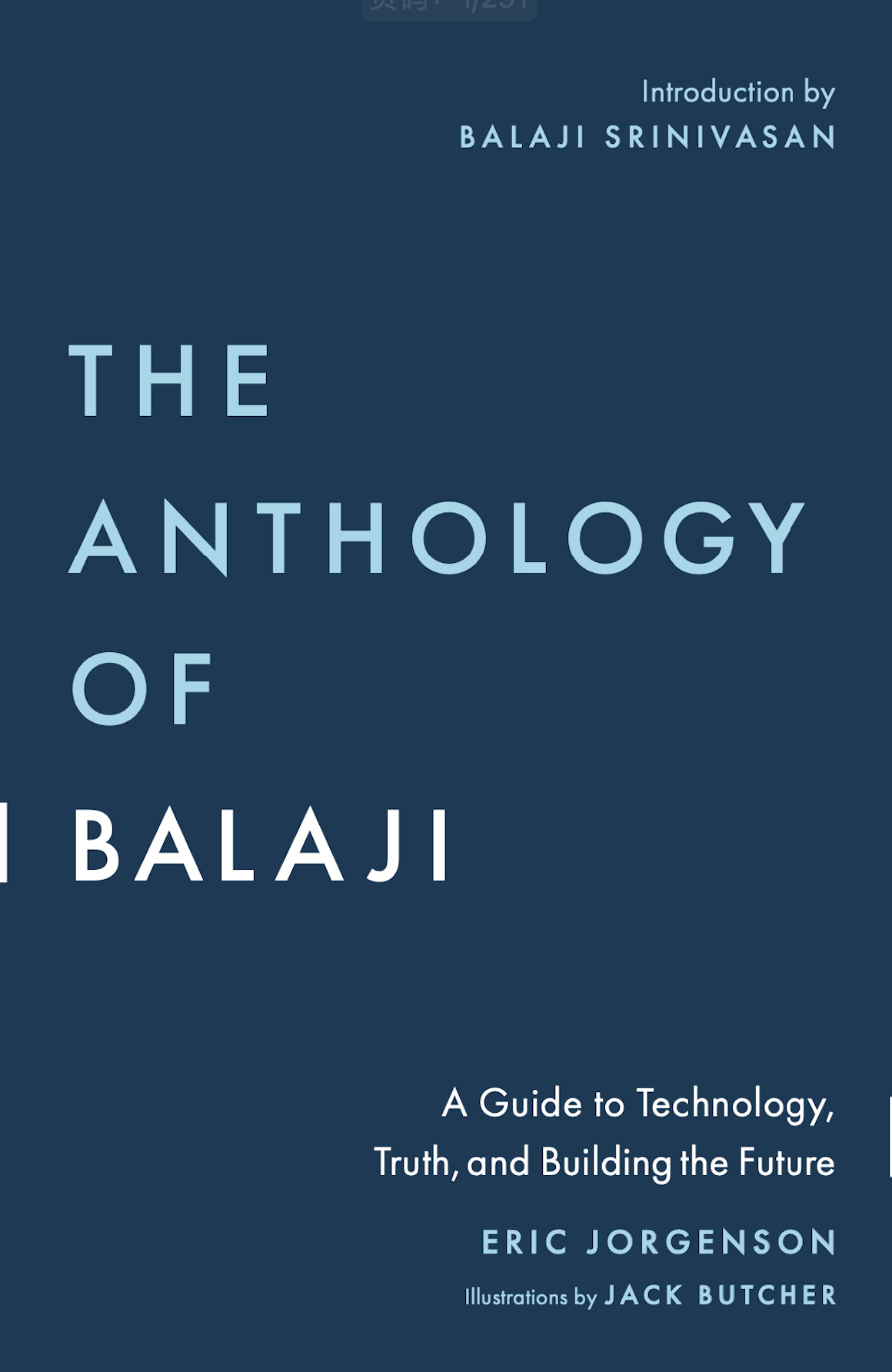
- My rating: 7 / 10
- Purchase Link
This book compiles the profound insights of Balaji S. Srinivasan, covering technology, entrepreneurship, wealth creation, and personal growth. He explores how to change the world through technology and innovation from a unique perspective, while also revealing the nature of wealth and the core principles of entrepreneurship.
What I Liked 🔗︎
- Technology-Driven Future: Balaji’s fervent belief in technology and his insights into future trends are inspiring.
- Highly Practical: The book offers much concrete advice on entrepreneurship, investment, and personal development.
- Thought-Provoking: It explains complex concepts (like wealth creation) with simple examples (like the creation of the iPhone), making them easy to understand and deeply insightful.
What I Disliked 🔗︎
- Scattered Content: As it is an anthology, some content lacks systematic organization, requiring readers to connect the dots themselves.
- Overly Idealistic: Some views (like “just make what people want”) may face more challenges in practical application.
Key Takeaways 🔗︎
I. Technology and Wealth Creation 🔗︎
- The Compounding Effect of Mastering Software
Mastering software skills can bring continuous compound returns, especially in the digital age. - Wealth Can Be Created
- The case of Steve Jobs’s iPhone illustrates that wealth is not a zero-sum game but can be created through innovation.
- By writing software or building a website, you can create valuable digital products even without natural resources.
- The Positive-Sum Effect of Money
Although money may seem zero-sum in a transaction (A loses $1, B gains $1), a voluntary exchange actually benefits both parties because the transaction brings non-monetary value. - Raw Materials vs. Technical Know-How
The value of raw materials themselves is far less than the technology, machinery, and effort required to assemble them into a product.
II. Personal Independence and Time Management 🔗︎
- Economic Independence = Personal Independence
Economic independence means not only financial freedom but also freedom from external control and the influence of cancel culture. - Trading Money for Time
- Spending money can reduce life’s trivial tasks, freeing up more time to focus on more important things.
- The rest time accumulated for each year of work can be used to start a business or achieve financial independence.
- Reducing Dependence
The less money you need, the less dependent you are on the outside world, thus gaining greater freedom.
III. Entrepreneurship and Product Development 🔗︎
- Build Alternatives, Don’t Argue
Don’t waste time arguing about regulatory or policy issues; focus on building effective alternatives. If the product works, the market will naturally accept it. - The Meaning of a Startup
The core of a startup is to build things that cannot be bought directly. Only after a product is actually made can the feasibility of some concepts be verified. - The Founder’s Spirit
Founders are unique because they are willing to pay a huge short-term price for long-term gain. - Practice Over Theory
The process of entrepreneurship is a form of learning in itself. Many critics and academics only realize the difficulty of creation and management when they put it into practice.
IV. Creator Economy and Incentive Mechanisms 🔗︎
- The Value of Creators
- A creator’s article or video might inspire others to start companies or solve social problems; in return, the creator can receive cash or equity.
- Platforms like Twitter and Substack have promoted the development of decentralized media. In the future, we may see “full-stack writers” who handle everything from writing to producing films.
- Rewarding Excellent Creators
Change the incentive mechanisms to ensure that excellent writers and artists receive the rewards they deserve. - The Creative Explosion of the Individual Era
- You can create movies or content on a computer and reach your audience directly, without relying on traditional media.
- Great journalists or creators could become millionaires or even billionaires.
V. Two Ways to Influence the World 🔗︎
- Create or Invest
To influence the direction of technology, you either create with a keyboard or invest money to support innovation. Talk is cheap; action is key. - Acquiring Status
- The hard way: Gain status through building, achieving, and adding value.
- The easy way: Gain relative status by blaming others. But real influence comes from creation, not criticism.
VI. The Leadership of Technologists 🔗︎
- Ranking of Leader Types
Socialist < Nationalist < Capitalist < Technologist. Technologists drive progress through innovation and technology, making them the most forward-thinking leaders. - The Power of 3D Printing and Open Source
Tools like open source, 3D printing, app stores, and crowdfunding combine the digital with the physical to create products people want.
Summary 🔗︎
The Anthology of Balaji is a work full of wisdom and insight, showing how a tech believer can change the world through innovation and action. The book emphasizes the possibility of wealth creation, the core principles of entrepreneurship, and the potential of the creator economy. Whether you are an entrepreneur, investor, or general reader, you can draw inspiration from it and put it into practice. Remember, to influence the world, you must either create or invest—mere talk is useless.
New articles on AI agents, full-stack engineering, and a one-person company
I email new writing about AI and agents, full-stack engineering, and building a one-person company. No spam, and you can unsubscribe anytime.